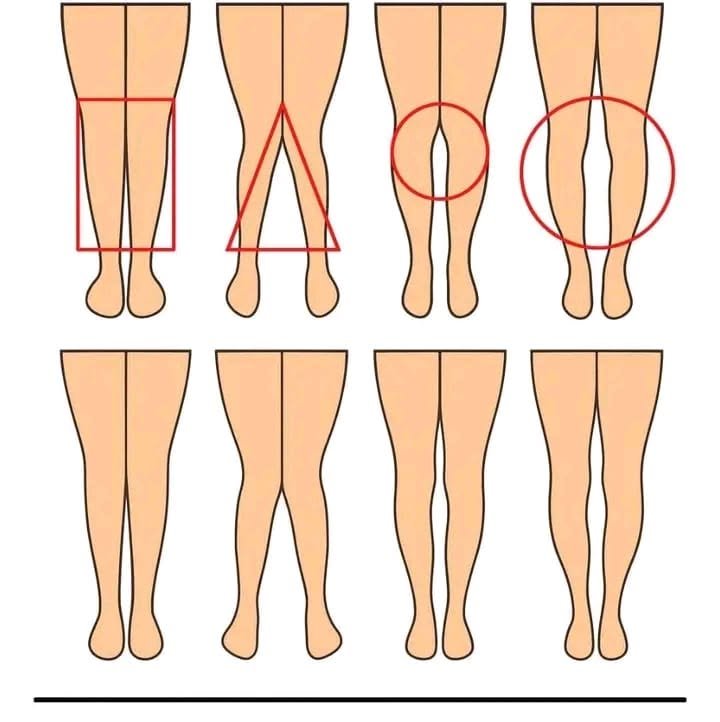
When sensationalized social media reels and clickbait wellness sites flash incomplete, manipulative headlines like “A Woman’s Legs Can Tell How Her Is” (or similar viral teasers hinting at secret health indicators in your lower limbs), they are using classic curiosity-gap marketing.
They purposely cut off the sentence to make you panic, wondering if a swollen ankle, a visible vein, or a patch of dry skin is secretly screaming about your heart, your liver, or your overall mortality.
In clinical reality, while our legs do reflect our health in tangible ways, doctors don’t rely on mysterious social media riddles—they look for clear, measurable physiological signs.
What Clickbait “Leg Secrets” Get Wrong
Sensationalized wellness videos thrive on fear and oversimplification:
-
The “One Sign Fits All” Fallacy: Clickbait often takes a single common physical trait—like mild swelling after a long flight or a harmless varicose vein—and frames it as definitive proof of a terrifying internal disease.
-
Lack of Medical Context: True clinical evaluation always looks at the whole person, medical history, and lab results, rather than jumping to alarming conclusions based on a single surface observation.
What Clinicians Actually Look At: What Your Legs Can Reveal
Physicians, vascular specialists, and cardiologists examine the lower extremities because the legs are a window into several major body systems:
-
Cardiovascular & Venous Health (Edema and Varicosities):
-
What it means: Persistent swelling (edema) in both lower legs, ankles, or feet can be a sign that the heart is pumping less efficiently (as seen in congestive heart failure), or that kidney/liver function is altered.
-
The Local Factor: Bulging, aching varicose veins indicate that internal venous valves are weakening, allowing blood to pool due to chronic venous insufficiency.
-
-
Circulatory Efficiency (Peripheral Artery Disease):
-
What it means: Cool skin on the lower legs, absent hair growth, shiny skin, or cramping in the calves while walking that disappears with rest (claudication) can signal Peripheral Artery Disease (PAD)—narrowed arteries reducing blood flow to the limbs.
-
-
Metabolic and Neurological Function (Neuropathy):
-
What it means: Chronic numbness, tingling, or burning sensations in the feet and lower legs are classic warning signs of nerve damage, most commonly associated with poorly managed diabetes or vitamin deficiencies.
-
-
Blood Clot Warning Signs (Deep Vein Thrombosis – DVT):
-
What it means: A sudden, painful swelling in one leg, accompanied by localized warmth, tenderness, and redness, is a genuine medical emergency that requires immediate evaluation to rule out a deep blood clot.
-
The Bottom Line
Your legs don’t hold secret riddles, but they do offer honest physical feedback about your circulation, nerves, and heart health. If you notice persistent, unusual changes—like chronic single-leg swelling, severe pain, coldness, or sores that won’t heal—skip the clickbait and consult a healthcare professional.
