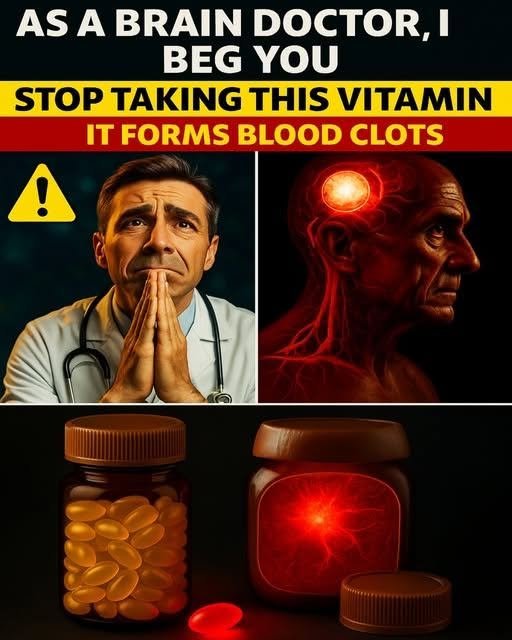
Sensationalized video titles and medical warning claims circulating online—such as a “brain doctor” warning that a specific vitamin raises stroke risk “overnight”—are designed to capture attention through fear rather than medical science.
No common vitamin causes a stroke overnight. Strokes are acute medical events driven by complex vascular, structural, or genetic factors (such as uncontrolled hypertension, arterial plaque rupture, blood clots, or aneurysms), not by standard vitamin consumption or routine supplementation.
Sorting Fact from Fear-Mongering Online
-
The Reality of Over-Supplementation: While megadosing certain fat-soluble vitamins (like excessive, long-term high-dose Vitamin A, E, or D) or improperly interacting with medications can carry theoretical health risks over months or years, they do not trigger sudden midnight strokes.
-
The Clinical Context: Deficiencies in essential nutrients (like Vitamin D) are actually associated with higher long-term cardiovascular risks, but taking or avoiding a vitamin overnight will not abruptly alter your cerebrovascular health.
-
Sensationalism vs. Science: Health content utilizing dramatic phrases like “shocked,” “begging you to stop,” or “overnight risk” typically relies on clickbait tactics to drive views rather than evidence-based guidance.
If you have specific concerns about your stroke risk, blood pressure, or whether your current supplement routine is appropriate for your age and medical history, the safest approach is to consult your primary care physician or a qualified cardiologist rather than relying on online wellness alerts.
