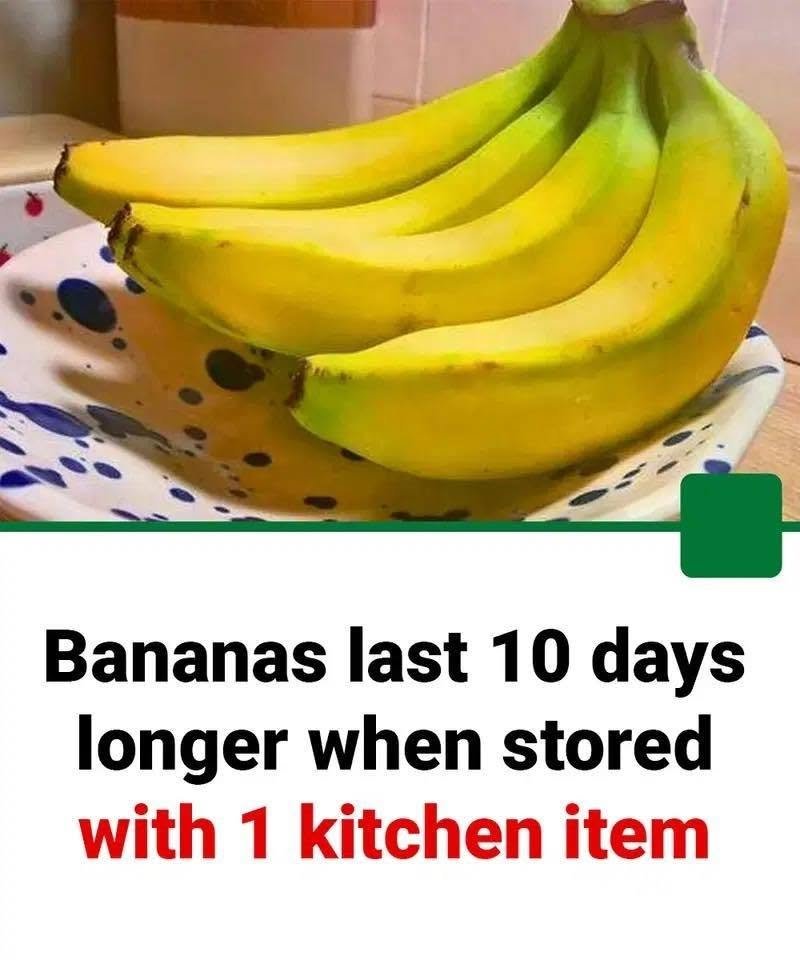
The transition of a vibrant, bright yellow bunch of bananas into speckled, overripe fruit within a matter of days is a frustrating kitchen conundrum that many households face on a weekly basis. When tossed casually into a traditional, open-air fruit bowl, bananas seem to accelerate their ripening cycle almost overnight, turning soft and mushy before you have the chance to enjoy them. However, unlocking an extra ten days of freshness, firmness, and appealing yellow color does not require expensive commercial preservation gadgets or complicated chemical treatments. Instead, the secret lies in a ubiquitous household staple found in nearly every kitchen: standard plastic food wrap (or, alternatively, a sheet of aluminum foil).
The Science of Ripening: Why Traditional Fruit Bowls Sabotage Bananas
To understand why wrapping bananas is so profoundly effective, it is first necessary to examine the biological mechanism of how bananas ripen. Unlike many other fruits, bananas continue to ripen heavily after they have been harvested from the tree. This process is driven primarily by ethylene gas, a naturally occurring plant hormone that acts as a chemical signal triggering cell wall breakdown, starch conversion into sugar, and skin discoloration.
When bananas are placed flat together in a traditional fruit bowl, two major compounding factors accelerate their decay:
-
Trapped Ethylene Concentration: As each banana in the bunch emits ethylene gas from its stem and skin, the gas pools heavily within the confined space of the bowl and circulates around the surrounding fruit. This high concentration creates a feedback loop, rapidly speeding up the ripening and softening process for the entire cluster simultaneously.
-
Pressure Bruising and Cell Damage: Resting a heavy bunch of bananas flat against the hard, rigid surface of a ceramic or wooden bowl creates microscopic bruising points at the contact areas. Damaged plant cells release enzymes that accelerate localized browning, rot, and structural breakdown.
The Mechanism of the Plastic Wrap Stem Hack
Bananas do not release ethylene gas uniformly across their entire surface; rather, the vast majority of this ripening hormone escapes directly through the crown or stem where the individual fingers are joined together. By targeting this specific anatomical feature, you can dramatically alter the fruit’s timeline.
-
The Sticking and Sealing Method: To execute this hack effectively, take your bunch of bananas and gently separate them into individual fingers or smaller clusters of two to three. Take a small sheet of standard plastic wrap and wrap it tightly, securely, and multiple times around the exposed stem and crown area of each cluster, ensuring there are minimal gaps for air exchange.
-
The Physiological Result: Wrapping the stem tightly serves a dual purpose. First, it acts as a physical barrier that traps the exiting ethylene gas right at the source, preventing it from escaping into the surrounding environment and accelerating the ripening of the fruit body. Second, it blocks outside air and ambient oxygen from penetrating the cut stem tissue, which otherwise fuels rapid oxidation and decay. By smothering the stem’s respiratory output, the biological clock of the banana slows down drastically, extending its prime eating window by up to a week to ten days compared to identical bananas left bare on a counter.
Alternative Mechanical Storage: The Banana Hanger
If you prefer to avoid single-use plastics or want an alternative aesthetic approach for your kitchen counter, pairing your storage strategy with a hanging hook or dedicated banana tree stand yields exceptional results.
-
Mimicking Natural Growth: Hanging bananas mimics their natural orientation as they hang downward on a tree stalk. This vertical suspension allows ambient air to circulate freely and completely around every single banana in the bunch.
-
Eliminating Surface Contact: By keeping the fruit suspended in mid-air, you entirely eliminate the pressure bruising caused by a bowl’s bottom surface. Furthermore, because the bananas are separated and exposed to moving air, any emitted ethylene gas disperses harmlessly into the room rather than pooling densely around the fruit. Combining a banana hanger with the plastic wrap stem trick creates the ultimate preservation synergy.
Managing Peak Ripeness: Transitioning to Utilization
Even with optimal storage techniques utilizing plastic wrap barriers or hanging stands, biological processes will eventually lead bananas to peak ripeness and beyond. When your bananas finally reach the speckled, ultra-sweet stage where fresh consumption is no longer appealing, they transition into prime culinary ingredients rather than waste:
-
Freezing for Smoothies and Baking: Peel fully ripened bananas immediately, slice them into uniform rounds or halve them lengthwise, and store them in heavy-duty freezer-safe bags. Frozen bananas provide a rich, creamy, dairy-free texture base for morning protein smoothies, oatmeal bowls, and homemade nice-cream.
-
Baking Chemistry: Overripe, heavily speckled bananas possess a high concentration of natural simple sugars and moisture, making them the absolute gold standard for baking. They create exceptionally moist texture profiles in classic homemade banana bread, muffins, pancakes, and breakfast oat bars without requiring excessive added refined sugars.
Do you typically rely on counter storage solutions like fruit bowls or hanging stands, or have you experimented with refrigeration methods to extend the life of your produce?
