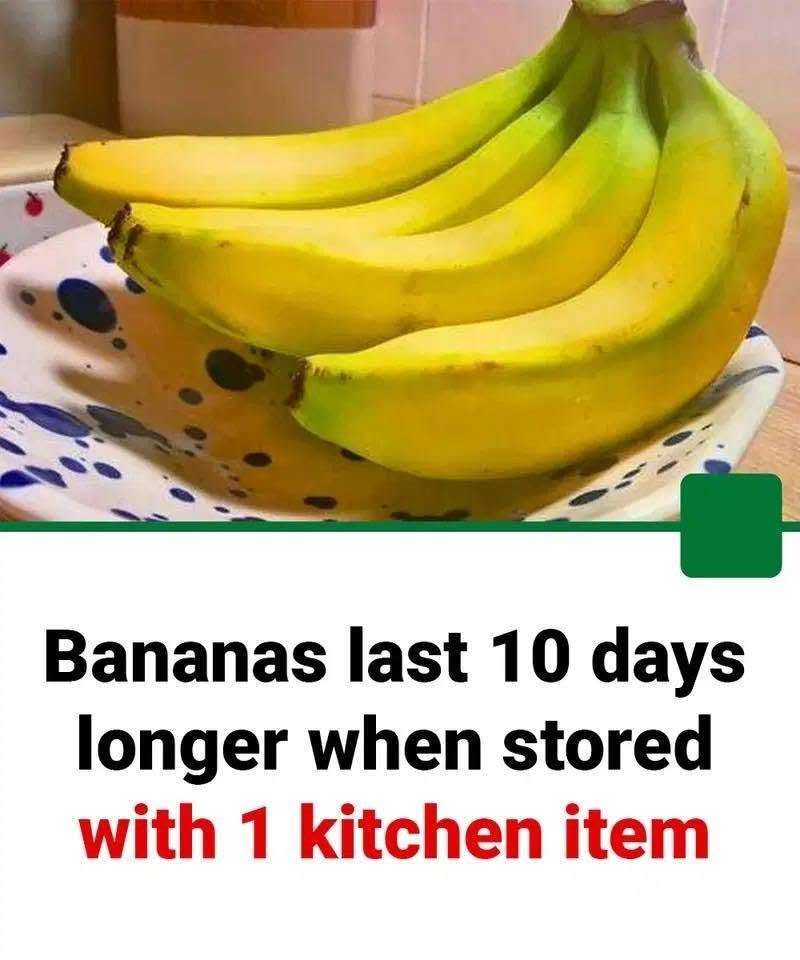
When viral kitchen hacks promise that bananas will last 10 days longer if you store them with a secret kitchen item, they are leaning into a classic clickbait formula. While you can certainly extend the shelf life of bananas by managing the gases they emit, no simple trick will keep a ripe banana fresh for an extra week and a half without refrigeration or freezing.
Let’s cut through the sensationalized exaggeration, examine the actual science of banana ripening, and look at the best ways to keep your fruit fresh longer.
The Science: Why Bananas Ripen So Fast
Bananas produce and release a natural plant hormone called ethylene gas. Ethylene acts as a chemical ripening agent. As it builds up around the stem (the crown) of the banana, it signals the fruit to convert starches into sugars, soften, and turn yellow—and eventually brown.
-
The Traditional Fruit Bowl Trap: When you bunch bananas together in a bowl, they trap and share ethylene gas, accelerating the ripening process for the whole bunch. Furthermore, resting them on a flat surface creates bruising points where pressure speeds up decay.
The “Secret” Kitchen Item: Aluminum Foil or Plastic Wrap
The viral hack referenced in these articles typically involves wrapping the crown (stem) of the banana bunch tightly in plastic wrap or aluminum foil.
-
Does It Work? Partially, yes. Wrapping the crown acts as a physical barrier that slows down the escape of ethylene gas from the cut stem and reduces the amount of oxygen reaching that specific growth point.
-
The Reality Check: While wrapping the stem can buy you an extra 2 to 4 days of firmness by slowing down the ripening clock, it will not magically preserve a banana for 10 extra days. Once the fruit reaches a certain stage, natural enzymatic breakdown takes over.
Evidence-Based Ways to Actually Extend Banana Shelf Life
If you want to maximize the life of your bananas and prevent them from turning mushy too quickly, these practical, science-backed methods work best:
-
Hang Them Up: Using a banana hanger keeps the fruit suspended in the air. This improves air circulation around the entire bunch, prevents bruising from resting on hard countertops, and disperses ethylene gas away from the fruit.
-
Separate the Bananas: Gently snapping individual bananas apart from the main bunch slows down the rapid cascade of ethylene gas, as each banana no longer shares its ripening hormones with its neighbors.
-
Refrigerate (Even When They Turn Brown): Once your bananas reach your preferred ripeness, you can put them in the refrigerator. The peel will turn completely black due to cold-induced enzyme reactions, but the fruit inside will remain firm and edible for another week because the cold halts the ripening process.
-
Freeze for Later: Peel and slice overripe bananas, then store them in a freezer-safe bag. They make an exceptional, creamy base for smoothies, oatmeal, or healthy baking.
