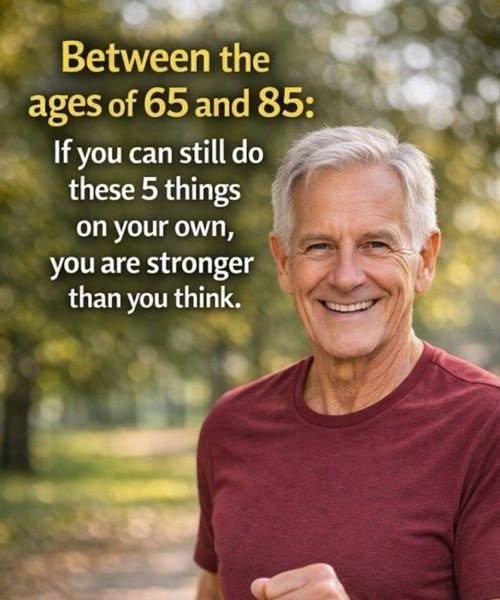
When viral health articles ask, “Between 65 and 85, if you can still do these 5 things, you’re stronger than you think,” they are usually referencing functional fitness markers—real-world indicators of strength, balance, and independence.
Rather than focusing on how much weight you can lift at a gym, geriatric specialists and physical therapists measure true strength by how easily you navigate everyday life.
The 5 Everyday Tests of Functional Strength
If you can independently perform these five fundamental movements, your musculoskeletal health, neuromuscular coordination, and core stability are in fantastic shape:
1. Rising from a Chair Without Using Your Hands
-
The Movement: Standing up from a standard dining chair or couch using only your leg and core muscles, without pushing off with your arms.
-
Why It Matters: This is the classic clinical test for lower-body power (quads, glutes, and hamstrings). It proves you have the lower-body strength required to get out of cars, armchairs, and toilets independently.
2. Carrying Groceries Up a Flight of Stairs
-
The Movement: Walking up a full flight of stairs while carrying bags of groceries or moderate household items without losing your breath or balance.
-
Why It Matters: Stair-climbing tests single-leg stability, cardiovascular endurance, and dynamic balance under load. Maintaining this ability is key to multi-level home living.
3. Standing on One Leg for 10 Seconds
-
The Movement: Closing your eyes or keeping them open while balancing on a single leg for 10 seconds without wobbling or grabbing a wall.
-
Why It Matters: Balance relies on a complex network involving your inner ear, vision, and proprioception (joint awareness). Being able to stand on one leg is one of the strongest predictors of fall prevention and neurological coordination.
4. Reaching Overhead and Behind Your Back
-
The Movement: Reaching up to grab an item from a top kitchen shelf, or reaching behind your back to zip a jacket or fasten clothing.
-
Why It Matters: Shoulder mobility, rotator cuff strength, and upper-body flexibility dictate your ability to dress, groom, and manage high-reach tasks without shoulder impingement or pain.
5. Bending Down to Tie Your Shoes (or Pick Up an Object)
-
The Movement: Hingeing at your hips and bending forward to touch your toes or pick up something off the floor without straining your lower back.
-
Why It Matters: This demonstrates functional core strength, lower-back flexibility, and hamstring pliability. It protects you from awkward strains during routine daily bending.
How to Maintain and Build Functional Strength
The wonderful thing about functional strength is that it responds brilliantly to regular, gentle practice at any age:
-
Practice Chair Squats: Try standing up and sitting down from your chair 5 times in a row without using your hands while watching television.
-
Incorporate Balance Drills: Practice standing on one leg while brushing your teeth, keeping a countertop or the kitchen sink nearby for safety support.
-
Stay Consistent: Regular walking, light resistance training, and gentle stretching keep your joints lubricated and your muscles responsive.
Are you looking for specific ways to build your daily strength, or interested in gentle exercises to support balance and mobility?
