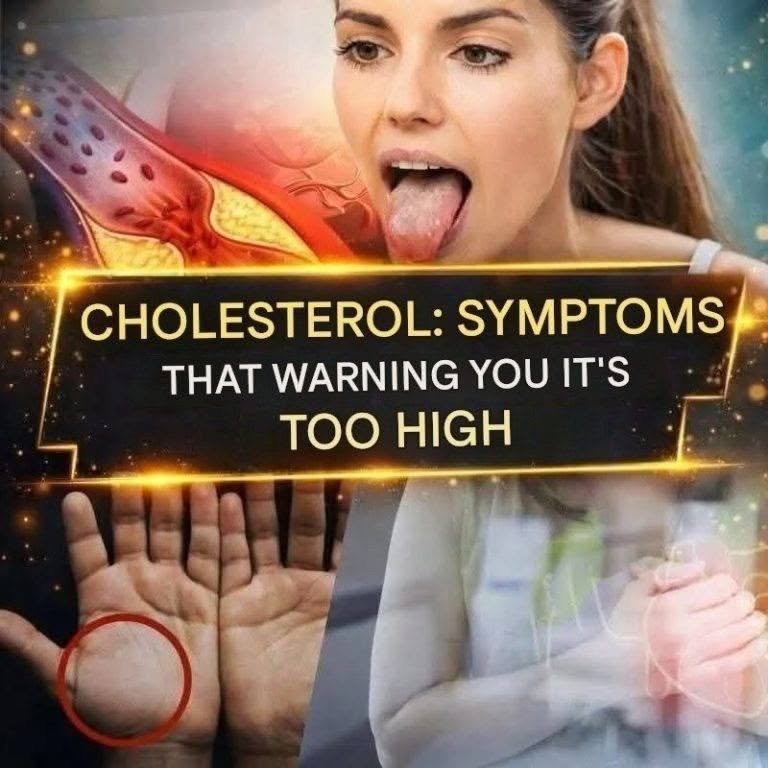
High cholesterol (hypercholesterolemia) is often called a “silent condition” because it typically produces no noticeable symptoms until plaque buildup significantly narrows your arteries or causes a cardiovascular event.
However, when LDL (“bad”) cholesterol and triglycerides remain dangerously elevated for years, specific physical signs and warning signals can manifest as blood flow and circulation begin to suffer.
5 Physical Warning Signs of Dangerously High Cholesterol
1. Xanthomas (Fatty Skin Deposits)
When blood lipid levels are excessively high, cholesterol deposits (xanthomas) can accumulate underneath the skin.
-
Appearance: They often look like yellowish-orange, smooth bumps or plaques, frequently appearing around the eyelids (xanthelasma), on the palms of the hands, or as firm nodules around the Achilles tendon in the ankles and heels.
2. Corneal Arcus (Gray or White Ring Around the Eye)
-
Appearance: A distinct opaque white, grey, or light-blue ring or arc forming around the outer edge of the cornea (the clear front surface of your eye).
-
What It Means: This is caused by cholesterol deposits building up in the corneal tissue. While common in older adults (arcus senilis), developing this ring before age 50 strongly correlates with dangerously high familial cholesterol levels.
3. Intermittent Claudication (Leg and Calf Pain While Walking)
When high cholesterol combines with calcium to form plaque in the peripheral arteries supplying your legs (Peripheral Artery Disease or PAD), blood flow drops.
-
Appearance: You may experience cramping, aching, heaviness, or fatigue in your calves, thighs, or buttocks during exercise or walking, which quickly disappears after resting for a few minutes.
4. Slow-Healing Sores or Cold Feet in the Lower Extremities
Severely restricted arterial blood flow prevents oxygen and vital nutrients from reaching your lower legs, feet, and toes.
-
Appearance: Persistently cold feet, thin or shiny skin on the lower legs, loss of leg hair, or minor cuts and sores on your feet that take weeks or months to heal.
5. Chest Pain or Tightness (Angina)
When coronary arteries feeding the heart muscle itself become narrowed by cholesterol plaque, the heart struggles to receive enough oxygenated blood during exertion or stress.
-
Appearance: A heavy pressure, squeezing, or aching sensation in the center or left side of your chest that occurs during physical activity and subsides with rest.
Why a Blood Test is Essential
Because physical symptoms like xanthomas or corneal arcus only appear in severe or genetic cases, the only definitive way to know your cholesterol levels is through a routine lipid panel blood test ordered by your doctor.
