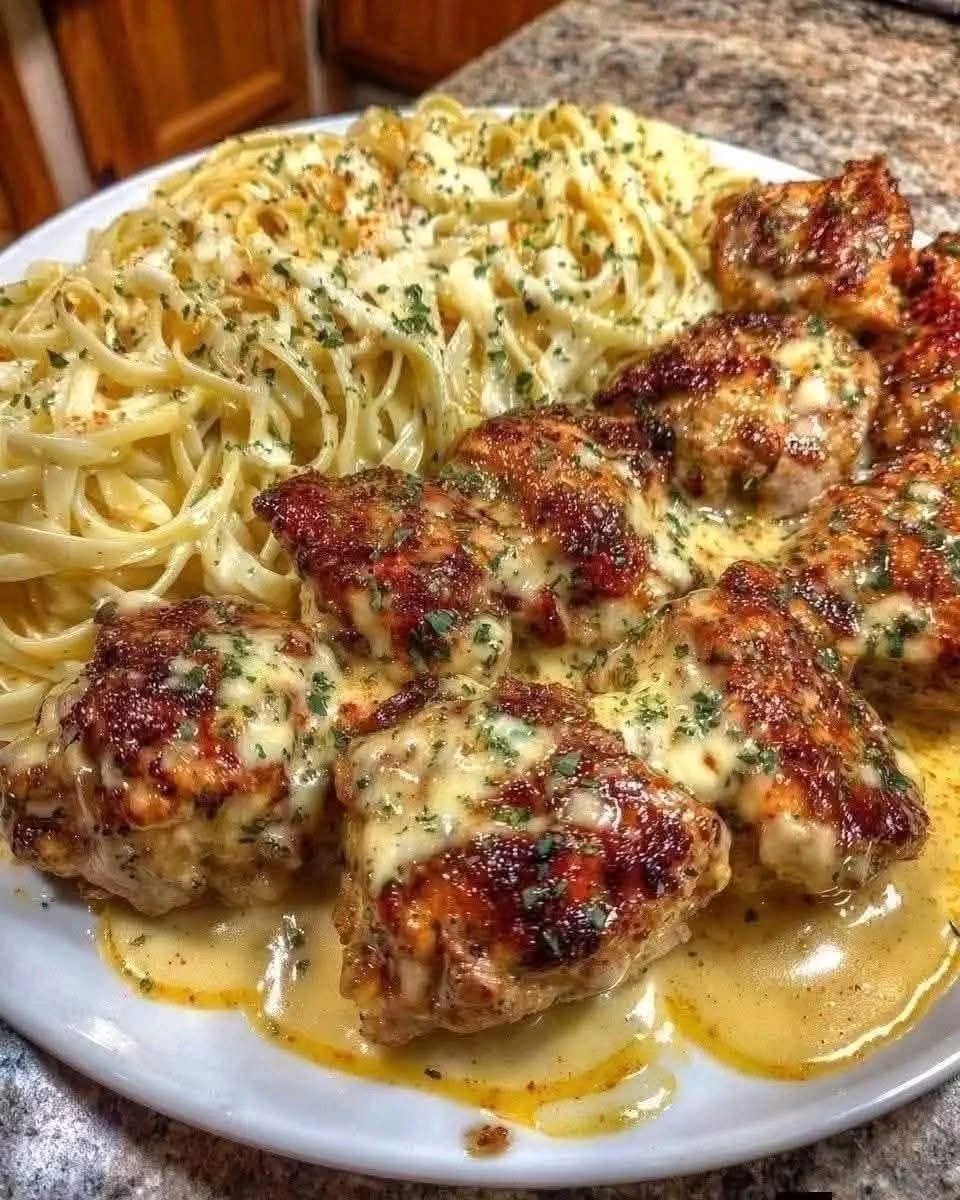
When popular food media and recipe blogs highlight a dish like “Creamy Garlic Butter Chicken & Linguine in Alfredo Sauce,” they are leaning into a universal culinary truth: rich, savory combinations of garlic, butter, heavy cream, and cheese are intensely satisfying. However, restaurant-style Alfredo dishes often come with a reputation for being heavy, calorie-dense “food comas” in a bowl.
From a culinary science and nutritional balance perspective, you can enjoy a decadent, restaurant-quality Creamy Garlic Butter Chicken & Linguine Alfredo at home by understanding how the sauce emulsion actually works and how to balance richness with vibrant, nutrient-dense ingredients.
The Culinary Science Behind a Perfect Alfredo Sauce
Why do some homemade Alfredo sauces turn out greasy, clumpy, or watery, while authentic restaurant versions are silky and smooth?
-
The Starch and Fat Emulsion: Traditional Roman Alfredo relies on the marriage of starchy pasta cooking water, high-fat butter, and finely grated Parmigiano-Reggiano cheese. American-style Alfredo incorporates heavy cream for extra stability and richness. When heated too aggressively, the proteins in dairy seize and separate, leaving pools of oil. Gentle heat and emulsification are key.
-
The Maillard Reaction in Garlic and Chicken: Searing chicken thighs or breasts in butter builds deep savory flavor (umami) through the Maillard reaction. Sautéing minced garlic carefully prevents bitterness; burnt garlic introduces a harsh, acrid taste that overpowers delicate cream.
A Balanced, Chef-Crafted Recipe Blueprint
Here is how to make an exceptional, deeply flavorful Garlic Butter Chicken & Linguine Alfredo that balances indulgence with kitchen-smart technique:
Ingredients:
-
The Protein: 1 lb boneless, skinless chicken breasts or thighs (seasoned with salt, black pepper, garlic powder, and smoked paprika).
-
The Pasta: 12 oz high-quality bronze-die linguine (bronze-die extrusion leaves a rough surface that catches and holds the sauce).
-
The Aromatics & Fats: 3 tablespoons unsalted butter, 4–5 cloves of fresh garlic (finely minced).
-
The Sauce Base: 1.5 cups heavy cream (or a 1:1 blend of heavy cream and low-sodium chicken broth for a lighter texture), 1 cup freshly grated Parmigiano-Reggiano cheese.
-
The Finish: Fresh chopped parsley and cracked black pepper.
Step-by-Step Method:
-
Sear the Chicken: Melt 1 tablespoon of butter in a large skillet over medium-high heat. Cook the seasoned chicken until golden-brown and cooked through (internal temp of 165°F / 74°C). Remove, let rest, and slice.
-
Build the Garlic Butter Base: In the same skillet (retaining those delicious browned chicken bits), melt the remaining 2 tablespoons of butter. Sauté the minced garlic for 30–60 seconds until fragrant—do not let it brown.
-
Simmer the Cream: Pour in the heavy cream and chicken broth, letting it gently simmer for 3–4 minutes to thicken slightly.
-
Emulsify the Cheese: Reduce heat to low. Gradually whisk in the freshly grated Parmigiano-Reggiano until melted and smooth.
-
Marry Pasta and Sauce: Toss the al dente linguine directly into the sauce, adding a splash of starchy pasta water to tie the emulsion together. Top with sliced chicken and fresh parsley.
Evidence-Based Nutritional & Culinary Tips
-
Embrace Pasta Water: Never skip saving a half-cup of pasta water before draining. The natural starch acts as an anchor, binding the butter and cheese seamlessly to the noodles without needing excess cream.
-
Balance the Plate: Because creamy pasta is rich in carbohydrates and saturated fats, pair it with a crisp, acidic side salad dressed in lemon vinaigrette or roasted green vegetables (like broccoli or asparagus) to add fiber, micronutrients, and a palate-cleansing brightness.
