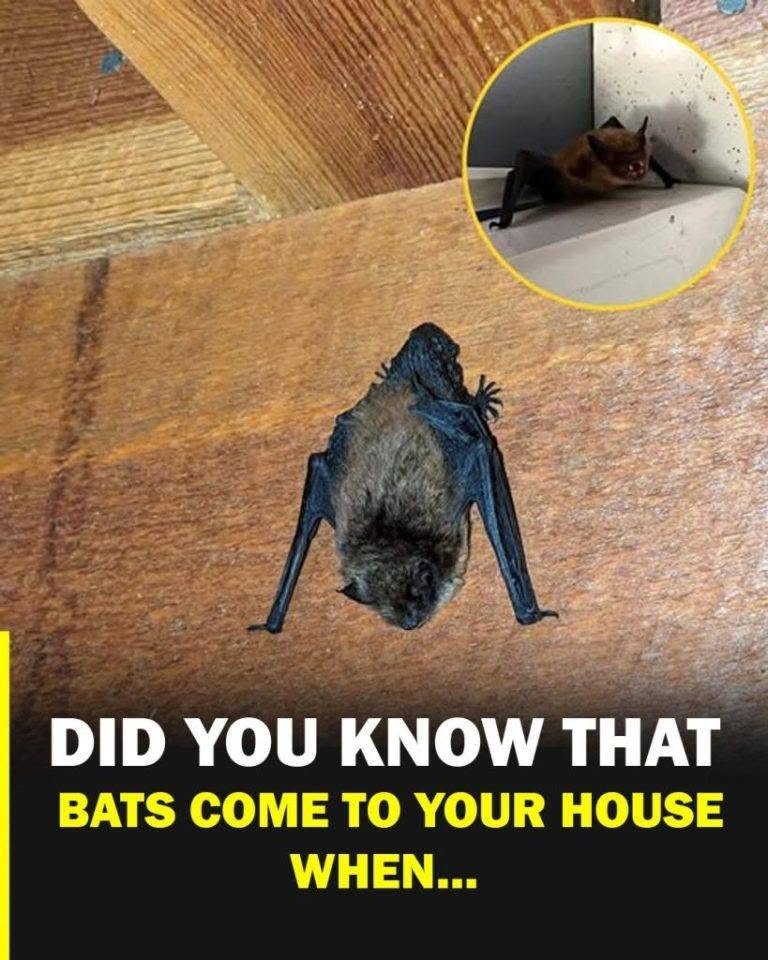
Sensational online headlines love dramatic, suspense-building hooks like “Did you know BATS come to your house when…”—often designed to trigger immediate panic about curses, invasions, or sudden biological threats.
Wildlife biologists, pest control experts, and public health officials look at animal behavior through a much more practical, environmental lens. The reality is that bats don’t seek out human houses out of malice or mystery; they are simply looking for shelter, warmth, and a place to raise their young.
Why Bats Actually Enter or Roost Near Homes
If a bat finds its way into your living space or decides to roost in an attic or chimney, it usually comes down to a few basic environmental factors:
-
Seeking Warmth and Shelter: Attics, soffits, and wall cavities mimic the dark, safe, stable temperatures of natural caves. During maternity season, female bats look for warm, safe spaces to form nursery colonies and raise their pups.
-
Accidental Entry: Bats are nocturnal hunters. If a young or disoriented bat flies through an open window, door, or un-screened chimney at dusk while chasing insects, it can become trapped inside a home.
-
Tiny Entry Gaps: Bats cannot chew through wood, drywall, or siding like rodents do. Instead, they slip into homes through pre-existing structural gaps—often no larger than a quarter—around rooflines, vents, and flashing.
Debunking Common Bat Myths
Pop culture and viral articles love to exaggerate bat behavior, but clinical and zoological facts offer a much calmer reality:
-
The “Hair Tangling” Myth: Bats do not want to fly into your hair. If a bat swoops close to you outdoors, it is simply darting after mosquitoes and flying insects that are attracted to human body heat or outdoor lighting. Their advanced echolocation makes it virtually impossible for them to accidentally collide with you.
-
The “All Bats Have Rabies” Myth: While bats can carry rabies (like any mammal), only a very small fraction—less than 1% of wild bats—actually contract the virus. However, because a bat bite can be tiny and easily missed (especially if found in a room with a sleeping person or a child), any direct, unobserved contact requires immediate professional and medical evaluation.
What to Do If a Bat Gets Inside Your House
If a bat makes its way into your living quarters, avoid panic and follow safe, practical steps:
-
Isolate the Area: Close doors to the room, open windows to the outside if it is safe to do so, and let the bat find its own way out. Turn off interior lights so it is guided toward the outdoor light.
-
Never Handle a Bat Barehanded: If you need to contain a grounded or resting bat, wear thick leather work gloves and use a box or a container to gently trap it, then slide a piece of cardboard underneath.
-
Call Professionals for Attic Colonies: If bats have established a roost in your attic, do not attempt to seal the entry points during the spring or summer months (as this can trap non-flying baby pups inside). Contact a humane, professional wildlife removal service to safely perform a one-way exclusion.
The Medical and Environmental Takeaway: Bats are vital contributors to local ecosystems, consuming thousands of mosquitoes and agricultural pests every single night. While you definitely don’t want them living inside your living room or attic, understanding their habits helps replace fear with safe, effective home management.
Are you dealing with an unexpected wildlife visitor at home, or looking into home proofing and exclusion tips?
