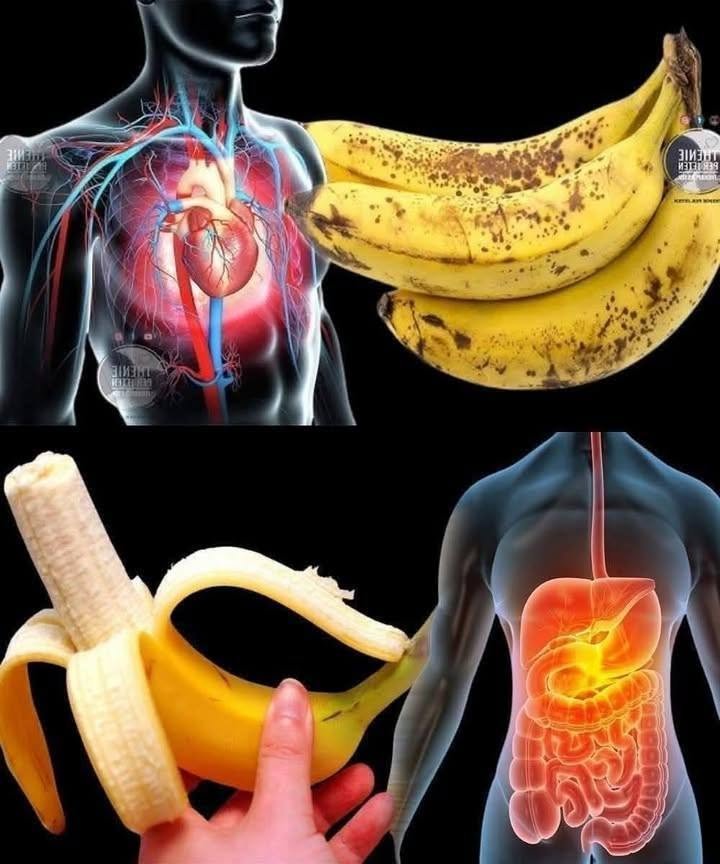
…potassium levels, but its systemic impact extends far beyond basic electrolyte balance. Consuming bananas regularly alters cellular biochemistry, gastrointestinal motility, vascular tone, and central neurotransmitter synthesis.
Key Biomarkers and Physiological Shifts Increased by Bananas
1. Serum Potassium and Vascular Nitric Oxide Activity
Mechanistic Action: A medium banana contains roughly $422\text{ mg}$ of potassium. Potassium acts as the primary intracellular cation, regulating the resting membrane potential of vascular smooth muscle cells and cardiac myocytes.
Vascular Outcome: High potassium intake stimulates the sodium-potassium pump ($\text{Na}^+/\text{K}^+$-ATPase) and activates hyperpolarizing potassium channels, inducing vasodilation. Concurrently, it promotes urinary sodium excretion via the kidneys, effectively dampening systolic blood pressure and reducing arterial stiffness.
2. Neurotransmitter Precursor Synthesis (Serotonin and Melatonin)
Mechanistic Action: Bananas supply high levels of Vitamin B6 (Pyridoxine)—providing up to $33\%$ of the Recommended Daily Intake per serving—alongside the essential amino acid L-tryptophan.
Neurological Outcome: Pyridoxal 5′-phosphate (PLP, the active form of B6) is a vital coenzyme for . This enzymatic pathway converts tryptophan to serotonin in the central nervous system, which subsequently converts to melatonin in the pineal gland to support sleep architecture and circadian rhythm regulation.
3. Endogenous Antioxidant Capacity and Dopamine Levels
Mechanistic Action: Bananas contain significant free dopamine ($2.5\text{–}10\text{ mg}$ per $100\text{ g}$) along with polyphenolic antioxidants like catechin and gallic acid.
Biochemical Outcome: Unlike central dopamine, dietary dopamine does not cross the blood-brain barrier to alter brain reward centers. Instead, it acts as a potent peripheral antioxidant, scavenging free radicals, preventing lipid peroxidation in circulation, and supporting gastrointestinal mucosal defense.
4. Prebiotic Fermentation and Short-Chain Fatty Acid (SCFA) Production
Mechanistic Action: Slightly green or underripe bananas are rich in type-2 and pectin.
Gastrointestinal Outcome: Resistant starch bypasses enzymatic digestion in the stomach and small intestine, reaching the colon where anaerobic gut microbiota (such as Bifidobacteria and Lactobacilli) ferment it into SCFAs—primarily butyrate, acetate, and propionate. Butyrate feeds colonocytes, strengthens the mucosal barrier, and lowers systemic inflammatory markers.
Advanced Chronic Kidney Disease (CKD): Impaired renal function reduces potassium excretion capacity. Ingesting potassium-dense foods like bananas can trigger severe , leading to cardiac dysrhythmias.
Concurrent Use of ACE Inhibitors / ARBs: Medications such as lisinopril or losartan elevate serum potassium levels by reducing aldosterone excretion. High dietary potassium intake alongside these medications increases hyperkalemia risk.
Fructose Malabsorption: High concentrations of free fructose in very ripe bananas can trigger osmotic diarrhea, bloating, and lower abdominal cramping in sensitive individuals.