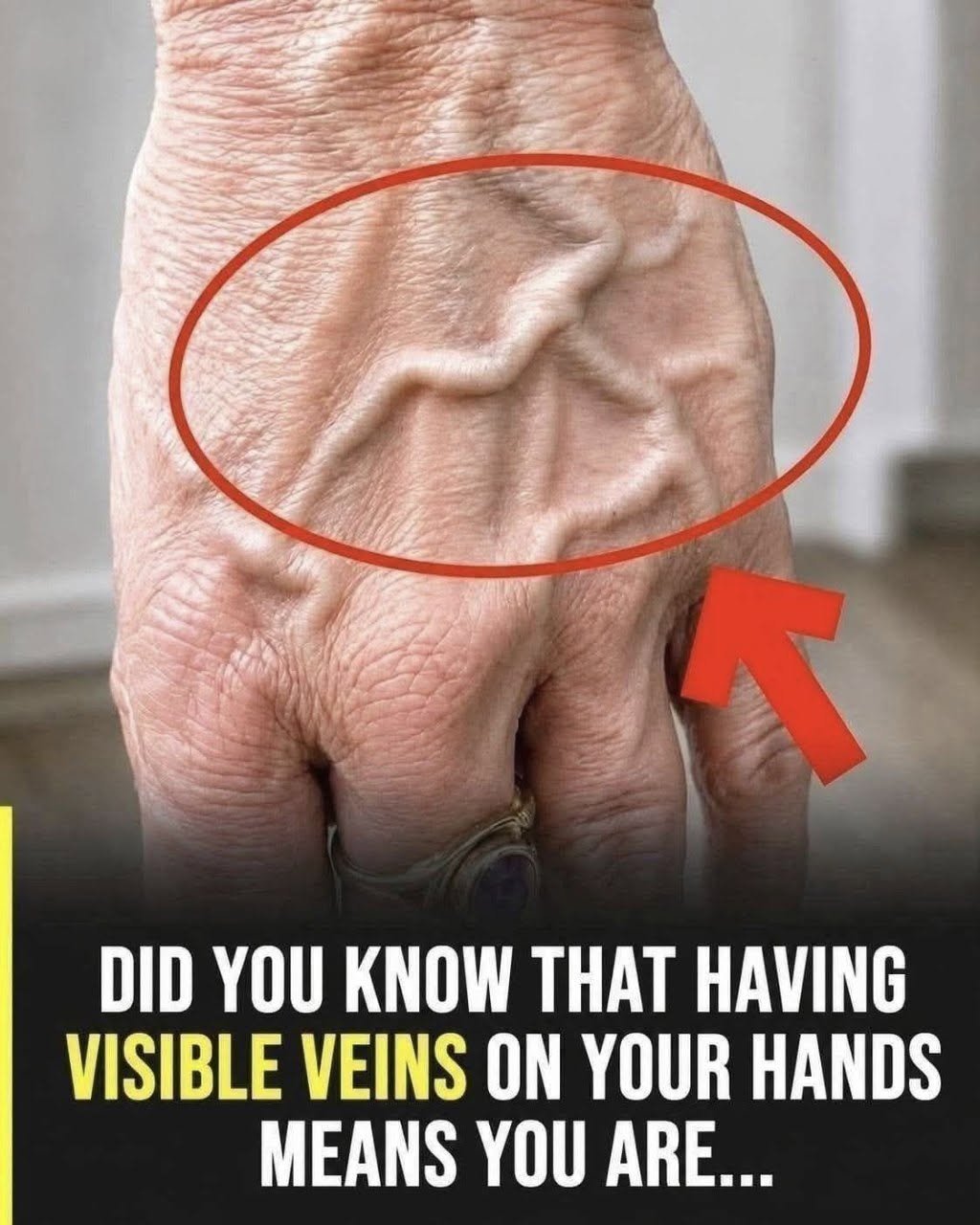
When viral health videos or social media posts tease that “having visible veins means you are…” they are usually setting you up for a dramatic, exaggerated claim. Depending on which corner of the internet you stumble into, visible veins are often falsely blamed on mysterious “toxins,” poor circulation, or an impending medical emergency.
Let’s cut through the internet hype and examine what visible veins actually mean from an anatomical and clinical perspective.
The Clinical Reality: Why Are Veins Visible?
In dermatology and vascular medicine, having visible veins is almost always a normal anatomical variation rather than a sign of a hidden disease. How visible your veins appear depends on several straightforward biological factors:
-
Subcutaneous Fat Thickness:
-
The Mechanism: Fat sits directly beneath the skin, acting as an insulating layer. Individuals with lower body fat percentages or naturally thin skin have less tissue masking the blood vessels running just beneath the surface, making veins naturally more apparent.
-
-
Skin Pigmentation and Translucency:
-
The Mechanism: Fair skin allows light to penetrate slightly deeper and reflect back the blue-green wavelengths of deoxygenated blood in superficial veins, making them stand out much more than they do on darker skin tones.
-
-
Age and Dermal Thinning:
-
The Mechanism: As part of natural dermatological aging, the skin gradually loses collagen, elastin, and subcutaneous fat. This thinning causes veins on the hands, arms, and temples to become much more prominent over time.
-
-
Physical Exertion and Heat:
-
The Mechanism: When you exercise or when ambient temperatures rise, your body increases blood flow to the skin to release heat. Veins dilate (widen) and push closer to the surface, making them temporarily more visible. Similarly, working muscles temporarily press veins outward.
-
When Visible Veins Do Warrant Medical Attention
While normal superficial veins are harmless, certain types of prominent veins indicate underlying vascular issues that doctors evaluate:
-
Varicose Veins: These are enlarged, twisted, and bulging veins—usually appearing in the legs—caused by weakened one-way valves inside the veins. When these valves fail, blood pools downward due to gravity rather than flowing efficiently back to the heart, causing aching, swelling, or heaviness.
-
Spider Veins (Telangiectasias): These are tiny, thread-like red, blue, or purple clusters visible close to the skin’s surface. While often purely cosmetic, they can sometimes be associated with underlying venous insufficiency.
The Bottom Line
If you have always had visible veins, or if they appear more prominent due to low body fat, aging, or warmth, it is simply normal human anatomy. However, if prominent veins are accompanied by persistent leg pain, swelling, cramping, skin discoloration, or ulcers, it is wise to consult a physician or a vascular specialist for an evaluation.
