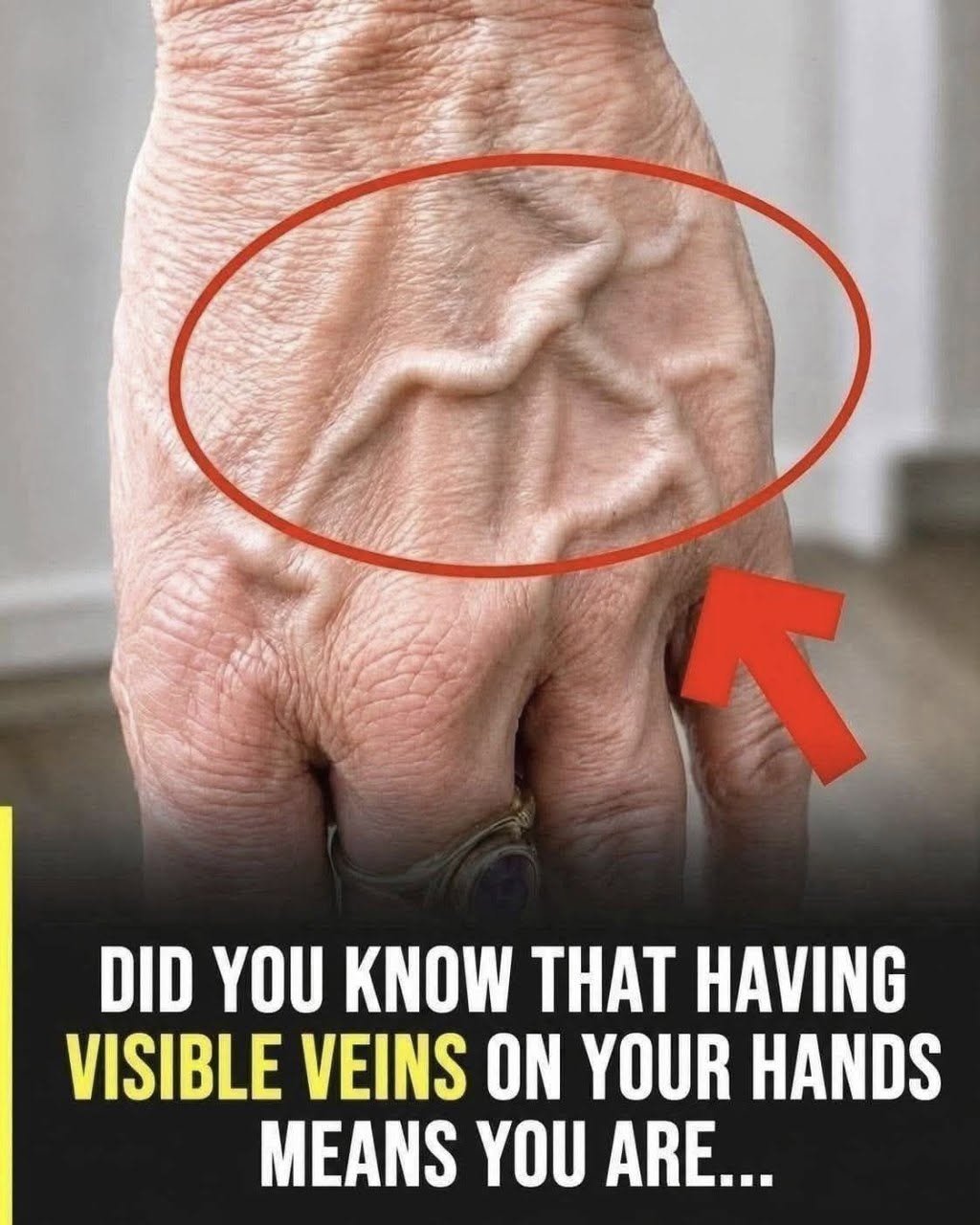
Headlines suggesting that having visible veins means something definitive—such as being uniquely fit, highly athletic, or harboring a hidden health issue—oversimplify a very common physical trait.
Whether your veins stand out depends on a mix of anatomy, biology, and lifestyle factors rather than a single indicator.
Why Veins Become Visible
Visible veins are primarily determined by how close your blood vessels sit to the surface of your skin and how clearly they can be seen through it. Several normal factors drive this:
-
Body Fat Percentage: Subcutaneous fat sits right beneath the skin. When body fat levels are lower, there is less tissue padding between your skin and your veins, making them naturally more prominent. This is why athletes or lean individuals often have visible vascularity, but it is purely structural rather than a direct health score.
-
Skin Tone and Thickness: Thinner, fairer skin allows underlying blood vessels to show through much more easily than thicker or more pigmented skin.
-
Genetics: Just like eye color or height, some people simply inherit thin skin or superficial vein placements that make them naturally more vascular from a young age.
-
Temperature and Hydration: When you are hot, your body dilates blood vessels to release heat, pushing warm blood closer to the skin’s surface and making veins bulge. Conversely, good hydration increases overall blood volume, which can make veins slightly more prominent.
When Visible Veins Point to Medical Concerns
While normal surface veins are harmless, certain types of prominent veins indicate underlying vascular issues that require attention:
-
Varicose Veins: These are enlarged, twisted, and bulging veins—most commonly appearing in the legs—caused by weakened valves inside the veins. When these valves fail, blood pools downward rather than flowing efficiently back to the heart, leading to aching, heaviness, and swelling.
-
Spider Veins: Smaller, damaged capillaries visible near the surface of the skin that often look like thin red or blue webs. While mostly cosmetic, they can sometimes signal underlying venous insufficiency.
Having visible veins is usually just a normal reflection of your genetics, body composition, or temperature. However, if prominence is accompanied by pain, swelling, cramping, or heavy fatigue in your legs, it’s worth discussing with a doctor to check your vein health.
