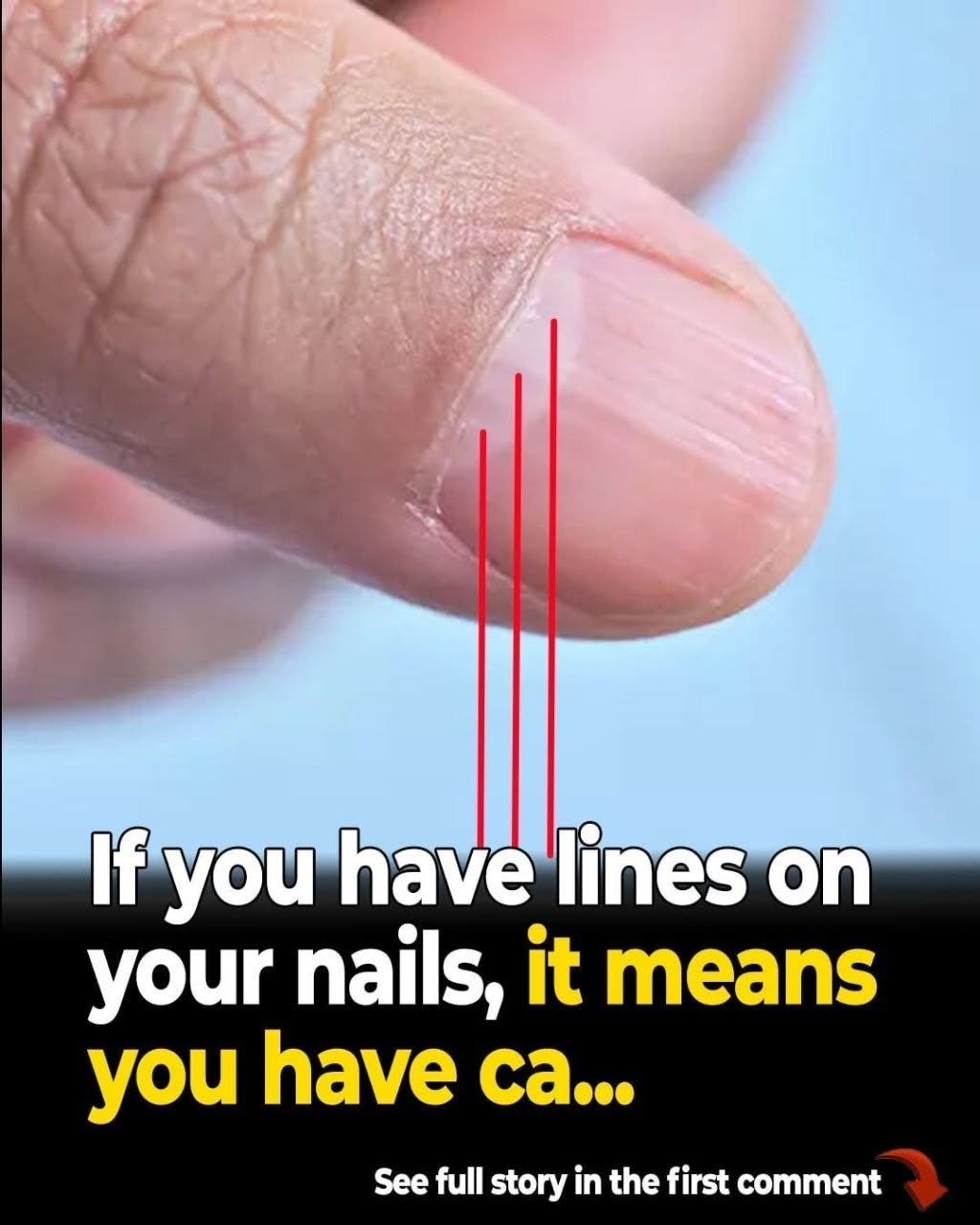
The viral claim that a doctor uncovered a telltale sign in your fingernails to predict life expectancy typically centers on the rate of fingernail growth.
Longevity researchers—such as Harvard Medical School professor Dr. David Sinclair—have highlighted that fingernail growth speed serves as a practical, visible indicator of your biological aging rate versus your chronological age.
The Science Behind Nail Growth & Longevity
-
Cell Turnover Rate: Nails are formed in the matrix under the cuticle, where living cells continuously divide, harden, and push outward. The speed at which your nails grow reflects the rate at which your body is generating new healthy cells and maintaining tissue repair.
-
Age-Related Slowdown: Landmark studies show that human fingernail growth naturally declines by about 0.5% per year starting around age 30.
-
The Longevity Indicator: If your fingernails grow noticeably faster than average for your age group, it suggests high microvascular blood circulation, robust cellular energy, and a slower rate of biological aging. Conversely, a rapid slowdown in nail growth can indicate reduced capillary blood flow, metabolic sluggishness, or cellular senescence.
Other Crucial Nail Signs That Signal Systemic Health
Beyond overall growth speed, specific changes in the structure or color of the nails act as clinical red flags for underlying medical conditions that directly impact life expectancy:
-
Nail Clubbing: The fingertips become enlarged, bulbous, and the nails curve downward around the tips. This is a key clinical sign of long-term hypoxia (low blood oxygen) associated with chronic lung diseases (COPD, lung cancer), cardiovascular conditions, or liver disease.
-
Terry’s Nails: The nail bed appears mostly white with a dark, reddish band at the top edge. This pattern often points to chronic liver cirrhosis, congestive heart failure, or kidney failure.
-
Spoon Nails (Koilonychia): Nails become thin and scoop inward like a spoon. This strongly indicates severe iron-deficiency anemia or hemochromatosis (iron overload disorder).
-
Beau’s Lines: Deep horizontal grooves running across the nail plate. These occur when nail growth temporarily stops due to a major physiological stressor, such as a severe systemic infection, heart attack, or uncontrolled diabetes.
-
Dark Longitudinal Streaks: A sudden brown or black vertical band beneath the nail plate should always be evaluated by a dermatologist, as it can be an early sign of subungual melanoma (a form of skin cancer).
