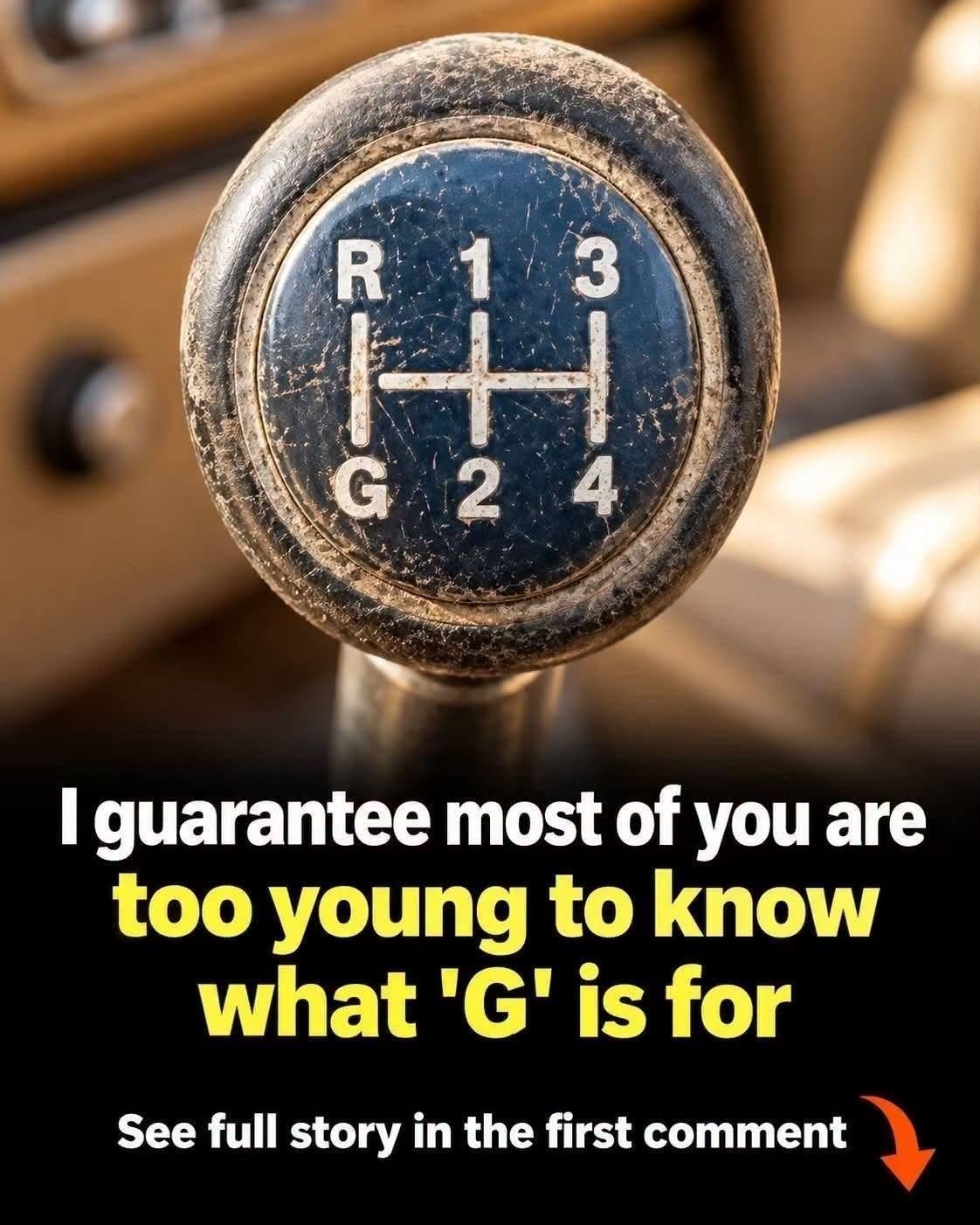
On certain classic or specialty manual gear shifters, seeing a letter “G” sitting alongside the standard 1, 2, 3, and R positions can throw off even experienced drivers.
The Real Meaning Behind the ‘G’
The “G” stands for Gelände, the German word for “terrain” (the same root used in the iconic Mercedes Geländewagen or G-Wagon).
In driver slang, it is often called a “Granny Gear” or “Ground Gear”.
How It Works and Why It Exists
The G gear is an ultra-low ratio crawling gear—effectively acting like a “Gear 0.5” sitting below 1st gear.
-
Maximum Torque & Crawling: It delivers maximum engine torque at extremely low speeds, allowing a vehicle to creep along at a walking pace without stalling.
-
Off-Roading & Heavy Loads: It was designed to help vehicles get moving when stuck in steep, rough, muddy, or snowy terrain, or when towing heavy loads.
-
The Legendary Porsche Trick: One of the most famous uses of the G gear was in the legendary Porsche 959 supercar. Porsche included a G gear for off-road capability in the rally-bred 959. Because European noise emissions tests evaluated engine noise starting in 1st gear, calling the ultra-low gear “G” allowed the car to legally start its test in standard 1st gear at lower engine RPMs, helping it effortlessly pass noise regulations!
Why You Don’t See It Much Today
Modern vehicles rely on electronic traction control, high-torque turbocharged engines, and complex multi-speed automatic or dual-clutch gearboxes that bypass the need for a physical manual crawler gear. Today, seeing a G on a stick shift remains a cool piece of automotive heritage!
