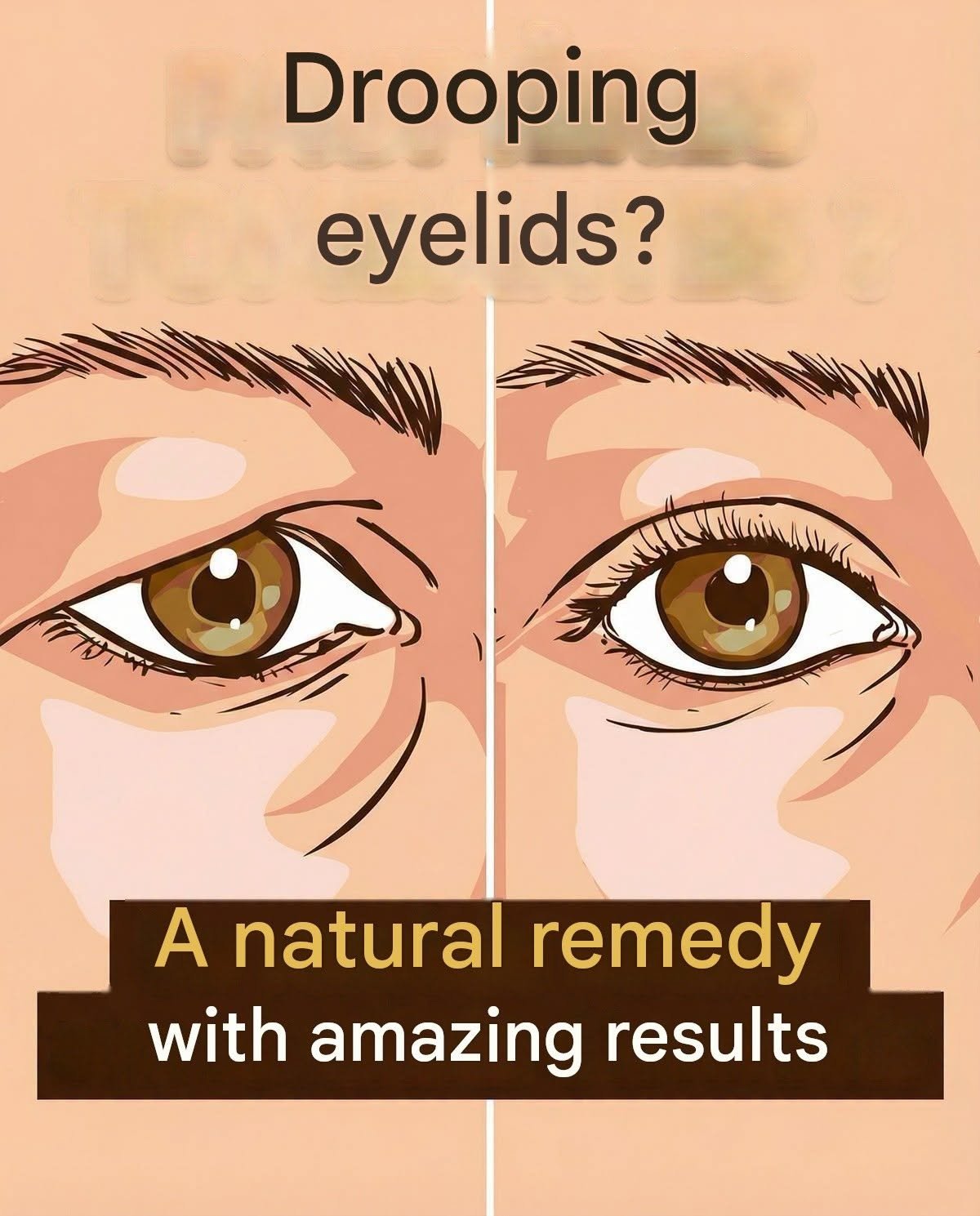
Droopy eyelids—known medically as ptosis (when the upper eyelid margin sags over the eye) or dermatochalasis (when excess skin hangs over the eyelid)—can make you look tired, aged, or even interfere with your field of vision.
While natural techniques can help firm the surrounding skin, improve muscle tone, and reduce puffiness, understanding the underlying cause is crucial for knowing whether home remedies or medical treatments are appropriate.
Natural Ways to Improve Eyelid Appearance
If your droopiness is mild, temporary, or related to skin laxity, fluid retention, or muscle fatigue, these non-invasive approaches can help enhance firmness and open up the eyes:
1. Targeted Facial & Eyelid Exercises
Strengthening the levator palpebrae superioris (the muscle responsible for lifting the eyelid) and the surrounding orbicularis oculi muscle can help build localized muscle tone:
-
The Resistance Lift: Place two fingers under your eyebrow. Gently push your eyebrow upward while simultaneously trying to close your upper eyelid against the resistance. Hold for 5 seconds, repeat 10 to 15 times.
-
Rapid Blinking Routine: Blink rapidly for 30 seconds, then close your eyes tightly for 5 seconds to relax the muscles. Repeat 3 times daily to stimulate circulation and muscle engagement.
-
Eye Rolls: Roll your eyes in a slow clockwise circle, then counterclockwise. This helps engage all extraocular and surrounding orbital muscles.
2. Cold Therapy for Fluid Retention
Excess fluid accumulation in the delicate upper lid tissue accentuates droopiness and heaviness.
-
Cold Compresses: Apply a cold spoon, a gel eye mask, or a clean cloth soaked in icy water to closed eyelids for 5 to 10 minutes every morning.
-
Chilled Green Tea Bags: Steepend, chilled green tea bags contain caffeinated antioxidants and tannins that temporarily constrict blood vessels and drain excess fluid, firming the skin.
3. Hydration & Topical Skincare
-
Peptide & Caffeine Eye Serums: Look for eye creams containing peptides (which encourage collagen synthesis) and caffeine (which tightens skin and reduces swelling).
-
Avoid Heavy Creams on the Upper Lid: Heavy, occlusive creams applied too close to the upper lash line can migrate into the eye, causing irritation, swelling, and added heaviness. Apply creams strictly along the orbital bone.
-
Sun Protection: The skin on the upper eyelid is the thinnest on the body. Daily application of broad-spectrum mineral sunscreen or wearing UV-blocking sunglasses prevents collagen breakdown that worsens skin sag.
4. Posture and Sleep Adjustments
-
Elevate Your Head While Sleeping: Use an extra pillow to prevent blood and fluid from pooling around your eyes overnight.
-
Avoid Eye Rubbing: Repeatedly pulling or rubbing the delicate skin of the upper eyelids stretches out the fine elastin fibers and can even loosen the levator muscle tendon over time.
Causes of Droopy Eyelids
Understanding why your eyelids droop determines whether natural care will work:
| Cause | Description | Will Natural Remedies Help? |
| Aging (Aponeurotic Ptosis) | Gradual stretching of the levator tendon and collagen loss over time. | Mild improvement in appearance; cannot fully reverse stretched tendons. |
| Dermatochalasis | Excess, sagging skin on the upper lid due to reduced skin elasticity. | Helps de-puff, but cannot eliminate structural excess skin. |
| Nerve or Muscle Damage | Conditions affecting the cranial nerves or autoimmune diseases (e.g., Myasthenia Gravis). | No. Requires medical evaluation. |
| Congenital Ptosis | Present at birth due to improper levator muscle development. | No. Usually requires surgical repair. |
| Eye Surgery or Injury | Stretching of the eyelid during cataract or LASIK surgery or physical trauma. | Requires doctor evaluation. |
When to See a Doctor Immediately
While most cases of droopy eyelids develop gradually with age, sudden droopiness can be a warning sign of a serious underlying neurological or vascular condition.
Seek emergency medical attention if your eyelid droop:
-
Appears suddenly over hours or days.
-
Is accompanied by double vision, blurred vision, or pain.
-
Comes with a differently sized pupil (one pupil noticeably larger or smaller than the other—a potential sign of Horner’s syndrome or a brain aneurysm).
-
Is accompanied by facial numbness, weakness in the arm or leg, difficulty speaking, or a severe headache (critical warning signs of a stroke or TIA).
-
Gets noticeably worse as the day progresses or when you are fatigued (a classic sign of Myasthenia Gravis).
-
Prevents you from seeing properly or obstructs your upper field of vision.
Clinical Medical Treatments
If natural remedies are insufficient or if the eyelid obstructs your line of sight, medical treatments offer permanent or significant correction:
-
Prescription Eye Drops (Oxymetazoline): For mild acquired ptosis, daily prescription drops can temporarily stimulate the Müller’s muscle to lift the eyelid by 1 to 2 millimeters.
-
Blepharoplasty (Eyelid Surgery): A standard, highly effective procedure where a surgeon removes excess skin, fat, and muscle from the upper eyelid.
-
Ptosis Repair: A surgical procedure that tightens or reattaches the stretched levator muscle to restore the eyelid to its proper height.
