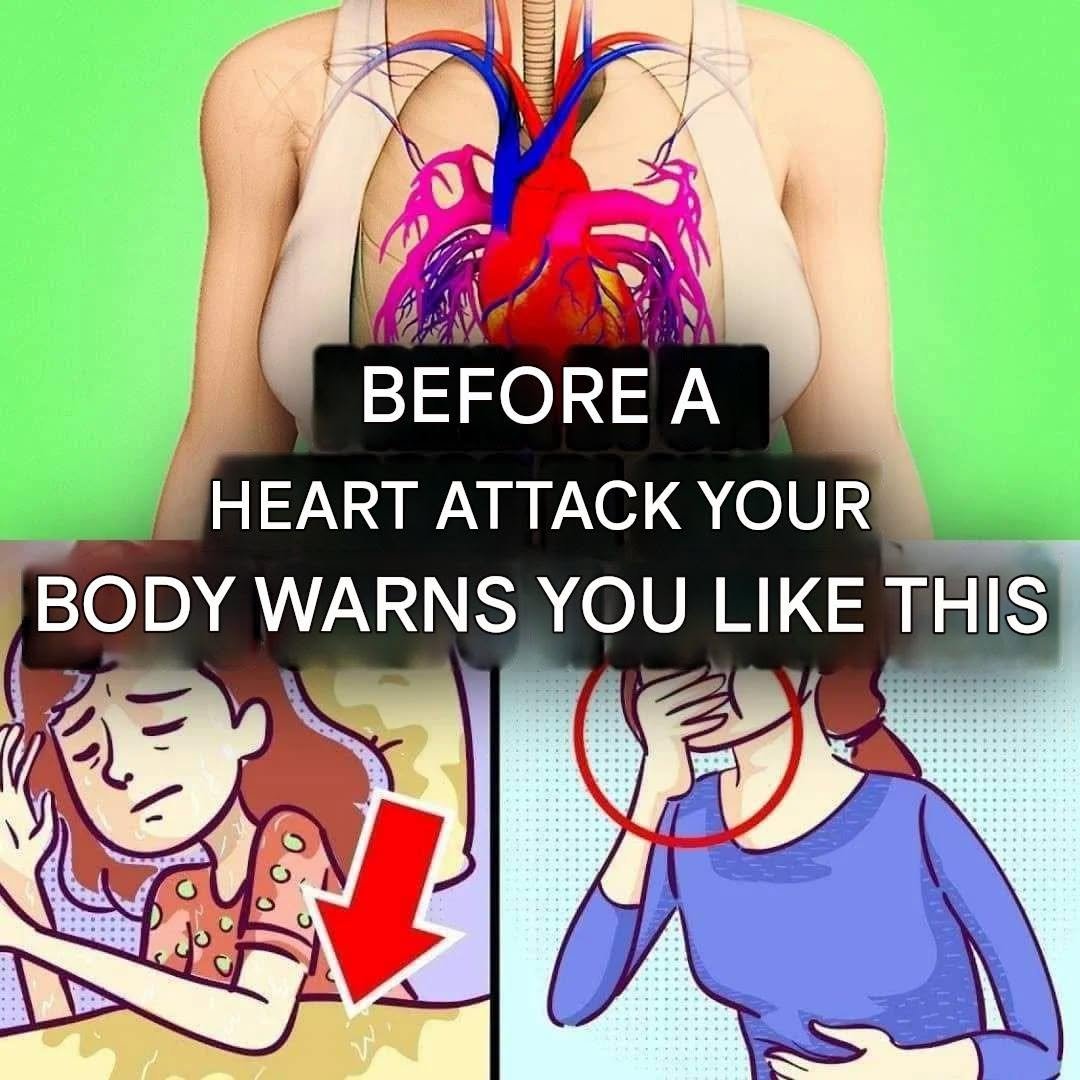
A heart attack occurs when blood flow to a part of the heart muscle is severely reduced or blocked. While chest pain is the most famous indicator, the body often broadcasts several other critical red flags.
Recognizing these signals early can mean the difference between minor heart muscle stress and permanent damage—or even life and death.
Here are 8 critical heart attack symptoms you should never ignore:
1. Crushing Chest Pain, Pressure, or Tightness
-
What it feels like: A heavy, squeezing, burning, or crushing sensation in the center or left side of the chest that lasts more than a few minutes or goes away and comes back. It is often described as feeling like an “elephant sitting on the chest.”
-
Why it happens: This is the classic signature of myocardial ischemia—a section of the heart muscle being starved of oxygen due to a blocked coronary artery.
2. Pain or Discomfort Radiating to Other Areas
-
What it feels like: Pain, aching, or numbness that originates in the chest and travels outward to one or both arms (especially the left arm), the back, neck, jaw, or stomach.
-
Why it happens: Pain signals from the heart travel along nerve pathways that intersect with nerves supplying the upper body, causing the brain to perceive the pain in adjacent areas (referred pain).
3. Unexplained Shortness of Breath (Dyspnea)
-
What it feels like: Struggling to catch your breath while resting or performing minimal activity, often accompanied by chest discomfort or occurring entirely on its own.
-
Why it happens: When the heart’s pumping efficiency drops sharply due to an acute blockage, pressure backs up into the blood vessels of the lungs, making breathing difficult.
4. Sudden Breaking Out in a Cold Sweat
-
What it feels like: Drenching in a sudden, cold, clammy sweat without any physical exertion or high temperatures surrounding you.
-
Why it happens: The acute distress of a starving heart triggers an extreme surge of adrenaline (the sympathetic “fight-or-flight” response), causing your skin’s sweat glands to overfire while blood vessels contract.
5. Severe Lightheadedness, Dizziness, or Fainting (Syncope)
-
What it feels like: Feeling suddenly woozy, unbalanced, extremely weak, or passing out unexpectedly.
-
Why it happens: A compromised heart cannot pump enough blood up to the brain, causing a sharp, temporary drop in cerebral blood pressure and oxygen supply.
6. Sudden, Extreme Fatigue
-
What it feels like: An overwhelming, profound exhaustion that comes out of nowhere, making even basic actions like picking up a cup or walking across a room feel impossibly heavy.
-
Why it happens: When a portion of the heart muscle stops contributing to the pump, the entire cardiovascular system works at double effort to keep essential organs functioning, sapping the body’s energy.
7. Unexplained Nausea, Indigestion, or Upper Abdominal Discomfort
-
What it feels like: A deep, burning ache in the pit of the stomach, severe heartburn, or an urge to vomit that isn’t tied to anything you ate.
-
Why it happens: The lower wall of the heart sits directly above the diaphragm, near the stomach. Inflammation or ischemia in this area can irritate nearby nerves, mimicking acute digestive distress or heavy acid reflux.
8. Sudden Feelings of Doom or Severe Anxiety
-
What it feels like: A sudden, overwhelming sense of panic, terror, or an unexplainable feeling that “something is deeply wrong,” often mistaken for a panic attack.
-
Why it happens: The nervous system registers systemic cardiovascular failure before the conscious mind can fully process it, unleashing massive stress hormones that induce psychological panic.
Critical Emergency Notice
Heart attack symptoms don’t always look like the dramatic movie scenes, especially in women, elderly individuals, and people with diabetes, who are far more likely to experience “atypical” symptoms like isolated shortness of breath, back/jaw pain, or extreme fatigue without severe chest pain.
If you suspect you or someone near you is experiencing a heart attack:
-
Call emergency services (like 911) immediately. Do not attempt to drive yourself to the hospital.
-
Rest in a comfortable sitting position to reduce strain on the heart while waiting for medical personnel.
