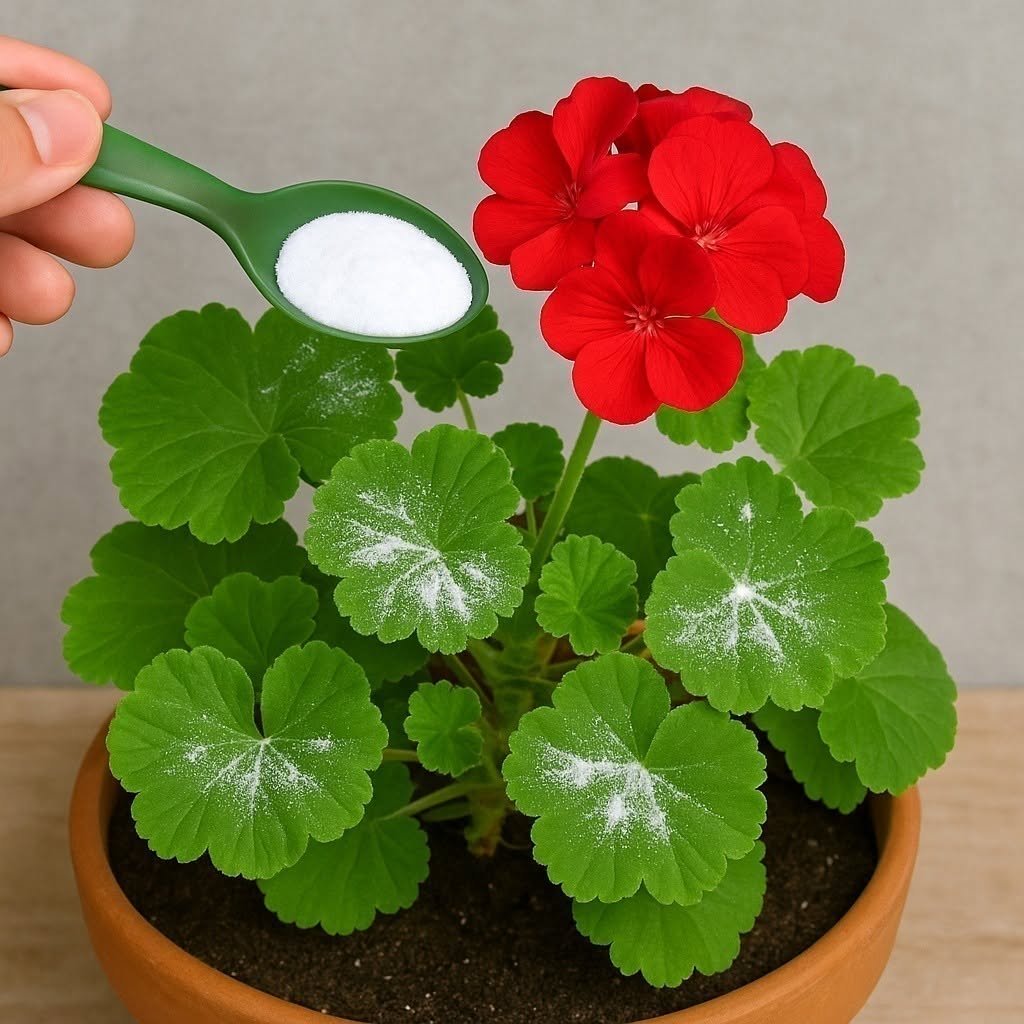
Viral gardening posts and social media reels frequently feature sensationalized claims like “water geraniums like this for endless flowers,” often promoting unusual hacks like pouring coffee grounds, milk, or baking soda mixtures over the soil to guarantee continuous blooming.
In horticultural science, geraniums (Pelargonium) are resilient, drought-tolerant perennials whose flowering is governed by sunlight, soil moisture dynamics, and root physiology, rather than secret home mixtures.
Here is an objective, science-based breakdown of how geranium watering actually works, why incorrect watering destroys blooms, and how to keep them flowering continuously:
The Science of Watering Geraniums Correctly
Unlike high-moisture tropical plants, geraniums are adapted to drier conditions. Their thick, semi-succulent stems store water, making them far more sensitive to overwatering than underwatering.
1. The “Soak and Dry” Method
-
The Mechanism: Geranium roots require a balance of water and oxygen in the soil matrix. Constant moisture suffocates the fine root hairs, leading to anaerobic conditions and fungal root rot (Pythium spp.).
-
The Right Way: Water the plant thoroughly until excess water drains out of the bottom of the pot. Then, allow the top 1 to 2 inches of soil to dry out completely before watering again.
-
The Potting Test: Poke your finger into the top two inches of soil. If it feels cool and damp, hold off. If it feels completely dry, it is time to water.
2. Water at the Base, Never on the Foliage
-
The Mechanism: Geranium leaves are covered in delicate trichomes (tiny hairs) that trap droplets of water. Wet leaves combined with high humidity create the perfect breeding ground for fungal pathogens like Botrytis blight (gray mold) and bacterial leaf spot (Xanthomonas).
-
The Right Way: Always pour water directly onto the soil at the base of the plant using a narrow-spout watering can, avoiding the leaves and blooms.
3. Drainage is Non-Negotiable
-
The Mechanism: Standing water in saucer trays or pots without drainage holes causes root decay. When roots rot, the plant loses its ability to absorb nutrients, causing flower buds to drop prematurely (bud blast) and leaves to turn yellow.
-
The Right Way: Always use pots with bottom drainage holes and empty decorative saucers 20 minutes after watering.
The Real Triggers for Maximum Blooms
While proper watering keeps the plant healthy, watering alone will not produce massive blooms if other key environmental factors are missing:
-
Full Sun Exposure: Geraniums require at least 6 to 8 hours of direct sunlight daily to generate the energy necessary for flower production. Inadequate light results in leggy stems and zero flower buds.
-
Deadheading (Removing Faded Flowers): Once a flower cluster starts to fade, the plant diverts its energy toward producing seeds. Snapping or trimming off spent bloom stalks right at the base signals the plant to continuously generate new flower spikes.
-
High-Phosphorus Nutrition: During the active growing season (spring through autumn), feed geraniums every 2 to 3 weeks with a balanced, water-soluble fertilizer higher in phosphorus (e.g., N-P-K ratios like 10-20-10 or 15-30-15). Excess nitrogen encourages lush green leaves at the expense of blooms.
