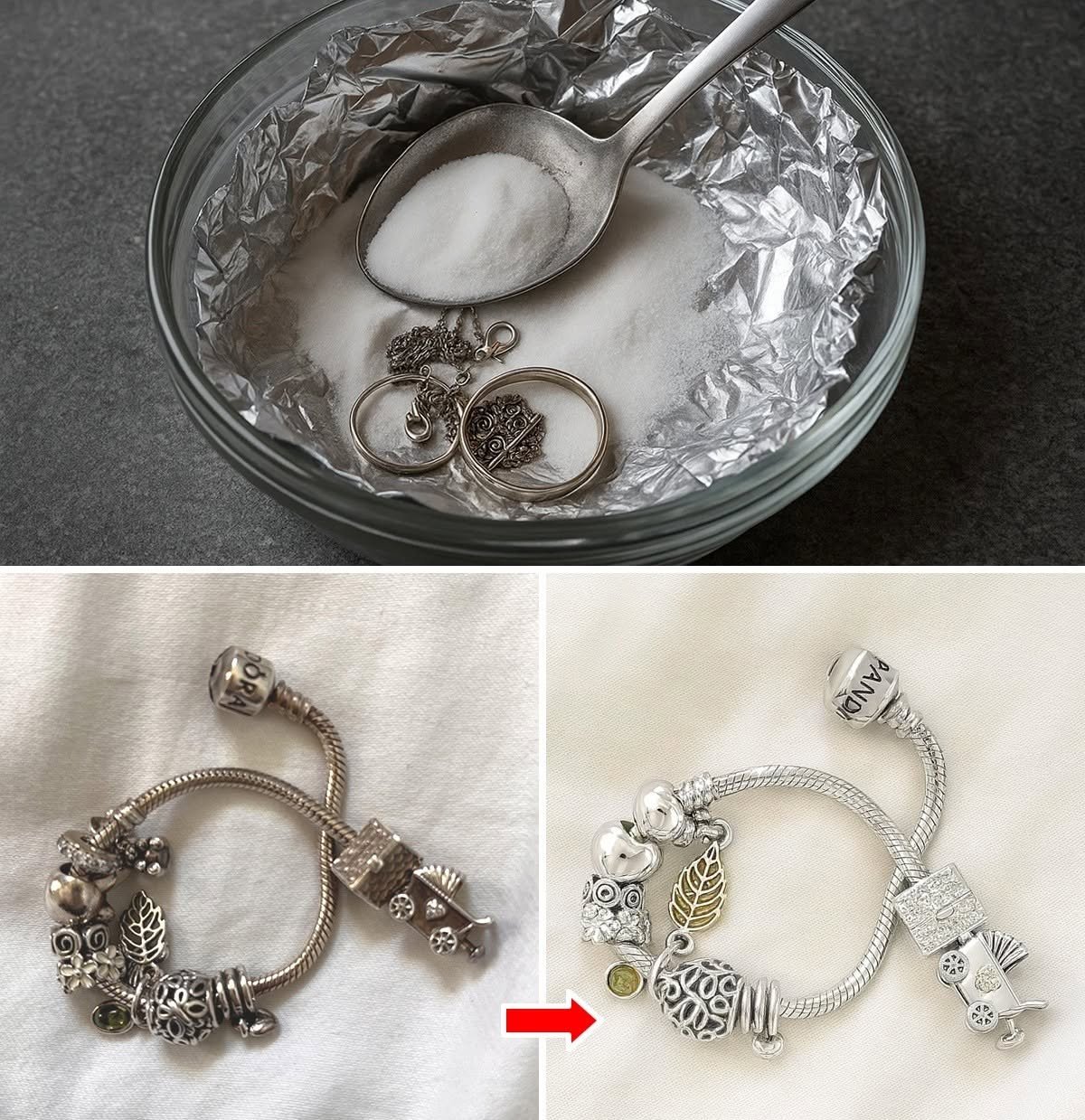
Silver blackens due to tarnish—a chemical reaction between silver and sulfur compounds in the air, creating a thin layer of silver sulfide ($\text{Ag}_2\text{S}$).
Rather than rubbing away the metal with harsh abrasives, the most effective methods reverse this chemical reaction or dissolve the tarnish safely at home.
Method 1: The Aluminum Foil Electrolysis Dip (Best for Intricate Silver)
This method uses an electrochemical reaction to transfer the tarnish directly off the silver and onto a sheet of aluminum foil without scrubbing.
Materials Needed
-
Glass or ceramic baking dish
-
Aluminum foil
-
1 tablespoon baking soda
-
1 tablespoon table salt
-
Boiling water
Warning: Do not use this method on silver items with embedded gemstones, pearls, or intentional antique patina, as the dip can loosen delicate glues, damage soft stones, or strip intentional decorative oxidation.
Method 2: Baking Soda Paste (Best for Heavy Tarnish & Smooth Items)
For heavily blackened silver or pieces too large to submerge, a gentle paste breaks down stubborn oxidation.
-
Make the Paste: Mix 3 parts baking soda to 1 part water until it forms a thick paste.
-
Apply Gently: Use a soft damp microfiber cloth (or a soft-bristled toothbrush for tight crevices) to apply the paste to the blackened areas.
-
Work in Straight Lines: Rub gently in straight, back-and-forth motions—avoid circular scrubbing, which can create micro-scratches on polished silver.
-
Rinse & Dry: Rinse off all residual paste under warm running water and dry immediately with a clean, lint-free cloth.
Cleaning Methods Comparison
| Cleaning Method | Safe For | Not Recommended For | Primary Advantage |
| Aluminum & Soda Dip | Plain sterling, cutlery, intricate chain link jewelry | Gemstones, pearls, antique/oxidized silver details | Zero scrubbing required; cleans deep crevices |
| Baking Soda Paste | Flatware, smooth trays, heavy tarnish zones | Plated silver (can strip thin silver layers over time) | Deep cleaning power for stubborn buildup |
| Gentle Soap & Warm Water | Daily maintenance, pearls, gemstone-set silver | Heavily blackened or thick tarnish layers | Safest non-reactive option for delicate items |
How to Prevent Silver from Turning Black
-
Store with Silica Gel or Chalk: Keep silver items in an airtight pouch alongside a piece of dry chalk or a silica gel packet to absorb moisture and airborne sulfur.
-
Wear It Often: Natural oils in your skin help prevent tarnish from forming on silver jewelry.
-
Avoid Common Triggers: Put on silver jewelry after applying perfume, hairspray, and lotions, and remove it before swimming in chlorinated pools or hot springs.
