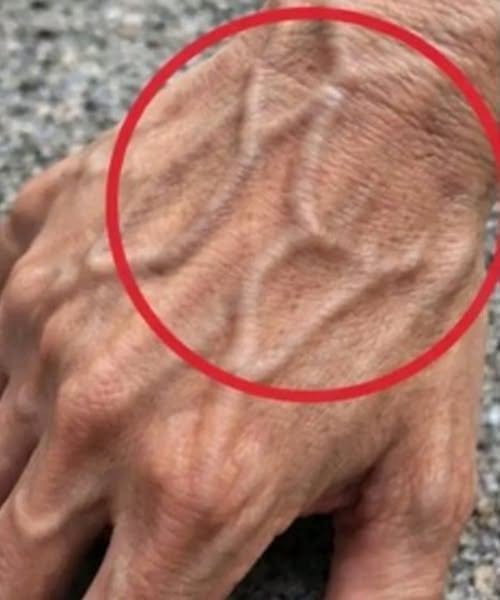
When viral posts claim that having visible veins means you possess a specific superpower, a hidden disease, or a sign of superior fitness, they usually oversimplify a very common and normal physiological trait.
If you have visible veins, it most frequently means your skin is relatively thin, your body fat percentage is low, or your anatomy naturally places veins closer to the surface. However, visibility can also point to age-related changes or underlying vascular conditions.
Here is what your body is actually telling you when your veins are clearly visible:
1. Low Body Fat and High Muscle Mass
-
The Reality: For fitness enthusiasts, athletes, or lean individuals, visible veins (vascularity) are entirely normal. When you have a lower layer of subcutaneous fat beneath the skin, veins are pushed closer to the surface and become easily seen, especially during or after exercise when blood flow increases.
2. Fair or Thin Skin
-
The Reality: Skin thickness is largely genetic and changes with age. Fair, translucent skin naturally reveals the blue-green network of veins underneath far more easily than darker or thicker skin tones. Furthermore, as we age, we naturally lose collagen, elastin, and subcutaneous fat, making veins on the hands, arms, and temples much more prominent.
3. Dehydration or Heat Exposure
-
The Reality: When you are dehydrated, your blood volume drops slightly, and your body attempts to cool itself by pushing blood closer to the skin’s surface, which can temporarily make veins look more prominent. Similarly, hot weather causes blood vessels to dilate (expand), making them more visible.
4. Varicose Veins or Venous Insufficiency
-
The Reality: If visible veins appear bulging, twisted, swollen, or dark purple—particularly in the legs and feet—they may be varicose veins. This occurs when the tiny one-way valves inside your veins weaken, causing blood to pool rather than flow smoothly back up to the heart. Factors like prolonged standing, pregnancy, genetics, and age contribute to this.
The Bottom Line: For most people, visible veins are simply a normal reflection of genetics, age, and body composition. However, if visible veins are accompanied by heavy aching legs, swelling, skin discoloration, or pain, it is worth consulting a doctor to check for underlying venous health.
