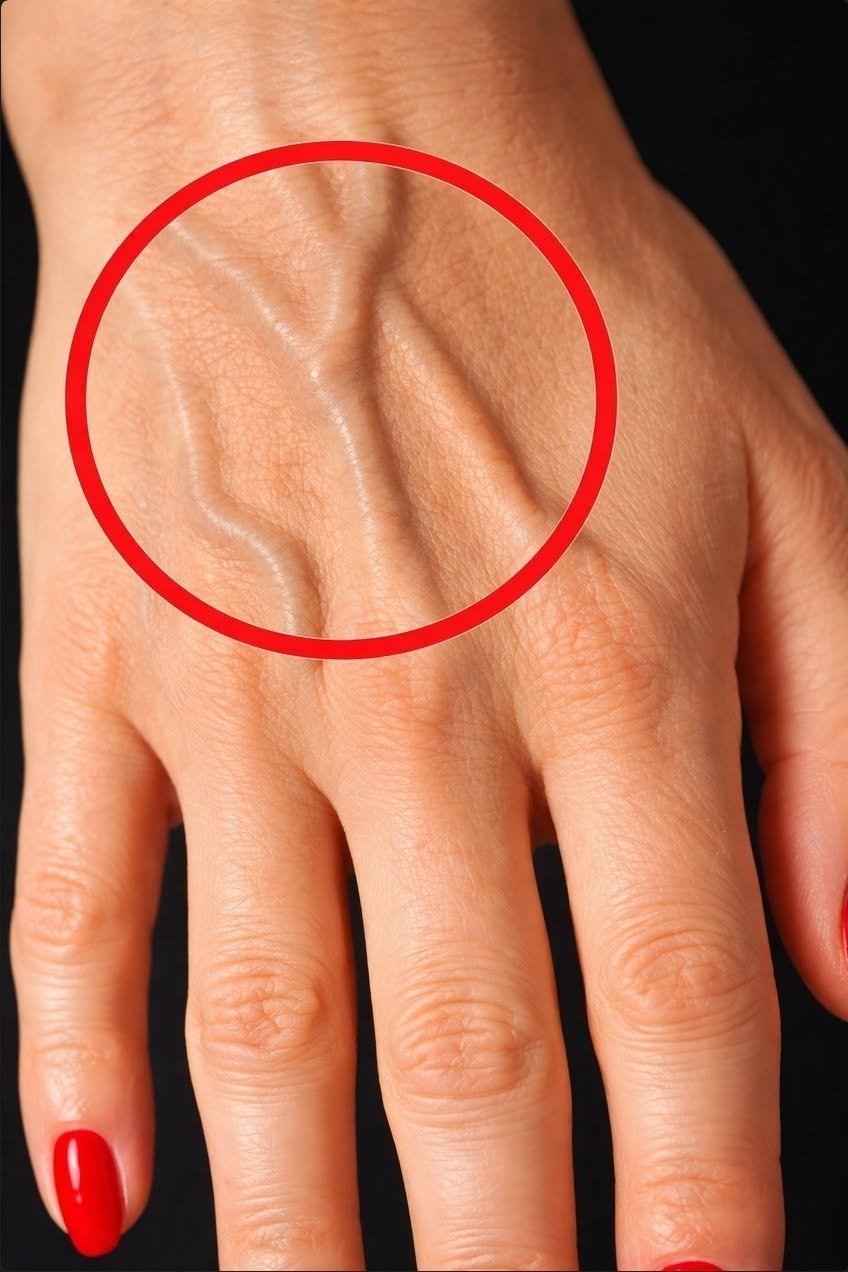
Viral health videos and eye-catching social media posts often use bold headlines like “If your veins are visible, it means you are…” followed by dramatic claims about severe health conditions, failing blood vessels, or toxic blood buildup.
In clinical anatomy and vascular health, having visible veins is usually a completely normal structural feature rather than a sign of disease.
Here is an objective, science-based look at what visible veins actually indicate about your body:
What Visible Veins Typically Mean
For the vast majority of people, clear or prominent veins are determined by normal anatomy, lifestyle, and physiological factors:
1. Low Body Fat Percentage
-
The Mechanism: Subcutaneous fat sits directly beneath the skin and hides deeper tissues. Individuals with lower body fat percentages—such as athletes, runners, or naturally lean individuals—have less fat covering their superficial veins, making them stand out sharply.
2. Thinner or Lighter Skin Tone
-
The Mechanism: Skin thickness varies naturally from person to person. Fair skin allows short-wavelength blue light to scatter off the skin and reflect back to your eyes, making the blood vessels beneath appear bright blue or green.
3. High Physical Fitness and Vascularity
-
The Mechanism: Exercise increases overall blood circulation and drives muscle hypertrophy (growth). During or after a workout, blood pressure within the capillaries rises, forcing fluid into surrounding muscle tissues and making the muscles swell. This pushes superficial veins outward against the skin—a harmless phenomenon known as vascularity.
4. Natural Aging
-
The Mechanism: As we age past 50 and 60, the body produces less collagen and elastin, causing the dermal layer of the skin to thin. Additionally, the natural fat pads on the backs of the hands, forearms, and feet diminish over time, allowing healthy, normal veins to show through.
5. Warm Weather or Heat Exposure
-
The Mechanism: When exposed to heat, your body opens up (dilates) blood vessels near the skin surface to release excess heat and keep your core body temperature cool (vasodilation). This temporarily enlarges your veins and makes them far more prominent.
When Visible Veins DO Indicate an Underlying Issue
While visible flat or slightly raised blue/green veins are normal, certain structural changes in your veins warrant attention:
| Feature | Healthy Visible Veins | Potential Vascular Issue (e.g., Varicose Veins or CVI) |
| Texture | Smooth, flat, or straight soft lines | Bulging, twisted, ropey, or cord-like clusters |
| Sensation | Painless, normal temperature | Throbbing, aching, heavy legs, or warm/tender to touch |
| Skin Changes | Normal skin tone and texture | Darkening/browning near ankles, dry/itchy skin, or ulcers |
| Swelling | None | Significant swelling in one or both lower legs/ankles |
The Medical Takeaway
If your veins are visible, it usually simply means you have lean body composition, fair or mature skin, high vascular fitness, or are reacting to warm weather. Unless your veins are accompanied by localized swelling, skin discoloration, or persistent leg aching, they are a normal and healthy part of your circulatory system.
