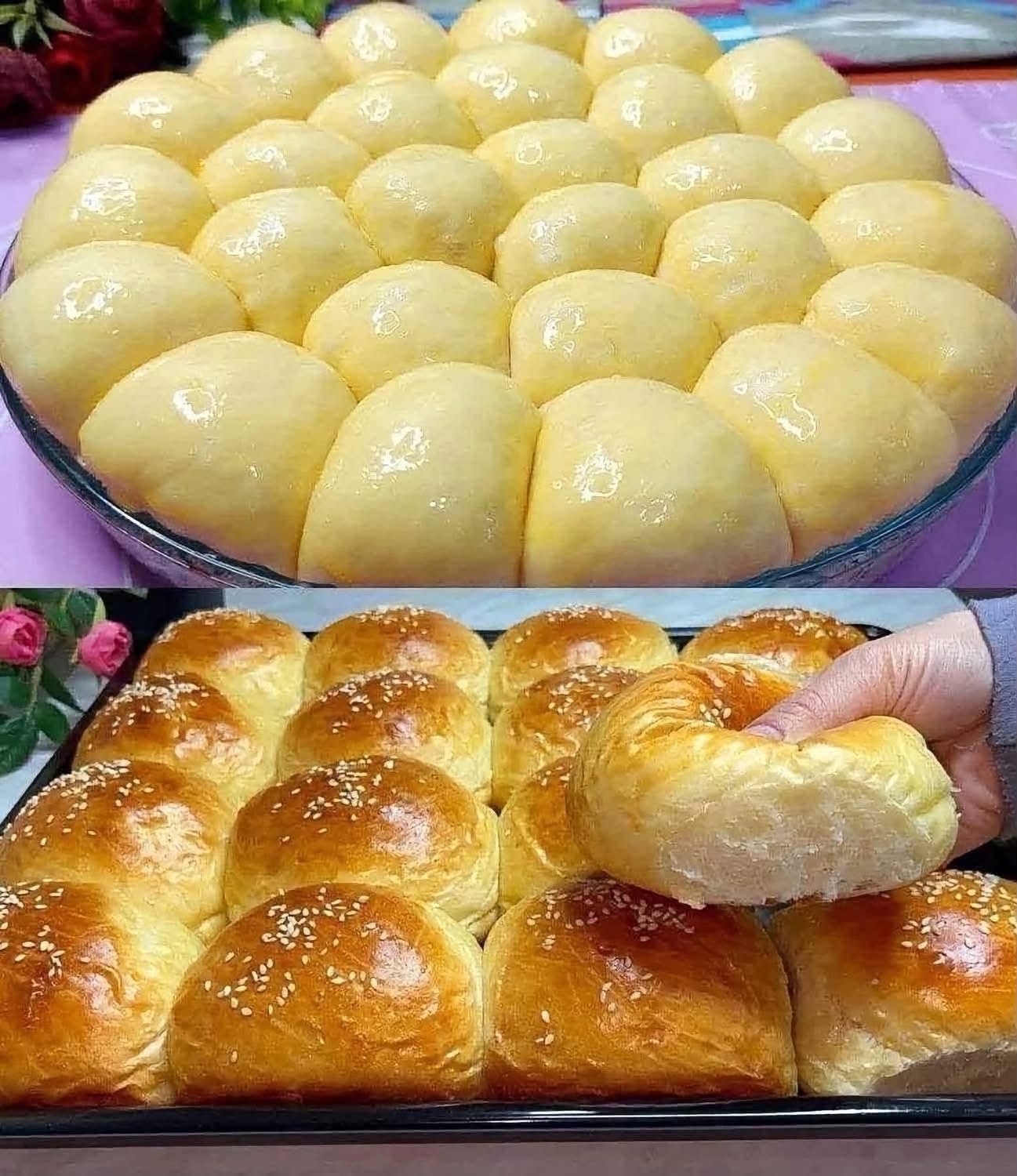
When home bakers and culinary enthusiasts look at a golden pan of “Milk Brioche Rolls,” they are drawn to the ultimate standard of bread-baking luxury: pillows of golden dough that are feather-light, buttery, and stringably soft.
From a baking science and culinary perspective, achieving that iconic cotton-like crumb and rich flavor profile isn’t a matter of luck; it relies on specific biochemical techniques—most notably the Tangzhong method and high-fat enrichment.
The Culinary Science Behind Perfect Milk Brioche
How do professional bakers transform basic flour, milk, and butter into bread that melts in your mouth?
-
The Tangzhong (Water Roux) Method: Borrowed from Asian baking traditions, this technique involves cooking a small portion of the flour, milk, and water together into a thick paste before mixing it into the main dough. By pre-gelatinizing the starches, the flour can hold significantly more moisture. This traps steam inside the dough during baking, creating an exceptionally soft, pillowy crumb that stays fresh days longer without artificial preservatives.
-
High-Fat Enrichment: Traditional brioche uses high percentages of butter and eggs. Fat molecules coat the gluten strands, shortening them and preventing the dough from becoming chewy. The result is a tender, cake-like crumb structure infused with rich dairy fats.
-
The Role of Whole Milk and Yeast: Whole milk provides natural lactose and milk fats that contribute to browning (via the Maillard reaction) and a tender crust, while active yeast produces the carbon dioxide bubbles trapped by the reinforced gluten network.
A Chef-Crafted, Foolproof Recipe Blueprint
Here is a step-by-step recipe for making bakery-quality Milk Brioche Rolls at home using the Tangzhong method for maximum softness.
Ingredients:
-
The Tangzhong Starter: 3 tablespoons bread flour, ¼ cup whole milk, ¼ cup water.
-
The Dough Base: 3 cups (approx. 360g) bread flour (high protein helps structure the butter), ¼ cup granulated sugar, 2 ¼ tsp (1 packet) active dry yeast, 1 ½ tsp salt.
-
The Enrichment (Wet Ingredients): ⅓ cup warm whole milk, 2 large eggs (room temperature), ⅓ cup unsalted butter (softened to room temperature).
-
The Egg Wash: 1 egg beaten with 1 tablespoon of milk for brushing the tops before baking.
Step-by-Step Method:
-
Make the Tangzhong: In a small saucepan, whisk the starter ingredients (3 tbsp flour, ¼ cup milk, ¼ cup water) over medium-low heat until it thickens into a smooth, pudding-like paste (about 3-5 minutes). Remove from heat and let cool to lukewarm.
-
Mix the Dough: In a large bowl (or stand mixer fitted with the dough hook), combine the bread flour, sugar, yeast, and salt. Add the cooled Tangzhong, warm milk, and eggs. Mix on low speed until a shaggy dough forms.
-
Incorporate the Butter: With the mixer running, add the softened butter one tablespoon at a time, waiting until each piece is fully absorbed before adding the next. Knead for 10–15 minutes until the dough is smooth, elastic, and passes the “windowpane test.”
-
First Rise: Shape the dough into a ball, place it in a greased bowl, cover, and let rise in a warm spot for 1.5 to 2 hours, or until doubled in size.
-
Shape and Second Rise: Punch down the dough and divide it into 12 equal pieces (approx. 70g each). Roll into tight balls and arrange them in a greased 9×13-inch baking pan. Cover and let rise for 45–60 minutes until puffy.
-
Bake: Preheat your oven to 350°F (175°C). Brush the rolls gently with the egg wash. Bake for 20–25 minutes until golden brown on top. Brush with melted butter immediately upon coming out of the oven for a glossy shine.
Evidence-Based Culinary Tips
-
Use Bread Flour: While all-purpose flour works in a pinch, high-protein bread flour is strongly recommended here. It provides the necessary gluten structure to support the heavy amounts of butter and sugar without collapsing.
-
Pairing and Storage: These rolls are naturally rich in carbohydrates and fats. Pair them with a lean protein soup or fresh green salad to balance your meal, and store leftovers in an airtight container to maintain their tender crumb for up to 3 days.
