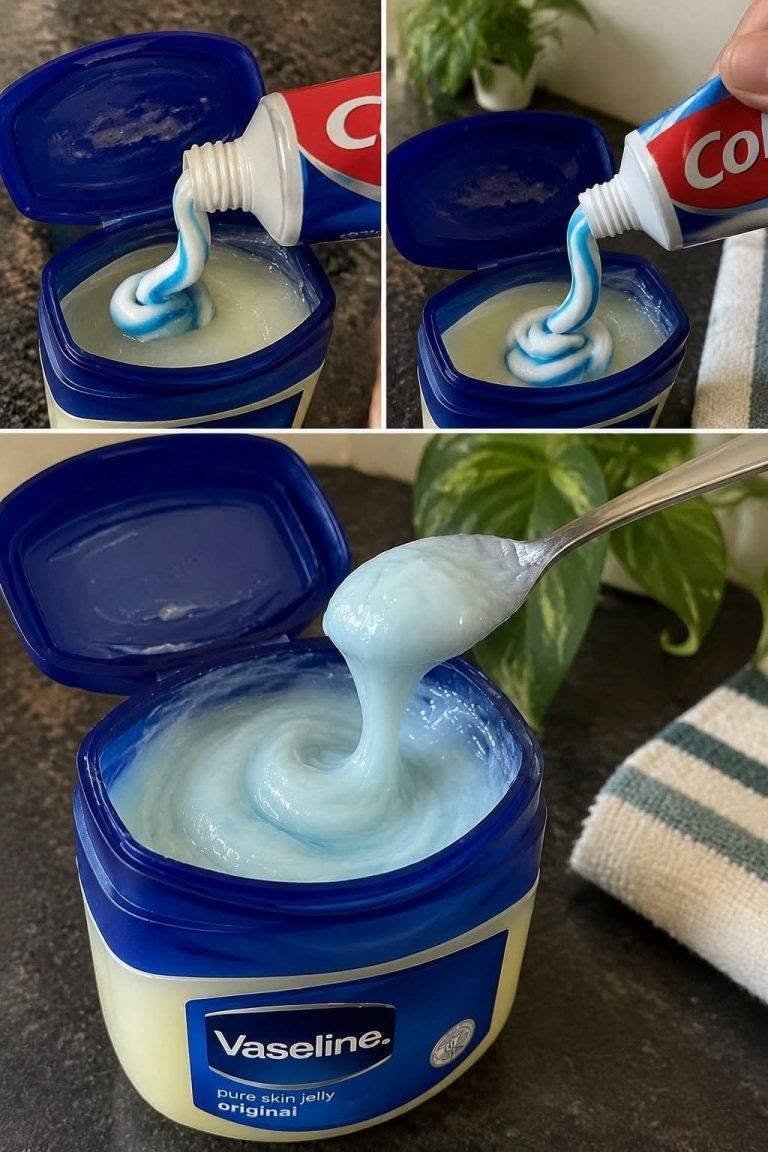
Viral beauty hacks claiming that mixing toothpaste and Vaseline creates a miraculous, overnight solution for clear skin rely on internet hype rather than dermatology.
While combining the two might create a temporary, tingly sensation on your skin, it is neither a safe nor clinically effective skincare routine. In fact, mixing these household products often causes more skin damage than good.
Why the “Toothpaste and Vaseline” Hack Fails
-
Toothpaste is Formulated for Enamel, Not Skin: Toothpaste contains abrasive ingredients like baking soda, hydrogen peroxide, synthetic detergents (such as SLS), essential oils, and alcohol. These ingredients are designed to scour hard teeth—not delicate facial skin. Applying them directly to your face frequently leads to contact dermatitis, severe dryness, redness, and chemical irritation.
-
Vaseline Locks in Irritants: Petroleum jelly (Vaseline) is an occlusive barrier, meaning it seals whatever is underneath it tightly against your skin. If you mix harsh chemicals from toothpaste into it, you are essentially trapping those irritants against your skin for hours, significantly increasing your risk of an inflammatory reaction or a mild chemical burn.
-
The “Pimple Drying” Fallacy: Toothpaste is often recommended as a DIY spot treatment because alcohol and baking soda dry out surface moisture. However, drying out the surface of a blemish doesn’t cure acne; it damages your skin barrier, triggers inflammation, and often leaves behind stubborn dark spots (post-inflammatory hyperpigmentation).
Evidence-Based Alternatives That Actually Work
Instead of mixing random household substances, targeted, dermatologically tested ingredients address specific skin concerns safely:
-
For Blemishes and Breakouts: Use spot treatments containing salicylic acid to clear out pores or benzoyl peroxide to target acne-causing bacteria without harsh abrasives.
-
For Dryness and Barrier Repair: Use pure petroleum jelly on its own to lock in moisture on dry hands, lips, or cracked heels—completely free of the chemical additives found in oral hygiene products.
-
For Fine Lines and Texture: Incorporate clinically proven ingredients like retinoids or alpha-hydroxy acids (AHAs) into a consistent, gentle skincare routine.
