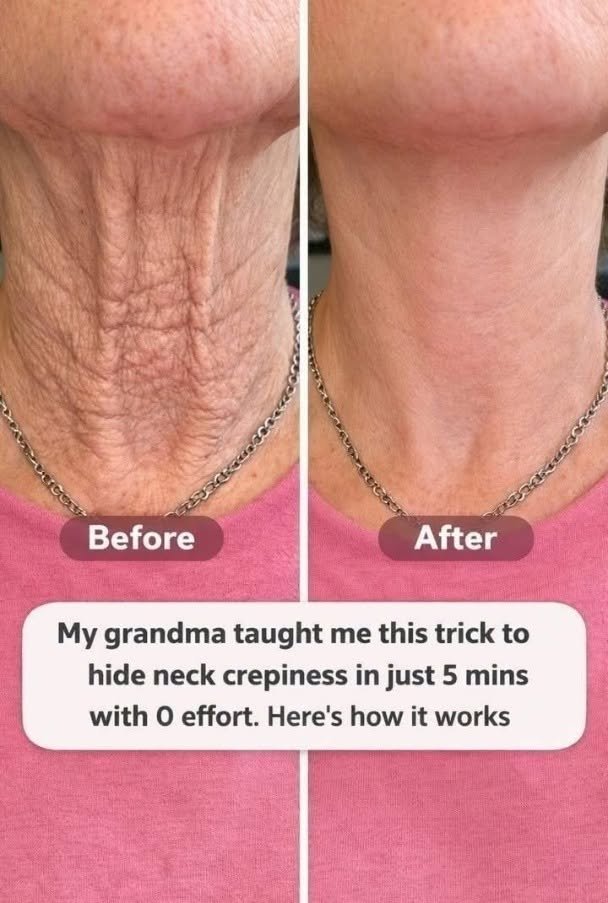
Sensational beauty clickbait loves catchy, miraculous transformation hooks like “My grandma taught me this trick to hide neck crepiness in just 5 mins with 0 effort. Here’s how it works.” These headlines are engineered to prey on normal insecurities about aging skin, usually leading to a pitch for an expensive, unproven firming cream or a viral tape trick.
Dermatologists, plastic surgeons, and skin health experts look at neck aging through an anatomical and physiological lens. The reality is that while no 5-minute trick can permanently alter skin structure, understanding why neck skin changes helps you focus on what actually works.
Why Does Neck Crepiness Happen?
“Crepey” skin refers to skin that becomes thin, finely wrinkled, and delicate, resembling loose crepe paper. The neck is particularly prone to this for several anatomical reasons:
-
Thinner Skin: The skin on the neck and chest is naturally thinner and has fewer oil glands than the skin on your face, making it much more vulnerable to dryness and environmental damage.
-
Loss of Collagen and Elastin: As we age, our bodies naturally slow down the production of collagen and elastin—the structural proteins that keep skin firm, bouncy, and resilient.
-
Cumulative UV Exposure: Most people diligently apply sunscreen to their face but completely forget the neck and chest for decades. Cumulative ultraviolet (UV) radiation breaks down elastic fibers rapidly.
-
Mechanical Stress (“Tech Neck”): Constantly looking down at phones and screens creates repeated folding creases in the neck skin over time.
What Gran’s “Tricks” (and Modern Cosmetics) Can Actually Do
While a viral DIY hack or a cosmetic primer can’t reverse structural aging in five minutes, makeup artists and skincare experts do use temporary optical tricks:
-
Immediate Hydration and Plumping: Applying a rich moisturizer containing hyaluronic acid or glycerin can temporarily plump up fine lines by drawing moisture into the upper layers of the skin, making crepey texture look slightly less pronounced.
-
Light-Reflecting Primers: Cosmetic blurring primers use silicones and light-diffusing particles to fill in micro-creases and bounce light away, temporarily smoothing the appearance of the skin for a special event.
Evidence-Based Strategies for Long-Term Neck Health
If you want to genuinely improve the resilience and texture of neck skin over time, dermatologists recommend moving past quick fixes and focusing on proven clinical care:
-
Daily Broad-Spectrum Sunscreen: Prevention is far more effective than reversal. Applying SPF 30 or higher to your neck every single day stops ongoing UV damage from degrading your remaining collagen.
-
Gentle Retinoids or Peptides: Incorporating targeted anti-aging topicals (like low-strength retinol, peptides, or growth factors) can stimulate collagen production over months of consistent use. Note: Neck skin is sensitive, so start slowly to avoid irritation.
-
In-Office Dermatological Options: For more pronounced texture changes, procedures like micro-needling, laser resurfacing, or radiofrequency treatments can successfully remodel collagen and tighten loose skin.
The Medical Takeaway: There is no zero-effort, 5-minute permanent fix for aging skin, and that is completely okay—skin changes are a normal, natural part of a life well-lived. Protecting your neck with daily sunscreen and gentle hydration is the best way to support your skin’s health for the long haul.
Are you looking into practical skincare routines for midlife wellness, or exploring specific dermatological treatments?
