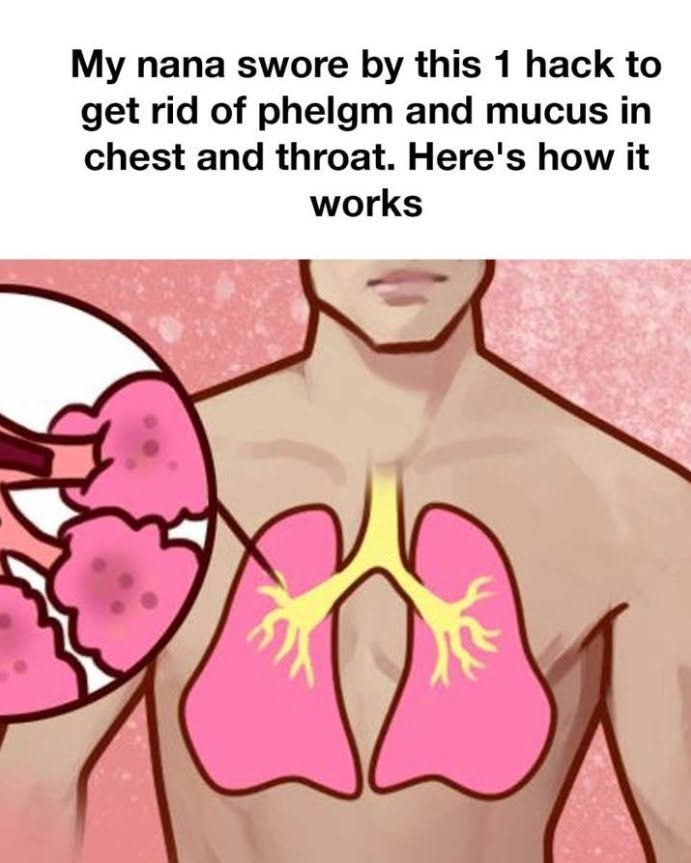
When sensationalized health clickbait hooks you with “My nana swore by this 1 hack to get rid of phlegm and mucus in chest and throat. Here’s how it works,” they are capitalizing on deep nostalgia and family trust. By attributing a mysterious, viral trick to a wise grandparent, they bypass your critical thinking and dress up a basic home remedy as a hidden medical secret.
From a clinical pulmonology and geriatric perspective, while grandparent-approved remedies like hot ginger teas, honey, steam, or mustard plasters often provide genuine comfort for minor throat irritation, no single “hack” instantly dissolves deep chest phlegm or replaces the body’s natural respiratory clearing mechanisms.
The Reality Behind “Grandma’s Hacks” for Mucus
Why do traditional remedies feel so soothing, and what is actually happening when we use them?
-
The Comfort of Warmth and Hydration: Most traditional remedies rely on warm liquids. Heat and moisture help relax irritated throat tissues and thin out upper-airway mucus, making it easier to swallow or clear away.
-
The Limits of Upper Airway Relief: A warm drink or herbal steam acts primarily on the upper respiratory tract (the throat and pharynx). It cannot physically reach into the lower bronchioles or alveoli of the lungs to “vacuum out” chest congestion.
-
Honoring Wisdom While Expecting Science: Grandparents often passed down wonderful comfort measures that ease symptoms of a common cold, but when chest congestion lingers or deepens, relying solely on kitchen tricks can delay necessary medical care.
Evidence-Based Ways to Support Respiratory Comfort
If you are dealing with stubborn phlegm or chest tightness, clinical guidelines recommend combining comforting home care with physiological reality:
-
Embrace Proven Hydrotherapy and Steam: Breathing in warm steam from a hot shower or using a humidifier adds moisture to dry airways, helping your natural mucociliary escalator sweep mucus upward.
-
Stay Ahead with Fluids: Drinking water, clear broths, or warm herbal teas throughout the day keeps your mucosal secretions fluid rather than thick and sticky.
-
Controlled Coughing Techniques: If you have lower chest congestion, controlled breathing and gentle “huff coughing” (exhaling forcefully with an open mouth rather than a harsh, hacking cough) can help move mucus up from the larger airways safely.
-
When to Consult a Physician: If chest phlegm is thick, discolored (yellow, green, or rust-colored), accompanied by a fever, or lasts longer than two weeks, skip the internet hacks and see your doctor to rule out bronchitis, pneumonia, or other respiratory conditions.
