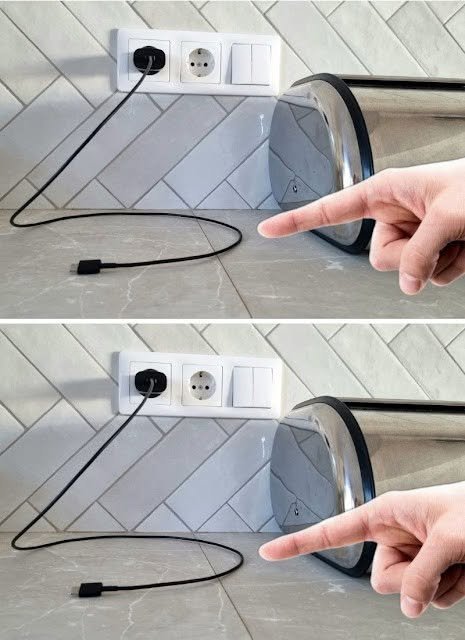
When viral internet warnings scream phrases like “NEVER LEAVE A CHARGER IN AN OUTLET WITHOUT YOUR PHONE: I’LL REVEAL THE 3 MAIN REASONS,” they rely on the classic digital clickbait formula: all-caps urgency, a dramatic cliffhanger, and an appeal to fear. They want you to imagine that an empty phone charger plugged into a wall is a ticking time bomb waiting to incinerate your home or bankrupt you with electricity bills.
From a clinical electrical engineering, safety, and consumer perspective, leaving a certified charger plugged in without a phone is generally not an immediate catastrophe, but it does involve real, minor inefficiencies and specific safety variables.
The Reality Behind Leaving a Charger Unplugged vs. Plugged In
Why do tech and safety warnings focus on this habit, and what is actually happening when a charger sits empty in the wall?
-
The “Vampire Draw” Phenomenon: Modern phone chargers contain miniature internal transformers and circuit boards. Even when no phone is attached, if the charger is plugged into an active AC outlet, it draws a tiny, almost unmeasurable amount of electrical current to keep its internal components ready.
-
Component Stress and Heat: A plugged-in charger handles a continuous electrical load. Over years of continuous, uninterrupted connection, tiny internal components (like capacitors) can experience thermal fatigue, slowly degrading the lifespan of the adapter itself.
-
The Quality and Safety Variable: Not all chargers are created equal. Certified, high-quality original equipment manufacturers (OEM) build robust safety cutoffs into their adapters, whereas cheap, uncertified knockoff or counterfeit chargers lack proper thermal protection and insulation.
The 3 Reasons Often Cited (Decoded by Science)
Stripping away the internet panic, here is what those dramatic “3 main reasons” actually boil down to in objective terms:
-
1. “Vampire” Energy Waste (Phantom Load)
-
The claim: Leaving chargers plugged in runs up a massive electric bill.
-
The reality: While it does consume standby power, modern high-efficiency phone chargers draw a microscopic amount of power when idle (usually less than 0.1 to 0.5 watts). Mathematically, leaving a single branded charger plugged in 24/7 costs pennies to a dollar over an entire year. It is a minor environmental and financial inefficiency rather than a financial emergency.
-
-
2. Chronic Overheating and Component Aging
-
The claim: The charger will spontaneously melt or overheat from doing nothing.
-
The reality: A quality, empty charger should remain cool to the touch. However, if a charger is cheaply made, or if it is plugged into a worn, sparking wall outlet, continuous electrical resistance can generate sustained heat. Over time, this accelerates wear and tear on the adapter’s internal circuitry.
-
-
3. The Electrical Fire Hazard (The Worst-Case Scenario)
-
The claim: Your house will burn down the second you walk out of the room.
-
The reality: While electrical fires are a leading cause of home damage, a certified charger sitting idle is statistically very unlikely to combust on its own. The real hazard spikes when cheap, counterfeit, uncertified, or physically damaged chargers are left unattended in compromised outlets during a power surge or voltage spike.
-
Evidence-Based Electrical Safety Habits
You don’t need to live in terror of an empty charging cable, but adopting a few sensible household habits eliminates unnecessary risks:
-
Invest in Certified Equipment: Never use cheap, unbranded, or knockoff adapters bought from discount bins. Always use original or safety-certified (e.g., UL-listed, CE-marked) chargers designed with over-voltage and thermal protection.
-
Unplug When Traveling or Away Long-Term: If you are heading out on vacation or won’t be using a specific room for a while, pulling the chargers from the wall is a smart, energy-conscious habit that protects your electronics from unexpected power surges.
-
Inspect Your Gear: Regularly check your charging bricks and cords. If a charger smells faintly of plastic, feels unusually hot when idle, or has a frayed cord, discard and replace it immediately.
