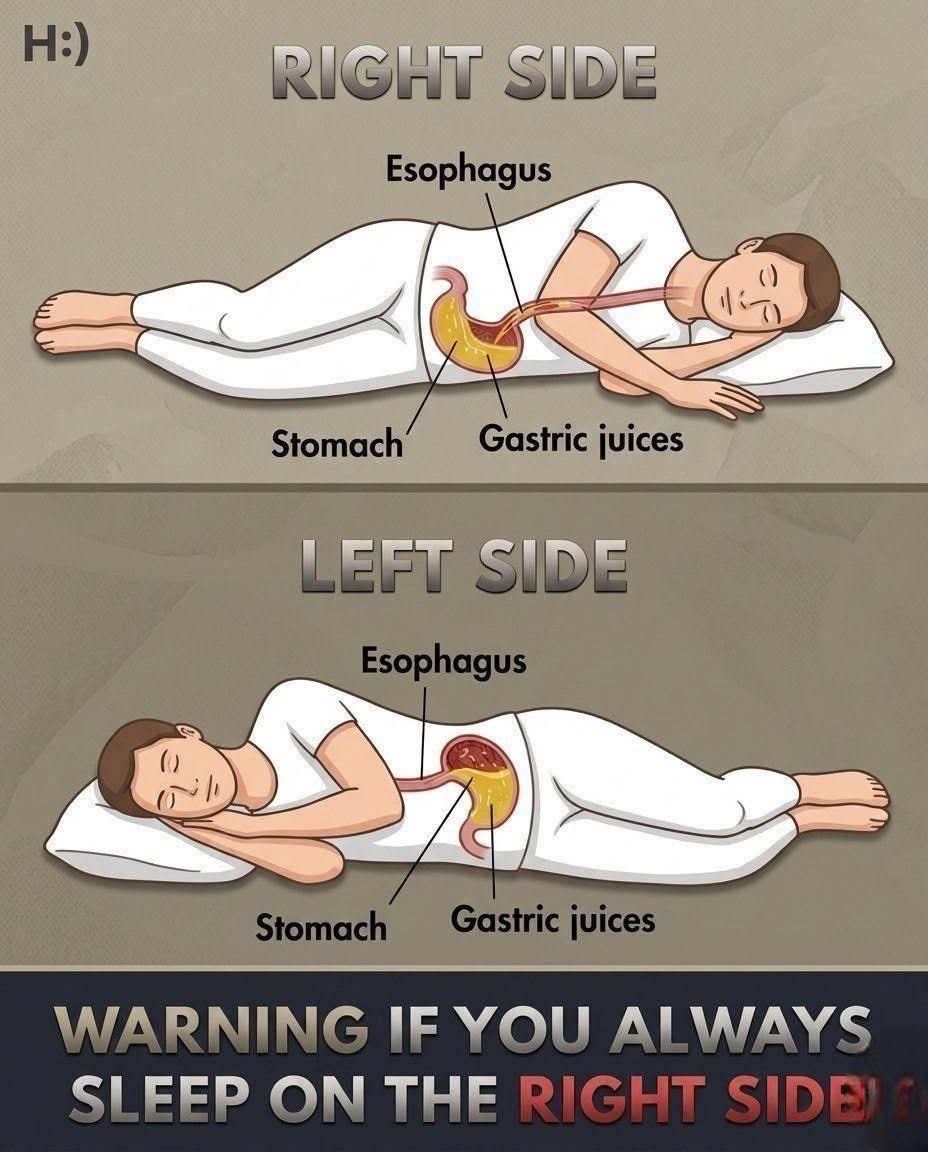
If you consistently sleep on your right side, it can influence several aspects of your physical comfort and long-term well-being. Because of human anatomy, right-side sleeping comes with a few specific trade-offs:
-
Increased Risk of Acid Reflux: The stomach naturally curves toward the left side of the abdomen. When you lie on your right side, the stomach is positioned higher than the esophagus, which can relax the lower esophageal sphincter and allow stomach acid to leak upward more easily, triggering nighttime heartburn.
-
Localized Joint Pressure: Concentrating your body weight on one side night after night places ongoing mechanical stress on your right shoulder and hip, which can lead to soreness, stiffness, or nerve compression.
-
Facial Creases (“Sleep Wrinkles”): Pressing the right side of your face into a pillow for thousands of hours puts extra mechanical friction and compression on the skin and eye contours, often leading to more pronounced fine lines or asymmetry on that side of the face over time.
Adjustments for Right-Side Sleepers
If right-side sleeping is your most comfortable position, a few targeted tweaks can protect your posture and minimize strain:
-
The Right Pillow Loft: Choose a firm or medium-firm pillow with enough loft to completely fill the gap between your mattress and your ear. This keeps your cervical spine neutral and stops your right shoulder from collapsing uncomfortably upward.
-
Knee Alignment: Place a small pillow or cushion between your knees. This keeps your hips stacked, prevents your top leg from dragging your pelvis forward, and relieves pressure on your lower back and hips.
-
Manage Reflux Triggers: If you are prone to heartburn, avoid eating heavy or spicy meals for 2 to 3 hours before bed, or elevate the head of your bed slightly to counteract gravity.
