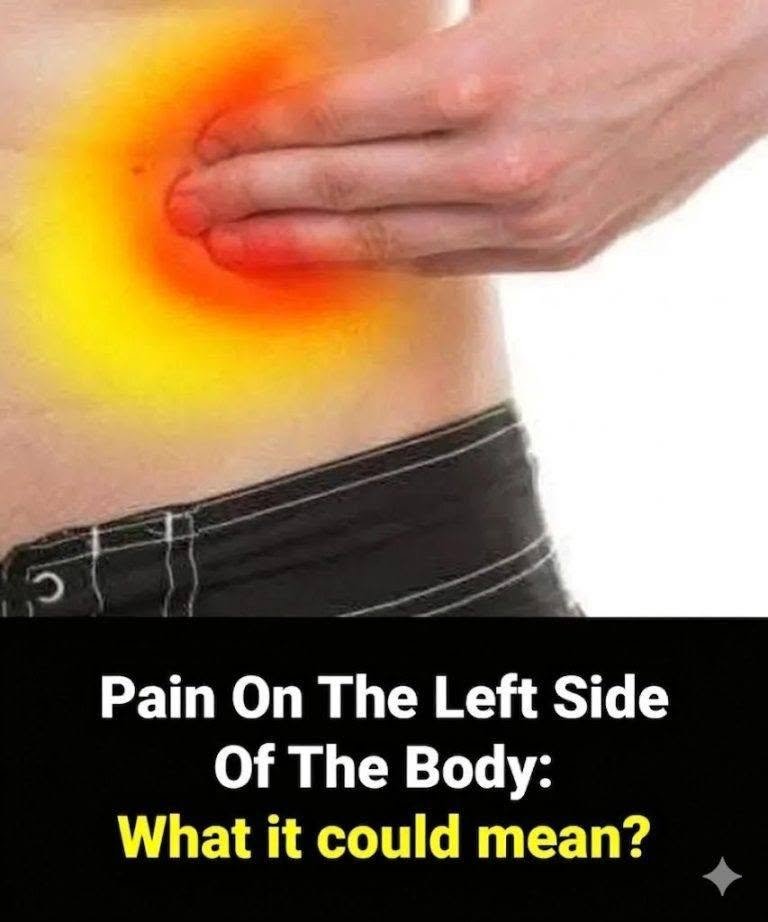
When sensationalized health articles warn about “Pain on the Left Side of the Body,” they rely on the ultimate medical cliffhanger—casually implying that an ache in your left arm, shoulder, or side is an immediate, catastrophic sign of a massive heart attack or stroke.
The underlying clinical and physiological reality is far broader: while left-sided pain can occasionally signal cardiac or vascular emergencies, the human body is bilaterally symmetrical, and the vast majority of left-sided aches are caused by musculoskeletal strain, spinal alignment issues, localized joint inflammation, or completely benign gastrointestinal quirks.
An evidence-based look at what left-sided pain actually indicates helps separate terrifying medical panic from practical clinical context.
1. The Classic Heart Attack Fear (Chest and Left Arm Pain)
-
The Alarmist Myth: Every twinge or dull ache in your left arm or left chest wall is instantly branded as cardiac arrest.
-
The Reality: Cardiac pain (angina or myocardial infarction) typically presents as a heavy, squeezing pressure, fullness, or crushing discomfort in the center of the chest that may radiate to the left arm, jaw, or back, usually accompanied by shortness of breath, nausea, or cold sweats. By contrast, a sharp, localized pain in the left arm that worsens when you press on a muscle or move your shoulder is almost always musculoskeletal—such as rotator cuff tendinitis, pinched nerves in the neck, or simple muscle strain.
2. Upper Left Abdominal or Rib Pain
-
The Alarmist Myth: A sharp stitch or ache under your left ribcage is often dramatized as severe organ failure.
-
The Reality: Your upper left abdomen houses the stomach, spleen, and the splenic flexure of the colon. Common, non-emergency culprits include:
-
Gas Trapping: Gas frequently gets trapped at the bend of the large intestine under the left ribs, causing sharp, cramping pain that resolves entirely once the gas passes.
-
Costochondritis: Inflammation of the cartilage connecting your ribs to your breastbone can mimic deep chest or internal organ pain, but it hurts specifically when you press on the rib joints.
-
3. Lower Left Abdominal Pain
-
The Alarmist Myth: Lower left-sided belly pain is frequently hyped as an immediate surgical emergency.
-
The Reality: The lower left quadrant primarily contains the descending and sigmoid colon.
-
Diverticular Issues: Diverticulosis (small pouches in the colon wall) can occasionally become inflamed or infected (diverticulitis), causing localized lower left pain, tenderness, and changes in bowel habits.
-
Simple Constipation or Cramping: Routine digestive sluggishness or muscular cramping from the lower abdominal wall is far more frequent than acute surgical emergencies.
-
4. Left-Sided Back and Flank Pain
-
The Alarmist Myth: Back pain on the left side is often exaggerated as catastrophic spinal collapse or kidney failure.
-
The Reality:
-
Muscular Strain: Lifting awkwardly, poor posture while sitting at a desk, or core imbalances strain the muscles and ligaments on one side of the spine more than the other.
-
Kidney Stones: A kidney stone passing through the left ureter can cause severe, agonizing flank pain radiating to the groin, but it is typically accompanied by urinary urgency or blood in the urine.
-
Red Flag Symptoms vs. Everyday Aches
Knowing when to seek immediate medical evaluation is essential:
-
Seek Emergency Care If: Left-sided pain is accompanied by sudden chest pressure, radiating jaw or neck pain, severe shortness of breath, sudden dizziness, profuse cold sweats, or sudden numbness and weakness on one side of the body.
-
Schedule a Routine Doctor’s Visit If: The pain is dull, persistent, chronic, or interferes with your daily activities without acute, alarming systemic symptoms.
The Takeaway
Ignore the fear-mongering articles designed to convince you that every minor ache on the left side of your body is a life-threatening medical emergency. While certain left-sided symptoms deserve careful attention, the vast majority of aches are mechanical, muscular, or digestive in origin. Listening to your body and understanding context is the best defense against health anxiety.
