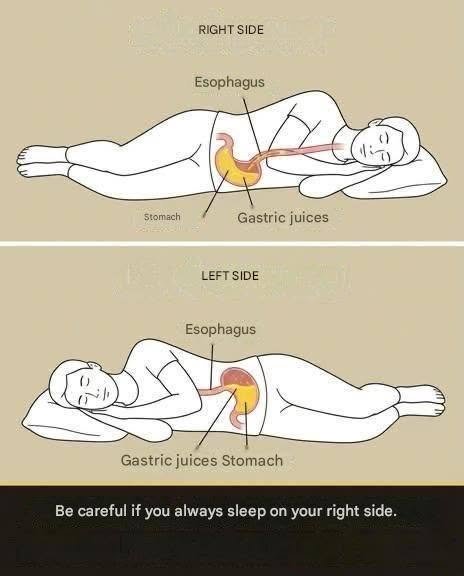
When health headlines or viral wellness posts warn that “if you always sleep on your right side, you…” they are usually building up to claims about digestion, acid reflux, or heart health.
From a clinical and anatomical standpoint, sleeping on your right side does have a few distinct physiological interactions, though it rarely spells doom or magic for your health.
The Anatomy of Right-Side Sleeping
-
Heartburn and Acid Reflux (GERD):
-
The Effect: Anatomically, the stomach curves to the left, and the junction where your esophagus meets the stomach sits slightly below the level of gastric acid when you lie on your right side. This position can sometimes relax the lower esophageal sphincter, making it easier for stomach acid to leak upward and trigger heartburn.
-
The Alternative: Gastroenterologists often recommend sleeping on your left side for individuals prone to acid reflux, as gravity keeps the gastric acid safely below the esophagus.
-
-
Cardiovascular Comfort:
-
The Effect: For most healthy people, sleeping on either side is safe. However, some cardiologists note that sleeping on the left side can sometimes create a slight sensation of pressure or awareness of the heartbeat because the heart is positioned closer to the chest wall. In contrast, right-side sleeping avoids direct pressure on the heart, which is why many people naturally find it more comfortable.
-
-
Pregnancy and Circulation:
-
The Effect: During late pregnancy, doctors generally recommend sleeping on the left side to prevent the heavy uterus from pressing on the inferior vena cava (the large vein returning blood to the heart), which maintains optimal blood circulation for both mother and baby.
-
What Really Matters for Restful Sleep
While sleep posture can influence minor issues like reflux or shoulder comfort, sleep quality and spinal alignment are far more critical than which side you favor:
-
Support Your Joints: If you sleep on your side, placing a supportive pillow between your knees helps keep your spine and hips aligned, reducing lower back strain.
-
Listen to Your Body: If you wake up pain-free and well-rested, your natural sleeping position is working just fine for you.
Are you looking into sleep ergonomics, or managing specific nighttime comfort concerns?
