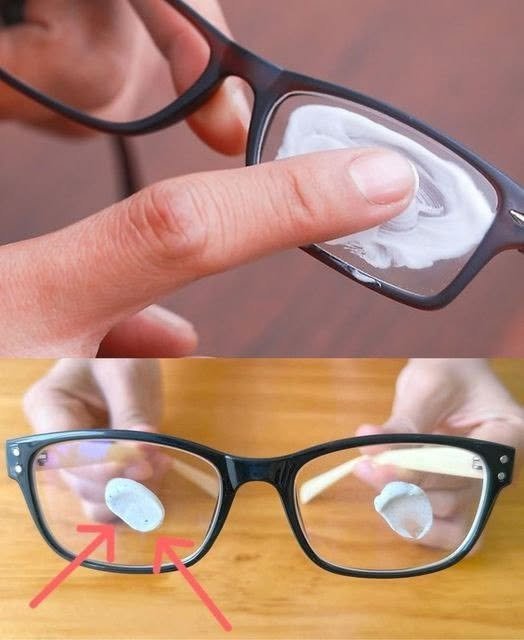
Headlines promising that a household trick will make scratches on eyeglasses “disappear instantly” rely on classic internet DIY clickbait. They exploit the high replacement cost of prescription lenses to push a quick-fix miracle that sounds too good to be true—because it is.
Whether the viral post advocates for toothpaste, baking soda paste, glass polish, or car wax, applying abrasive substances to optical lenses rarely fixes the problem and usually makes it significantly worse. Understanding the physics of eyeglass lenses and coatings clarifies why these hacks backfire.
Why “Instant Scratch Eraser” Clickbait Misleads
Sensationalized DIY videos thrive on dramatic visual tricks while ignoring the delicate engineering of modern eyewear:
-
The “Magic Eraser” Illusion: Videos often show someone rubbing a paste on a lens and wiping away a scratch. In reality, what they are usually doing is filling the microscopic valley of a light surface scuff with a temporary waxy residue, or worse, grinding down the surrounding lens material so the edges of the scratch become blurred.
-
Ignoring Lens Coatings: Almost all modern prescription lenses are coated with specialized layers—such as anti-reflective (AR) treatments, UV protection, and scratch-resistant hard coats. Abrasive DIY hacks strip away these delicate coatings, leaving permanent hazy patches, glare distortions, and rainbow smudges that ruin vision far worse than the original scratch.
The Real Physics of Eyeglass Scratches
Once a lens material (whether high-index plastic, polycarbonate, or glass) is physically gouged or fractured, it cannot be “healed” or filled back in with household substances.
-
Plastic Lenses: When you rub toothpaste or baking soda on plastic lenses, you are essentially using mild sandpaper. You grind down the plastic around the scratch to flatten the surface, which distorts the lens’s optical refraction. This causes blurry spots, eye strain, and headaches.
-
Coated Lenses: As soon as an abrasive compound cuts through the anti-reflective coating, the lens will catch and scatter light unevenly, creating severe glare when driving at night or looking at computer screens.
What You Should Do Instead
If your glasses are scratched, skip the kitchen cabinet hacks to avoid ruining them completely:
-
Check Your Warranty: Many quality optical shops and lens manufacturers offer a one-time scratch warranty or replacement policy within the first year.
-
Use Proper Cleaning Habits: While you can’t fix existing deep scratches, prevent new ones by always cleaning lenses with a microfiber cloth and lens spray (never paper towels, clothing tissues, or window cleaners, which contain tiny abrasive wood fibers).
-
Professional Replacement: If a scratch obstructs your line of vision and causes eye strain, the only true fix is having an optician replace the lenses.
The Bottom Line
Ignore the viral clickbait promising that a dab of household paste will make lens scratches disappear. Eyeglasses are precision optical instruments—treating them with DIY abrasives will strip their protective coatings and distort your vision for good.
