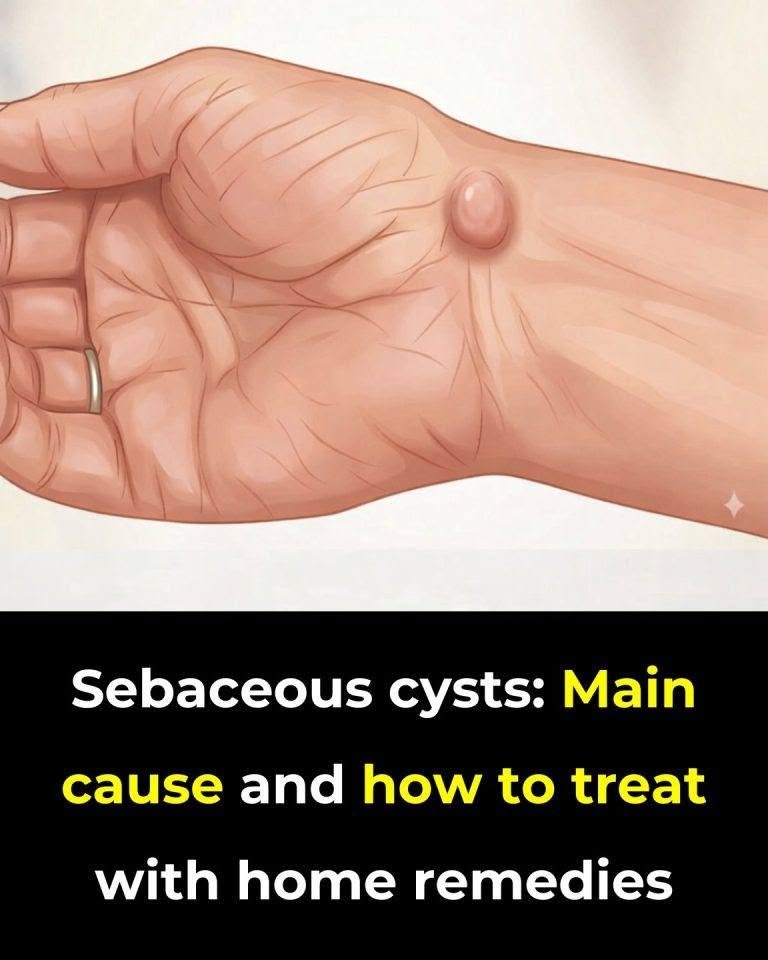
Viral medical posts often label every skin bump or lump as a “sebaceous cyst” and promote aggressive DIY squeezing or harsh topical home remedies like apple cider vinegar or garlic to “dissolve” them at home.
In clinical dermatology, true sebaceous cysts (originating from oil glands) are actually quite rare; most bumps commonly referred to as sebaceous cysts are actually epidermoid cysts or pilar cysts.
Here is an objective, science-based breakdown of what these cysts actually are, why they form, what you should (and shouldn’t) do at home, and when professional medical care is necessary:
What Causes an Epidermoid or Sebaceous Cyst?
These cysts are non-cancerous, slow-growing sacs beneath the skin filled with a cheesy, yellowish material made of keratin (a structural protein) and skin lipids.
-
Blocked Hair Follicles or Oil Glands:
-
They form when the top layer of skin cells (epidermis) moves deeper into the dermis rather than sloughing off naturally. This can happen due to a blocked hair follicle, an obstructed sebaceous (oil) gland, or skin trauma (like a severe scratch, bug bite, or acne lesion).
-
-
Genetics and Skin Conditions:
-
People prone to acne or certain rare hereditary conditions (such as Gardner syndrome) are more susceptible to developing cysts.
-
-
The Enclosed Sac:
-
Crucially, a cyst is surrounded by a distinct fibrous wall or “sac.” As long as this sac remains intact under the skin, it will continue to secrete keratin and collect material over time.
-
The Truth About Home Remedy Solutions
Because a cyst is defined by an anatomical sac sitting under the skin, home remedies cannot permanently dissolve or cure a cyst. However, conservative home care can safely manage mild discomfort and promote localized circulation.
Safe Home Management: Warm Compresses
-
The Method: Soak a clean washcloth in warm (not scalding) water and hold it gently against the cyst for 10 to 15 minutes, three to four times a day.
-
How It Works: Heat dilates local blood vessels, increasing blood circulation to the area. This helps the surrounding tissue manage localized inflammation and can ease tension inside the sac.
What You Should NEVER Do at Home
-
Never Squeeze, Pop, or Drain It Yourself:
-
Popping a cyst ruptures the sac wall beneath the skin rather than removing it. This forces keratin, bacteria, and debris deep into the surrounding tissue, causing severe inflammation, secondary bacterial infection, and painful swelling (abscess formation).
-
-
Avoid Applying Harsh Topicals (Garlic, Vinegar, Tea Tree Oil):
-
Applying acidic or caustic substances to the skin will not reach the underlying sac. Instead, it frequently causes chemical burns, contact dermatitis, and skin breakdown, increasing infection risk.
-
How Doctors Permanently Treat Cysts
If a cyst is persistent, large, cosmetically bothersome, or painful, a physician or dermatologist can treat it safely in an outpatient setting:
-
Surgical Excision (The Permanent Cure):
-
Under local anesthesia, the doctor removes the cyst along with its entire capsule wall. If the entire sac is removed intact, the cyst will not return.
-
-
Incision and Drainage (For Infected Cysts):
-
If a cyst becomes red, hot, swollen, and infected, a doctor will make a small cut to drain the pus and relieve pressure. However, because the sac wall remains, the cyst may eventually refill once the infection clears and must be excised later.
-
-
Corticosteroid Injections:
-
An injection of a mild steroid directly into an inflamed (but non-infected) cyst can rapidly reduce swelling and tenderness.
-
