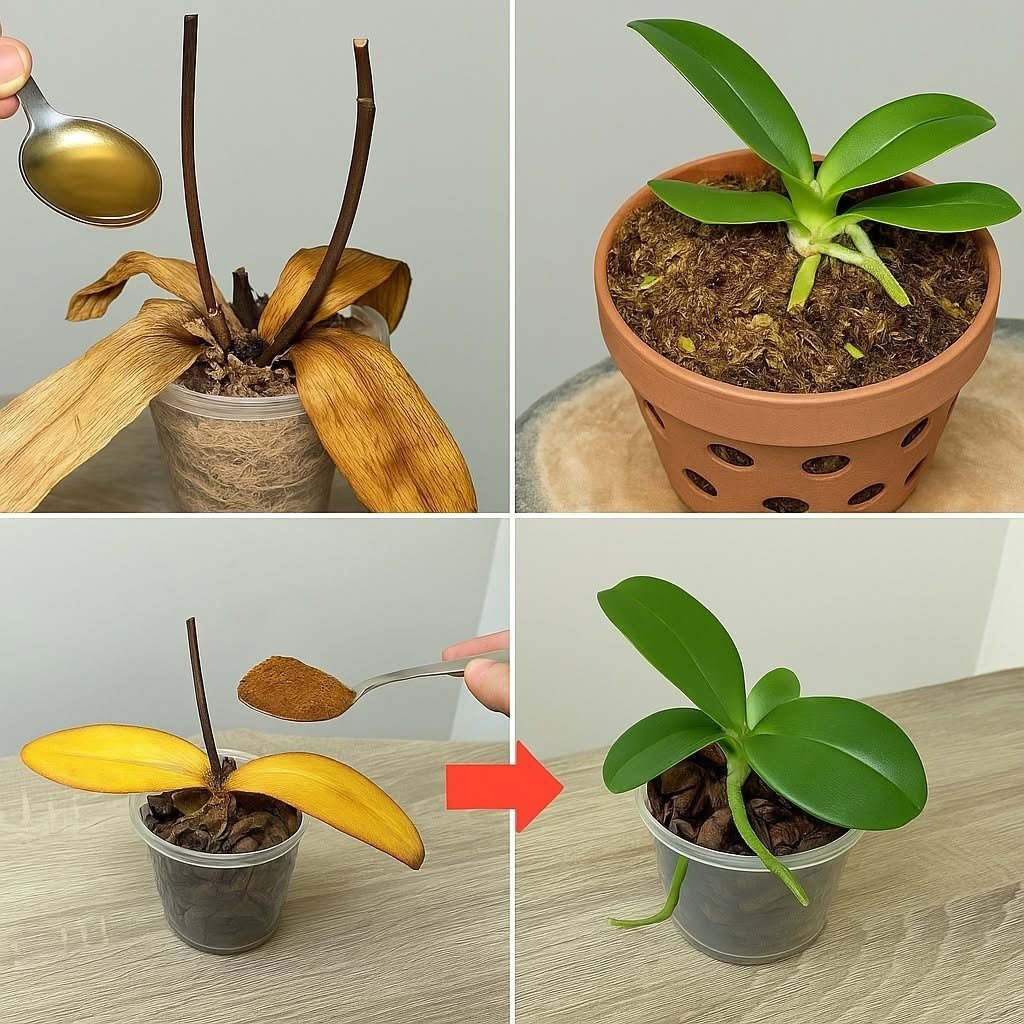
Viral gardening videos frequently promise that sprinkling a spoonful of a household item—such as cinnamon, crushed garlic, or special kitchen powders—onto dead or rotting orchid roots will magically revive the plant and cause it to bloom continuously all year round.
From a botanical and horticultural standpoint, this claim is physically impossible and biologically misleading.
The Botanical Reality of Orchid Roots
To understand why a simple powder cannot resurrect dead tissue, it helps to examine how orchid roots function:
-
The Velamen Layer: Healthy orchid roots are plump, silvery-green when dry, and bright green when wet. They are covered in a spongy outer layer called velamen, which absorbs moisture and nutrients from the air.
-
Dead vs. Alive Tissue: When an orchid root dies (usually due to overwatering, lack of oxygen, or severe root rot), the tissue turns brown, black, mushy, or completely hollow and papery. Once plant tissue is completely dead, necrotic, or decayed, it cannot be brought back to life. No spice or powder can regenerate dead plant cells.
What Popular Kitchen “Hacks” Actually Do
-
Cinnamon Powder: Gardeners often use cinnamon on orchids, but not as a magical growth fertilizer. Cinnamon is a mild natural antifungal and drying agent. If you cut away rotten, dead roots with sterile shears, dusting the fresh cut with a tiny bit of cinnamon can help dry the wound and prevent fungal spores from entering. However, dumping a spoonful of cinnamon onto an intact root system or rotting medium will not revive dead roots and can actually dry out healthy tissue or stunt growth if overapplied.
-
The “Year-Round Bloom” Myth: Phalaenopsis and other common household orchids have a natural biological resting and growing cycle. They naturally bloom once or twice a year for a few months, governed by temperature drops and light cycles. Expecting any plant to bloom 365 days a year goes against its natural physiology and will exhaust the plant.
How to Actually Rescue a Struggling Orchid
If your orchid is losing its roots, true horticultural rehabilitation requires mechanical intervention rather than kitchen magic:
-
Unpot and Inspect: Gently remove the orchid from its pot and brush away old, degraded bark.
-
Prune the Dead: Use sterilized scissors or shears to ruthlessly snip away all brown, mushy, or hollow roots. Leave only firm, plump, silvery-green or whitish roots intact.
-
Repot in Fresh Medium: Plant the orchid in fresh, airy orchid bark (never dense garden soil) that allows maximum oxygen flow to the root system.
-
Water Correctly: Only water when the roots inside the clear pot turn silvery-gray, avoiding letting the plant sit in standing water.
Do you enjoy nurturing indoor houseplants like orchids, or are you currently trying to nurse a struggling plant back to health?
