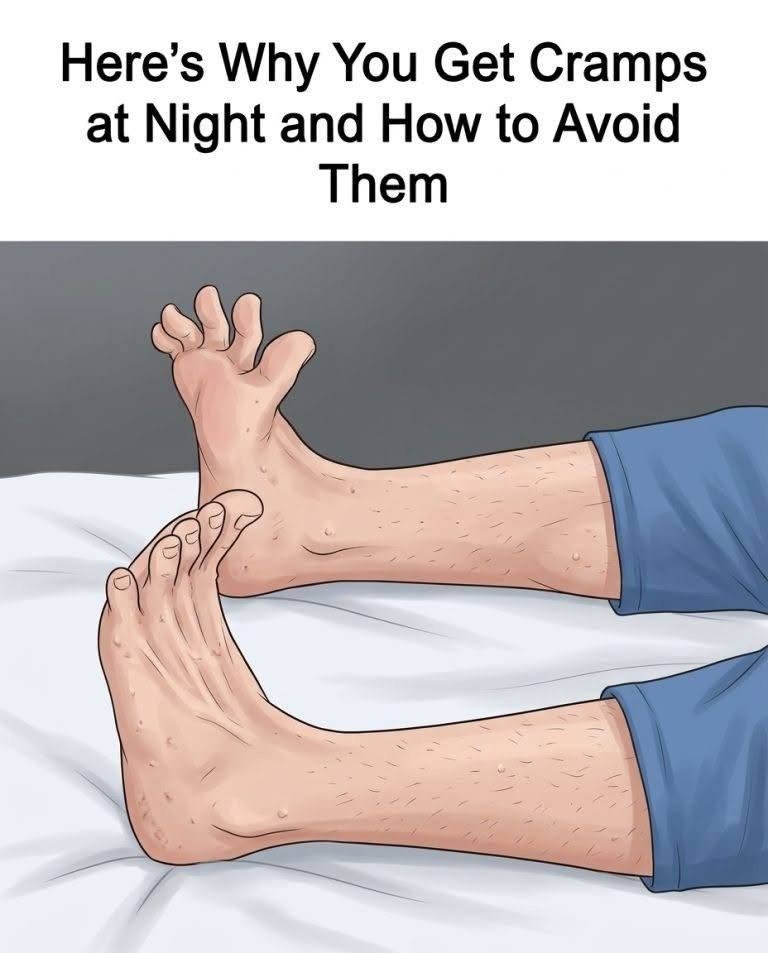
When sensationalized health articles or late-night video reels proclaim, “This is why we get cramps at night,” they usually try to pin the blame on a single culprit—most commonly a lack of magnesium or dehydration.
From a clinical and physiological perspective, nocturnal leg cramps (sudden, painful contractions of the calf or foot muscles that often strike just as you drift off to sleep or wake you up) are rarely caused by just one factor. Instead, they are usually the result of a combination of mechanical and physiological triggers.
The Real Triggers Behind Nighttime Cramps
Geriatric specialists and physical therapists look at several interconnected mechanisms when evaluating why muscles suddenly spasm after dark:
-
Nerve and Muscle Fatigue: Throughout the day, our muscles contract and relax repeatedly. As we age, microscopic changes in our nerve endings mean that minor fatigue or awkward positioning in bed can cause a motor neuron to misfire, sending the muscle into an involuntary, sustained contraction.
-
Prolonged Plantar Flexion (Bedtime Positioning): When we lie on our backs or sides, our feet often point downward (toes extended). This position naturally shortens the calf muscles. If a shortened muscle is suddenly stimulated or stretched (like when you stretch your legs out in your sleep), it can easily trigger a cramp.
-
Electrolyte Shifts and Fluid Balance: While severe dehydration is a well-known trigger, subtle imbalances in key electrolytes—specifically magnesium, potassium, and calcium, which govern how nerves signal muscles to contract and relax—can increase muscle irritability.
-
Circulatory Sluggishness: As we discussed with evening circulation, lying still for hours slows down venous return. Combined with cooler nighttime temperatures, reduced blood flow can occasionally leave muscles slightly under-supplied and prone to spasms.
Practical Ways to Prevent and Ease Nighttime Spasms
-
Gentle Evening Stretches: Spend 2 to 3 minutes doing a gentle calf stretch against a wall or flexing your feet before getting into bed to lengthen the muscles.
-
Stay Adequately Hydrated: Keep a small glass of water by the bedside and maintain consistent fluid intake throughout the day.
-
Incorporate Mineral-Rich Foods: Support your electrolyte balance with foods rich in magnesium and potassium, such as leafy greens, nuts, seeds, beans, and avocados.
-
Immediate Relief: If a cramp strikes, gently pull your toes upward toward your shin (dorsiflexion) and massage the tight muscle to help it release.
Are you managing nighttime muscle discomfort, or looking for more ways to support your evening relaxation and sleep routine?
