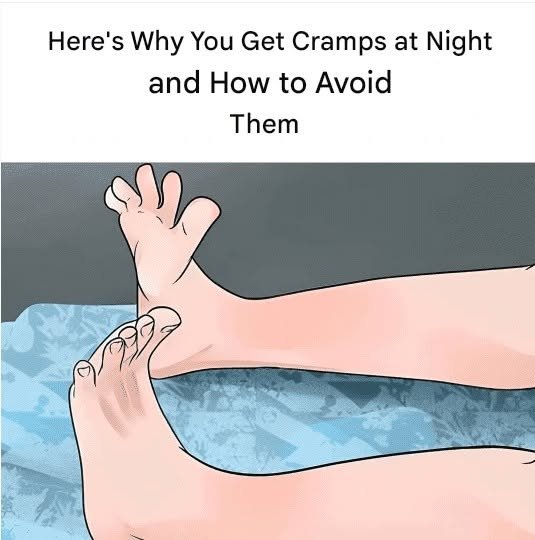
Waking up in the middle of the night with a sudden, agonizing cramp in your calf or foot—often called a “charley horse”—is an intensely painful experience. While viral health posts often blame nighttime cramps entirely on a single deficiency (like needing more potassium or magnesium), the medical reality is more nuanced.
Nighttime leg cramps are typically caused by a mix of muscle fatigue, nerve signaling quirks, and physical strain. Here is why we actually get them, along with what is happening in your body:
1. Muscle Fatigue and Overuse During the Day
-
What happens: The most common trigger for nocturnal cramps is simply spending too much time on your feet, walking on hard surfaces, or engaging in unaccustomed physical activity during the day. When skeletal muscles are overworked, microscopic fatigue sets in, making the muscle fibers more prone to erratic, involuntary contractions when you finally relax in bed.
2. Prolonged Muscle Shortening in Bed
-
What happens: The way you position your feet while sleeping matters. If you sleep on your back or stomach with your toes pointed downward (plantarflexion), your calf muscles are held in a shortened position for hours. In this shortened state, even a tiny shift or stretch can trigger a sudden, powerful spasm in the muscle.
3. Nerve Hyperexcitability
-
What happens: Leg cramps are fundamentally a problem of misfiring nerves rather than just the muscle itself. Tiny motor neurons that tell your muscles when to contract and relax can become hyperexcitable, firing rapid bursts of electrical signals that lock the muscle into a painful contraction.
4. Dehydration and Electrolyte Shifts
-
What happens: While not every cramp is caused by dehydration, fluid loss and shifts in key electrolytes—particularly magnesium, calcium, and potassium, which govern fluid balance and nerve transmission—can make neuromuscular junctions more unstable, especially in older adults or during warmer months.
5. Medication Side Effects
-
What happens: Certain prescription medications—most notably diuretics (water pills) frequently prescribed for high blood pressure or heart conditions—can alter fluid and electrolyte balances, making nighttime muscle cramps a common side effect.
How to Stop a Cramp Fast
When a cramp strikes in the middle of the night:
-
Stretch the Muscle: Gently flex your foot upward (pulling your toes toward your shin) and straighten your leg to lengthen the cramped muscle.
-
Walk Around: Getting out of bed and walking around gently for a minute helps force the muscle to relax.
-
Apply Warmth: A warm shower or a heating pad on the tight muscle can help soothe the spasm.
