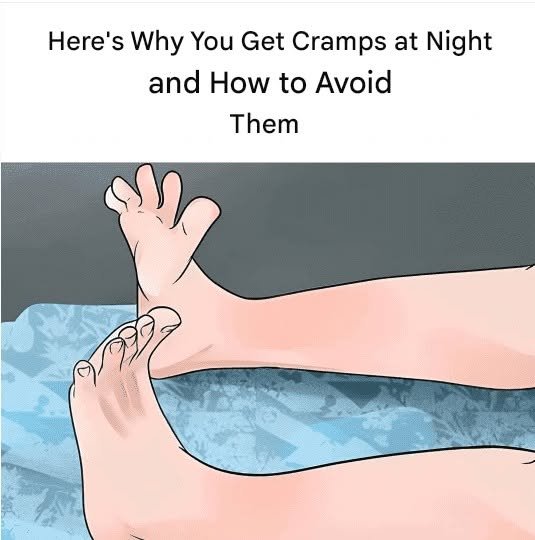
Nocturnal leg cramps—sudden, painful contractions of muscles in the calves, feet, or thighs—stem from specific mechanical, metabolic, and neurological factors during sleep.
Primary Causes of Nighttime Cramps
Nerve Hyperactivity: Resting with feet pointed downward shortens the calf muscle. Motor neurons can misfire in this shortened state, triggering spinal reflex loops that lock the muscle in spasm.
Tendon Shortening: Aging naturally decreases muscle and tendon elasticity, increasing cramping frequency in adults over 50.
Electrolyte & Hydration Depletion: Deficiencies in magnesium, calcium, or fluid balance disrupt the nerve-muscle signals that allow muscle fibers to relax.
Muscular Fatigue: Prolonged standing on hard surfaces or intense daytime exertion depletes muscle energy reserves, predisposing them to night spasms.
Systemic Conditions: Peripheral artery disease, nerve compression, and thyroid dysfunction reduce localized blood flow and alter nerve signaling.
Nighttime Leg Discomfort Comparison
Feature
Nocturnal Leg Cramp
Restless Legs Syndrome
Sensation
Sharp, intense muscle knotting
Uncomfortable pulling or crawling feeling
Physical Sign
Visibly hardened, tight muscle mass
No physical muscle contraction
Relief
Passive stretching and firm massage
Movement (walking or shaking the leg)
Aftermath
Muscle soreness lasting hours or days
Immediate relief once movement starts
Immediate Relief & Prevention Protocol
1.Perform an Emergency Stretch:
If a cramp strikes, flex your foot upward toward your shin to force the calf muscle to lengthen.
2.Apply Direct Pressure:
Massage the center of the cramped muscle firmly with your thumbs for 30 to 60 seconds to disrupt the spasm cycle.
3.Pre-Bed Calf Stretching:
Stand 2 feet from a wall, lean forward with heels flat on the floor, and hold for 30 seconds per leg before sleeping.
4.Loosen Bedding:
Keep blankets loose around the feet to prevent them from pointing downward overnight.
Medical Warning: Consult a doctor if leg cramps occur multiple times per week, are accompanied by swelling or leg redness, or persist despite targeted stretching and hydration.