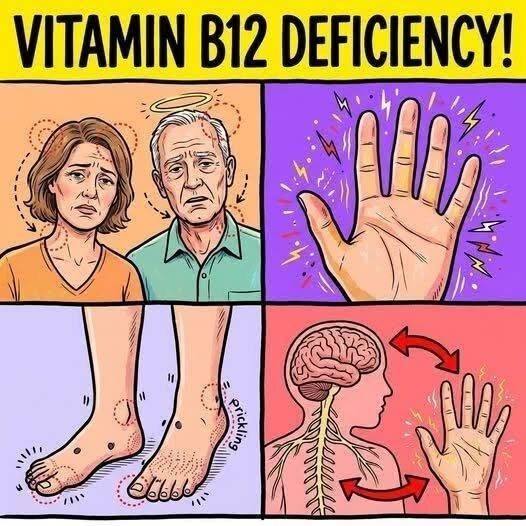
Catchy headlines warning about Vitamin B12 deficiency symptoms highlight a very real medical truth: B12 is essential for nerve function, energy production, and red blood cell formation. Because your body cannot manufacture it on its own, you rely entirely on diet (primarily animal products, fortified foods, or supplements) to keep your levels stable.
When B12 levels drop too low over time, the body begins to struggle in some very distinct ways. Here are the crucial warning signs that medical experts emphasize should never be ignored:
Key Symptoms of Vitamin B12 Deficiency
1. Profound Fatigue and Weakness
-
What it feels like: Feeling utterly exhausted, lethargic, or drained even after a full 8 hours of sleep.
-
Why it happens: B12 is essential for producing red blood cells, which carry oxygen throughout your body. Without enough B12, your tissues are starved for oxygen, leaving you weak and wiped out.
2. Numbness, Tingling, or “Pins and Needles”
-
What it feels like: A strange prickling sensation in your hands, fingers, feet, or toes, or feeling like you’re walking on cotton.
-
Why it happens: B12 is crucial for maintaining the myelin sheath—the protective coating that insulates your nerves. A prolonged deficiency can damage nerve fibers, leading to peripheral neuropathy.
3. Mobility and Balance Changes
-
What it feels like: Unsteadiness when walking, stumbling more often, or unexplained clumsiness.
-
Why it happens: Nerve damage from a deep B12 deficiency can affect proprioception—your body’s awareness of where it is in space—which directly impacts balance and coordination.
4. Brain Fog, Memory Issues, and Confusion
-
What it feels like: Struggling to find words, forgetting why you walked into a room, or feeling unusually forgetful and unfocused.
-
Why it happens: Because B12 supports neurological function and cognitive processing, low levels can mimic early-stage cognitive decline or severe brain fog. (Fortunately, if caught early, these cognitive symptoms are often reversible with treatment!)
5. Mood Shifts, Irritability, or Low Spirits
-
What it feels like: Unexplained mood swings, increased anxiety, or a persistent low mood.
-
Why it happens: B12 is heavily involved in synthesizing brain chemicals like serotonin and dopamine, which regulate mood and emotional well-being.
6. A Smooth, Sore Tongue (Glossitis) or Mouth Ulcers
-
What it feels like: A tongue that feels unusually tender, swollen, red, or smooth (as the tiny papillae start to flatten out), or frequent mouth sores.
-
Why it happens: Rapidly dividing cells in the mouth are very sensitive to a lack of healthy red blood cells and B12, making oral tissues prone to inflammation.
Who is Most at Risk?
-
Older Adults: Stomach acid production naturally decreases with age, making it harder for the body to absorb B12 from food.
-
Vegetarians and Vegans: Since natural B12 is primarily found in animal products, plant-based eaters need to rely on fortified foods or supplements.
-
Individuals with Digestive Conditions: Conditions like Crohn’s disease, celiac disease, or those who have had gastric surgery can impair absorption in the gut.
The Medical Takeaway: If you experience persistent fatigue, unexplained tingling, or balance issues, don’t just brush it off as aging or stress. A simple, routine blood test ordered by your doctor can check your B12 levels, and correcting a deficiency is usually as straightforward as adjusting your diet or taking the appropriate supplement or injections!
Would you like to explore foods rich in Vitamin B12 or learn more about how nutrition supports energy levels?
