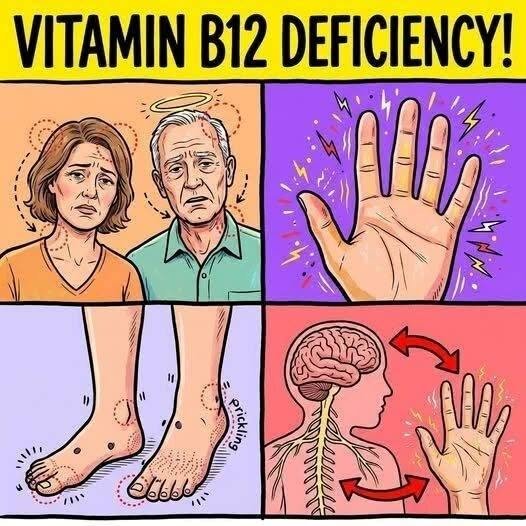
Health and wellness blogs love dramatic headlines like, “Vitamin B12 Deficiency Symptoms That Should Never Be Ignored.” While these titles lean heavily into fear-mongering, they touch on a genuine clinical reality: Vitamin B12 is an absolute powerhouse nutrient, and letting its levels drop too low can lead to serious neurological consequences if left unchecked.
Hematologists and neurologists look past the alarmist framing to focus on how this vital nutrient affects the body and why certain warning signs deserve prompt medical attention.
What Vitamin B12 Actually Does in the Body
Vitamin B12 (cobalamin) is a water-soluble vitamin responsible for two massive physiological tasks:
-
Red Blood Cell Formation: Helping your bone marrow produce healthy, fully functioning red blood cells that can efficiently carry oxygen throughout your tissues.
-
Neurological Maintenance: Playing a primary role in synthesizing and maintaining the myelin sheath—the protective insulating layer that wraps around your nerves, allowing signals to fire smoothly from your brain to the rest of your body.
Because your liver can store B12 for several years, a deficiency usually creeps up very slowly over months or years, making early symptoms easy to brush off as everyday stress or aging.
Key B12 Deficiency Symptoms You Shouldn’t Ignore
When B12 levels plummet, the body begins flashing specific warning signs across the nervous and circulatory systems:
1. Persistent Fatigue and Weakness
-
The Cause: Without enough B12, your body cannot produce healthy red blood cells (a condition called megaloblastic anemia). Your tissues are starved of adequate oxygen, leaving you feeling profoundly exhausted, weak, and out of breath even after a full night’s sleep.
2. Numbness, Tingling, or “Pins and Needles”
-
The Cause: Because B12 is vital for myelin sheath health, a deficiency directly impacts nerve function. People often experience a strange tingling sensation, numbness, or a “electric shock” feeling running down their hands, fingers, or feet.
3. Balance Issues and Mobility Changes
-
The Cause: Advanced B12 deficiency can affect the nerves responsible for proprioception—your body’s awareness of where it is in space. This can manifest as unexplained clumsiness, stumbling, or unsteadiness when walking in the dark.
4. Brain Fog, Memory Lapses, and Mood Shifts
-
The Cause: Neurological impact isn’t limited to the limbs; it affects the brain as well. Trouble concentrating, short-term memory lapses, irritability, or unexplained mood changes can frequently accompany low B12 levels.
Why Does a Deficiency Happen?
Unlike many vitamins that simply require a better diet, B12 deficiency is frequently an absorption issue rather than a dietary one.
-
Intrinsic Factor: To absorb B12 from meat, eggs, and dairy, your stomach must produce a special protein called intrinsic factor. As people age (or due to autoimmune conditions like pernicious anemia), stomach acid and intrinsic factor production decline.
-
Medications: Long-term use of acid-reducing medications (like proton pump inhibitors) or diabetes drugs like Metformin can also subtly impair B12 absorption over time.
The Medical Takeaway: A vitamin B12 deficiency is easily diagnosed with a routine blood test and corrected with dietary changes, oral supplements, or, when absorption is blocked, periodic B12 injections prescribed by a doctor. If you’re experiencing chronic fatigue or strange neurological tinglings, it’s a straightforward fix worth discussing with your physician.
Are you managing your nutrient levels, or looking for practical ways to support your energy and cognitive health through diet?
