Vitamin B12 is an essential nutrient that your body needs to produce red blood cells, maintain proper nerve function, and synthesize DNA. Because your body cannot manufacture B12 on its own, you must obtain it through diet or supplementation.
When B12 levels drop critically low, the effects ripple across your entire nervous and circulatory systems. Here are 7 critical Vitamin B12 deficiency symptoms that you should never ignore:
1. Extreme, Debilitating Fatigue and Weakness
-
What happens: Without enough B12, your body struggles to produce healthy red blood cells capable of carrying sufficient oxygen to your tissues (a condition known as megaloblastic anemia).
-
Why you shouldn’t ignore it: While everyday tiredness is common, profound, bone-deep exhaustion that doesn’t improve with sleep—leaving you too weak to complete normal daily tasks—signals that your cells are starved of oxygen.
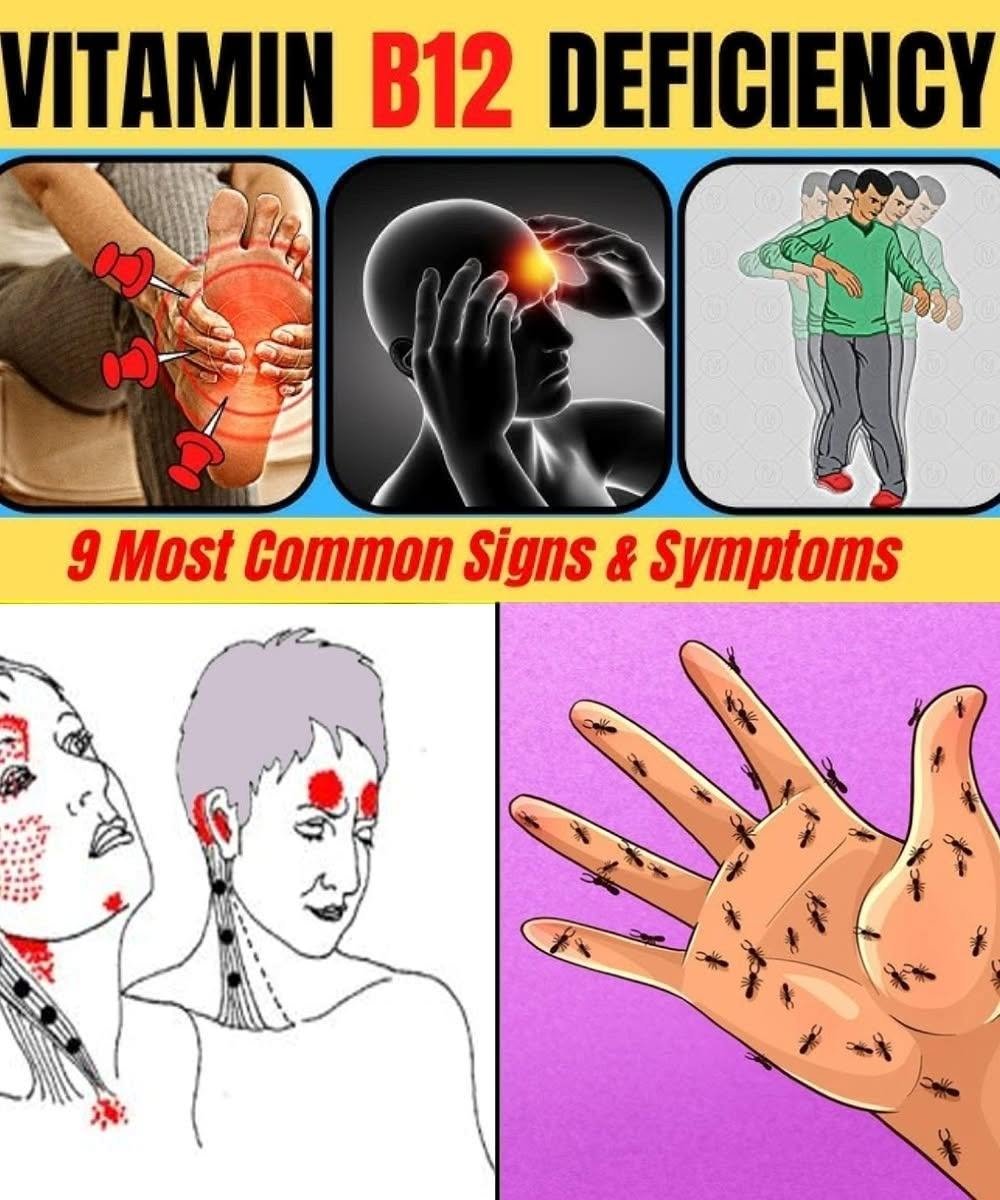
2. Tingling “Pins and Needles” or Numbness in Hands and Feet
-
What happens: Vitamin B12 is vital for maintaining the protective myelin sheath that insulates and shields your nerve fibers.
-
Why you shouldn’t ignore it: Persistent numbness, a crawling sensation, or sharp “pins and needles” in your extremities indicate that your nerves are beginning to suffer damage. If left untreated, peripheral nerve damage can become permanent.
3. Brain Fog, Memory Lapses, and Confusion
-
What happens: Chronic B12 deficiency affects cognitive processing, memory consolidation, and overall neurological health.
-
Why you shouldn’t ignore it: Struggling to find words, experiencing sudden short-term memory lapses, or feeling constantly disoriented can severely impact your daily life and, in older adults, can sometimes be mistakenly attributed to early-stage dementia if the underlying B12 deficiency goes unchecked.
4. Unsteady Balance, Clumsiness, and Mobility Changes
-
What happens: Nerve damage caused by low B12 can impair proprioception—your body’s ability to sense its position in space.
-
Why you shouldn’t ignore it: Unexplained stumbling, a sudden increase in clumsiness, difficulty walking in a straight line, or feeling unsteady on your feet puts you at an immediate risk of dangerous falls.
5. Pale or Jaundiced (Yellowish) Skin Tone
-
What happens: The lack of fully formed, healthy red blood cells causes them to break down prematurely, flooding the body with bilirubin and leading to a pale complexion or a subtle yellowish tint to the skin and the whites of the eyes.
-
Why you shouldn’t ignore it: A noticeable change in skin pallor or tone is a classic visual red flag of underlying anemia.
6. A Smooth, Sore, Red Tongue (Glossitis) and Mouth Ulcers
-
What happens: Nutritional deficiencies rapidly affect cells that replicate quickly, such as those inside your mouth and on your tongue.
-
Why you shouldn’t ignore it: If your tongue becomes painfully swollen, smooth (as the tiny papillae wear away), abnormally red, or if you develop frequent mouth ulcers and burning sensations while eating, it points directly to a systemic deficiency.
7. Unexplained Mood Shifts, Anxiety, or Depression
-
What happens: B12 plays a crucial role in synthesizing brain chemicals like serotonin and dopamine, which regulate mood and emotional stability.
-
Why you shouldn’t ignore it: Persistent irritability, deep low moods, escalating anxiety, or sudden behavioral changes can all be fueled by depleted B12 reserves.
Who is Most at Risk?
-
Older Adults: Stomach acid production naturally decreases with age, making it harder to absorb B12 from food.
-
Vegetarians and Vegans: Because natural B12 is found almost exclusively in animal products (meat, fish, eggs, dairy), plant-based eaters require fortified foods or supplements.
-
Individuals with Digestive Disorders: Conditions like Crohn’s disease, celiac disease, or those who have undergone gastric bypass surgery often struggle with nutrient absorption.
What to Do Next
If you are experiencing several of these symptoms, do not self-diagnose or start high-dose supplements blindly before speaking to a professional. A simple blood test ordered by your doctor can check your B12 and folate levels. Depending on the results, treatment can range from dietary adjustments and oral supplements to prescribed B12 injections.
Are you or a loved one currently investigating potential nutrient deficiencies or experiencing any of these specific symptoms?
