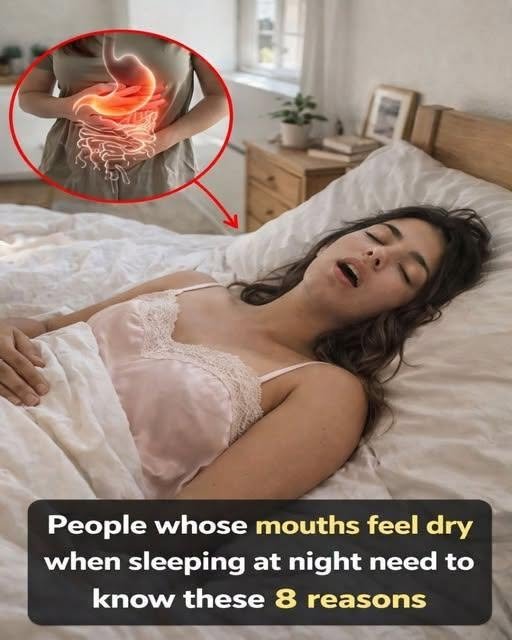
Waking up with a dry mouth, medically termed , occurs when salivary glands fail to produce enough saliva to keep the oral tissues moist during sleep. Chronic nocturnal dryness degrades oral hygiene, increases tooth decay risk, and disrupts deep sleep cycles.
Primary Causes of Nighttime Dry Mouth
-
Mouth Breathing: Nasal congestion from allergies, a deviated septum, or chronic sinus issues forces breathing through the mouth. Unfiltered airflow rapidly evaporates oral moisture throughout the night.
-
Sleep Apnea: Obstructive sleep apnea causes frequent gasping and mouth breathing as the upper airway collapses during sleep.
-
Medication Side Effects: Over 400 common drugs reduce saliva production as a secondary effect, including antihistamines, blood pressure medications, decongestants, antidepressants, and diuretics.
-
Dehydration: Insufficient fluid intake during the afternoon and evening leads to reduced overall systemic secretions.
-
Salivary Gland Dysfunction: Autoimmune conditions like directly damage salivary tissues.
-
Alcohol & Tobacco Use: Consuming alcohol, using tobacco, or using alcohol-based mouthwashes before bed dries out the oral mucosa.
Immediate At-Home Remedies
-
Run a Cool-Mist Humidifier: Place a humidifier near your bed to maintain ambient bedroom humidity above 40%, reducing evaporation from open-mouth breathing.
-
Switch to Alcohol-Free Mouthwash: Rinse before bed with a mouthwash specifically formulated for dry mouth containing .
-
Hydrate Consistently: Keep a glass of fresh water at your bedside. Sip water throughout the day rather than chugging large amounts right before sleep.
-
Use Xylitol Oral Lozenges: Place slow-dissolving dry-mouth discs or lozenges inside your cheek before bed to stimulate nighttime salivary flow safely.
-
Clear Nasal Passages: Use a saline nasal spray or nasal strip before sleep to promote open airway breathing through the nose.
Symptom Evaluation Guide
| Symptom Pattern | Most Likely Cause | Initial Action |
| Dry mouth + Loud snoring or gasping | Obstructive Sleep Apnea | Schedule a professional sleep study evaluation. |
| Started after starting a new prescription | Drug-induced xerostomia | Consult your prescribing physician for alternatives. |
| Dry mouth + Persistent dry eyes | Autoimmune gland dysfunction | Request an autoimmune blood panel from your doctor. |
| Waking up with a stuffed nose | Seasonal allergies or sinus blockage | Use saline rinses and address bedroom allergens. |
Safety Note: Consult a dentist or physician if nocturnal dry mouth persists past two weeks. Prolonged lack of saliva accelerates tooth decay, gum disease, and fungal infections like oral thrush.
