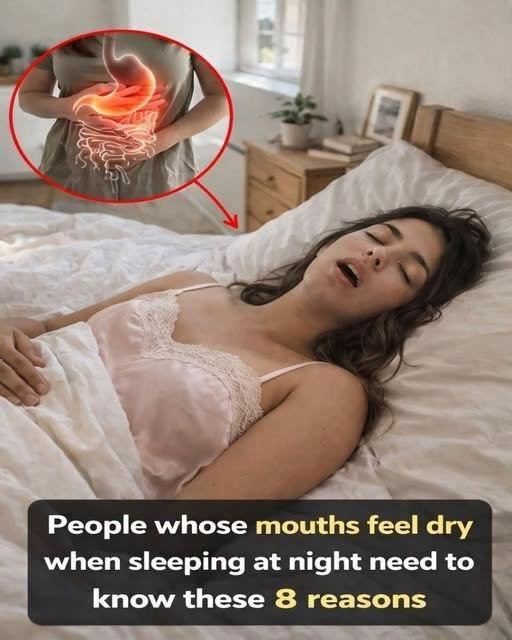
Waking up every night with a dry, parched mouth—clinically known as xerostomia—isn’t just uncomfortable; it can disrupt your sleep and leave your teeth vulnerable to decay. Saliva is your mouth’s natural defense system, washing away food particles and neutralizing acids. When your salivary glands slow down at night, the effects become glaringly obvious by morning.
Here are 8 common reasons why you might be waking up with a dry mouth every single night:
1. Mouth Breathing While Sleeping
-
Why it happens: If your nasal passages are blocked due to allergies, a deviated septum, or sinus issues, your body naturally switches to breathing through your mouth while you sleep. The constant airflow of breathing in and out rapidly evaporates the thin layer of saliva coating your oral tissues.
2. Obstructive Sleep Apnea (OSA)
-
Why it happens: Sleep apnea causes your airway to repeatedly collapse during the night, forcing you to gasp for air, which almost always involves heavy, open-mouth breathing. Waking up with a severely dry mouth is frequently one of the quiet, underlying warning signs of untreated sleep apnea.
3. Evening Medications
-
Why it happens: Hundreds of prescription and over-the-counter medications list dry mouth as a primary side effect. This includes antihistamines, decongestants, blood pressure medications, antidepressants, and muscle relaxants. If you take any of these right before bed, their impact peaks during the night.
4. Dehydration
-
Why it happens: It sounds simple, but not drinking enough water throughout the day—or consuming dehydrating fluids like alcohol or excessive caffeine close to bedtime—starves your body of the systemic hydration required to produce adequate saliva overnight.
5. Natural Aging
-
Why it happens: As we grow older, our bodies naturally undergo physiological changes that can reduce salivary gland output. While aging alone doesn’t guarantee a dry mouth, older adults are also much more likely to take multiple medications that compound the issue.
6. Alcohol and Caffeine Consumption Before Bed
-
Why it happens: Having a nightcap or a caffeinated beverage in the evening acts as a diuretic, pulling water from your tissues and suppressing salivary gland production, leading to a desert-dry mouth by morning.
7. Smoking or Vaping
-
Why it happens: Inhaling smoke, nicotine, or chemical vapor alters the composition of your saliva and directly irritates and inhibits the salivary glands. Smokers and vapers experience chronic dry mouth at rates significantly higher than non-smokers.
8. Nerve Damage or Underlying Medical Conditions
-
Why it happens: Certain systemic conditions—such as Sjögren’s syndrome (an autoimmune disorder that attacks moisture-producing glands), diabetes, nerve damage in the head or neck, or thyroid disorders—can directly impair your body’s ability to produce saliva.
Tip for Relief: Keep a glass of water by your bed, consider using a cool-mist humidifier in your bedroom to add moisture to the air, and speak with your doctor or dentist if the problem persists, as it may be linked to medication adjustments or an underlying sleep issue.
