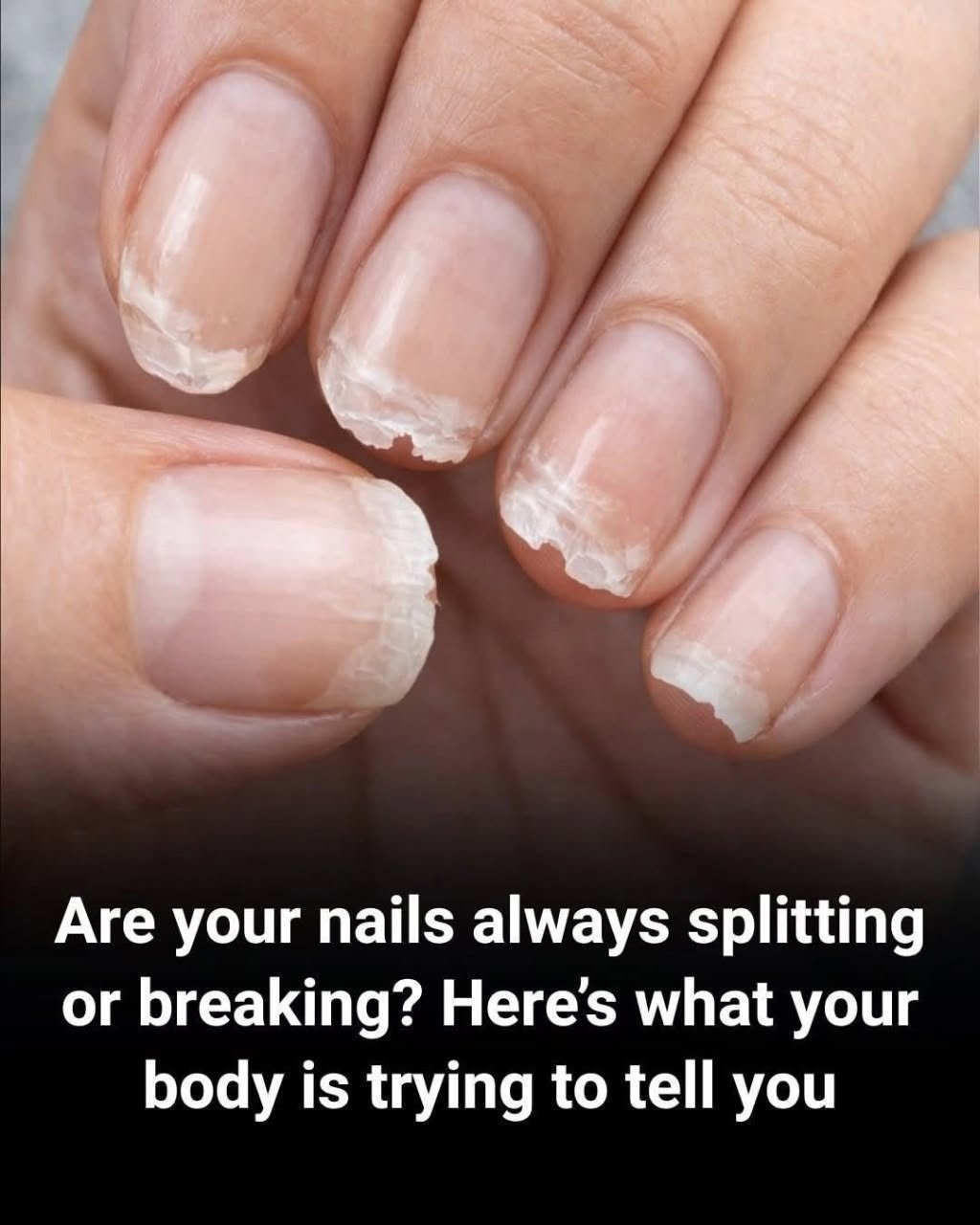
When your fingernails or toenails begin splitting, peeling, breaking easily, or developing deep ridges, it is rarely just a cosmetic annoyance. Your nails are made of tough layers of hardened protein called keratin, and they act as a biological window into your internal nutritional status, circulation, and systemic health.
Weak or brittle nails generally fall into two categories: brittle-dry (nails that split, flake, or peel easily) and brittle-soft (nails that bend easily and tear under light pressure).
What Weak or Brittle Nails Are Trying to Tell You
1. Iron Deficiency (Anemia)
One of the most common internal causes of fragile nails is low iron or ferritin (stored iron). When iron drops, oxygen delivery to your nail matrix—the tissue underneath the cuticle where nail cells grow—is compromised.
-
Key Sign: Nails that become thin, brittle, and develop a concave, spoon-like upward curve (koilonychia) in more advanced deficiency.
2. Thyroid Imbalance (Hypothyroidism)
Your thyroid gland regulates your body’s metabolic rate and cell turnover, including how quickly your hair and nails grow.
-
Key Sign: Underactive thyroid function slows cellular renewal, leaving nails dry, thick, brittle, and prone to slow growth or vertical splitting.
3. B-Complex Deficiencies (Especially Biotin / B7)
Biotin is essential for producing keratin and supporting amino acid metabolism.
-
Key Sign: Chronic peeling and splitting along the nail edges. While biotin supplements are widely popular, deficiencies can also point to poor gut absorption or restrictive diets.
4. Protein Malnutrition or Low Stomach Acid
Because nails are pure keratin protein, a diet lacking adequate protein—or low stomach acid (
HCl), which prevents you from breaking down and absorbing dietary protein—directly starves the nail matrix.-
Key Sign: Weak, soft nails accompanied by hair thinning and fatigue.
5. Dehydration & External Moisture Stripping
Not all nail weakness is internal. Frequent hand-washing, exposure to harsh household cleaning chemicals, continuous use of acetone nail polish removers, or dry winter air strips the natural moisture and protective lipid barrier directly out of the nail plate.
-
Key Sign: Brittle, dry nails that flake off in horizontal layers starting from the tip.
Key Nutrients & Natural Strategies to Strengthen Nails
| Nutrient / Strategy | How It Helps | Best Food Sources |
| Biotin (Vitamin B7) | Strengthens nail matrix keratin structure and increases nail thickness. | Eggs, almonds, sweet potatoes, sunflower seeds |
| Zinc | Essential for rapid cellular division, tissue growth, and protein synthesis in the nail bed. | Pumpkin seeds, lentils, beef, chickpeas |
| Silica (Silicon) | Enhances structural integrity, bone density, and nail tensile strength. | Cucumbers, bell peppers, oats, whole grains |
| Hydration & Topical Oils | Seals moisture into the keratin plate to prevent splitting and peeling. | Daily application of jojoba oil or vitamin E oil to cuticles |
When Brittle Nails Point to Other Health Issues
If brittle nails are accompanied by other systemic symptoms, it is worth discussing with your doctor:
-
Pitting or Discoloration: Tiny dents or yellowish-brown nail discoloration can sometimes indicate psoriatic nail changes or fungal infections.
-
Clubbing (Enlarged, Rounded Fingertips): Thickened nails that curve downward around wider fingertips can signal chronic low blood oxygen levels linked to heart or lung conditions.
