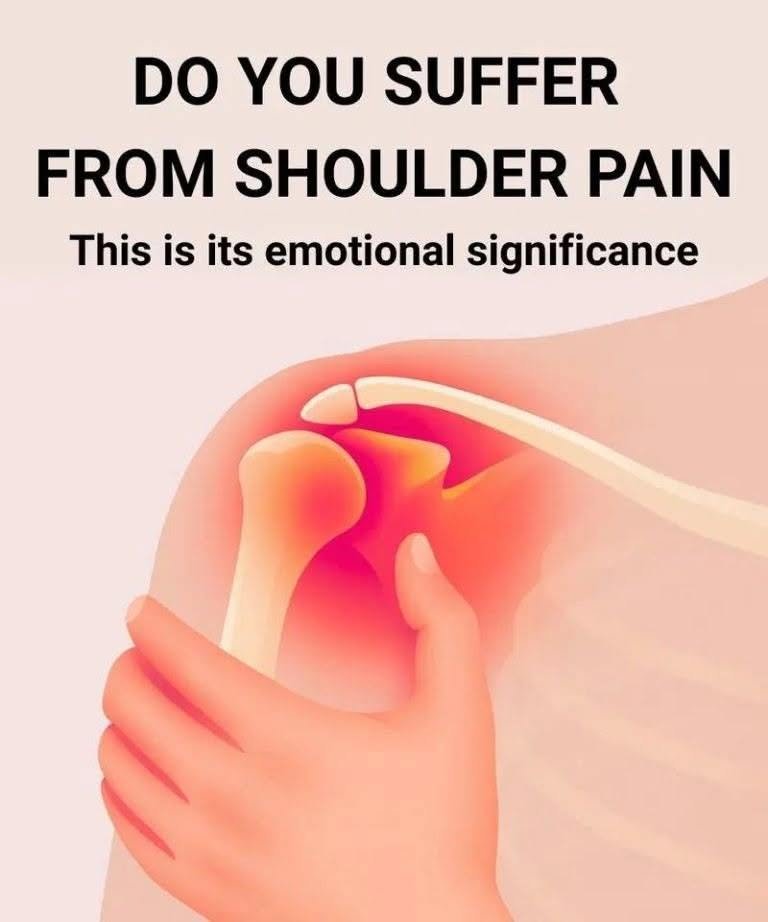
While shoulder pain is almost always rooted in physical causes—such as rotator cuff strain, poor posture, or tension—many people notice that physical tightness in the shoulders tends to flare up during periods of emotional stress.
In mind-body medicine and emotional anatomy, the shoulders are widely considered the body’s primary physical armor for carrying stress, responsibility, and emotional weight.
Here is a look at what emotional and psychological meanings are commonly associated with shoulder pain:
1. “Carrying the Weight of the World”
-
The Meaning: The shoulders physically lift, support, and carry things. Emotionally, when you are overwhelmed with responsibilities, caregiving, work pressure, or financial stress, your subconscious often translates that mental burden into physical tension.
-
The Physical Link: When stressed, humans instinctively hunch their shoulders and draw them up toward their ears (a primitive defense reflex). Doing this unconsciously for hours or days leads to severe muscular knotting and pain.
2. Suppressed Burden or Obligation
-
The Meaning: Shoulder pain is often linked to feeling forced to do something you resent, or feeling like you have no choice in a difficult situation. You feel like you are “shouldering” a burden alone without support or appreciation.
3. Holding Back Expression or Action
-
The Meaning: Your shoulders and arms connect your torso to the outside world—they are the tools you use to embrace, push away, reach out, or defend yourself. Chronic tightness in the shoulders can sometimes symbolize feeling restricted, blocked, or unable to “fight back” or express anger safely.
How Stress Amplifies Physical Shoulder Pain
Even if your shoulder pain has a clear mechanical cause (like a pinched nerve or tendonitis), stress and emotions play a major role in how you experience it:
-
The Stress-Tension Cycle: Emotional stress triggers the sympathetic nervous system (fight-or-flight), causing muscles—especially the trapezius and shoulders—to tense up.
-
Amplified Pain Signals: Chronic emotional distress releases inflammatory chemicals and heightens your nervous system’s sensitivity, making existing physical shoulder pain feel much sharper and harder to heal.
