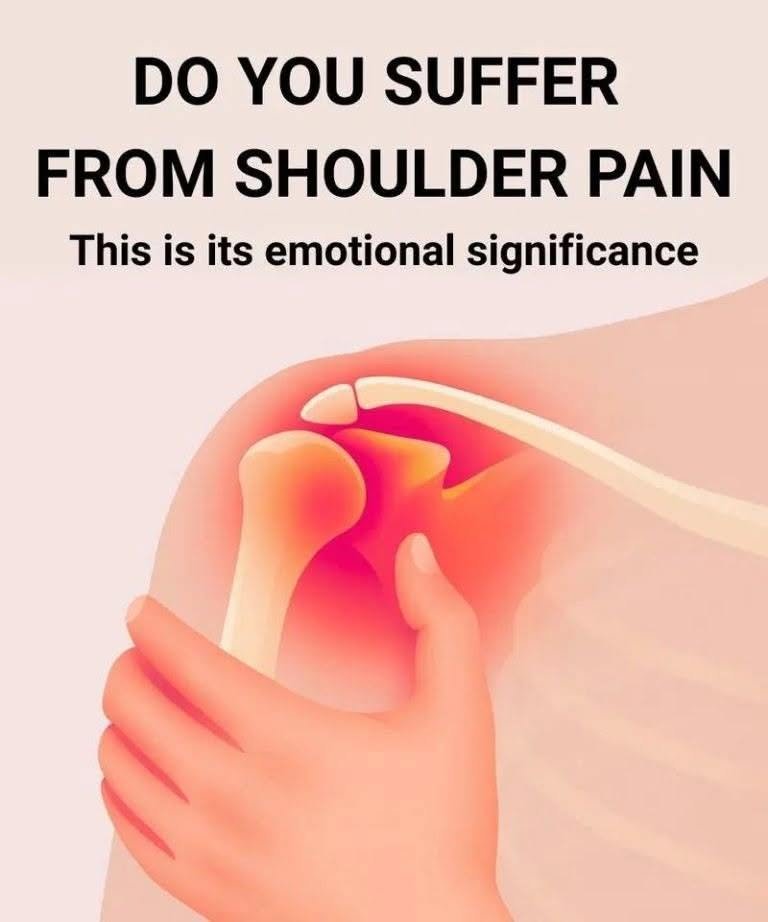
While conventional medicine attributes shoulder pain to physical causes like rotator cuff tendinitis, bursitis, impingement, or joint strain, mind-body medicine and somatic psychology recognize that the shoulders carry a profound emotional and symbolic load.
In the language of the body, the shoulders represent responsibility, burden, power, and protection. When we experience unresolved emotional stress, anxiety, or psychological conflict, our body often responds by tightening the skeletal muscles in our upper body as a protective armor.
Here is a breakdown of the emotional and psychological meanings commonly associated with shoulder pain:
1. “Carrying the Weight of the World” (Overburden and Stress)
-
The Emotional Meaning: Shoulders are our primary physical tools for lifting and carrying. When you feel overwhelmed by obligations—whether at work, in family caregiving, or financial pressures—your subconscious mind registers this as a physical weight.
-
How it manifests: Chronic tension settles into the trapezius and levator scapulae muscles. You literally feel like you are physically carrying an unbearable load on your shoulders.
2. Suppressed Anger, Resentment, or Helplessness
-
The Emotional Meaning: The body’s natural response to a threat or an unfair situation is to shrug, tense up, or strike out. When you feel forced to endure a situation you hate—swallowing your anger, feeling unsupported, or lacking control—that pent-up energy has nowhere to go.
-
How it manifests: It gets locked into the shoulder girdle as muscular armor, causing a persistent, dull ache or sharp knots (myofascial trigger points).
3. Fear of Moving Forward or Taking Action
-
The Emotional Meaning: Shoulders and arms allow us to reach out, embrace life, defend ourselves, and push obstacles aside. If you are terrified of the future, facing a major life decision you are avoiding, or feeling “paralyzed” by indecision, your shoulders may tighten up to hold you back.
-
How it manifests: Stiffness and restricted range of motion, making it physically difficult to lift your arms or turn freely.
4. The Left vs. Right Shoulder Distinction
In somatic and holistic traditions, the side of the body experiencing pain often carries a symbolic meaning:
-
The Left Shoulder: Often associated with the emotional, maternal, and internal aspects of life—relating to home, personal relationships, vulnerability, and unresolved emotional burdens.
-
The Right Shoulder: Often associated with the external, paternal, and active aspects of life—relating to career, financial pressure, social standing, authority figures, and outward responsibilities.
Bridging Mind and Body for Relief
When physical treatments (like stretching, physical therapy, or anti-inflammatories) only provide temporary relief, addressing the emotional root cause can be transformative. Somatic practices like targeted breathwork, progressive muscle relaxation, journaling about current life stressors, or gentle yoga can help signal to your nervous system that it is safe to “put the burden down.”
