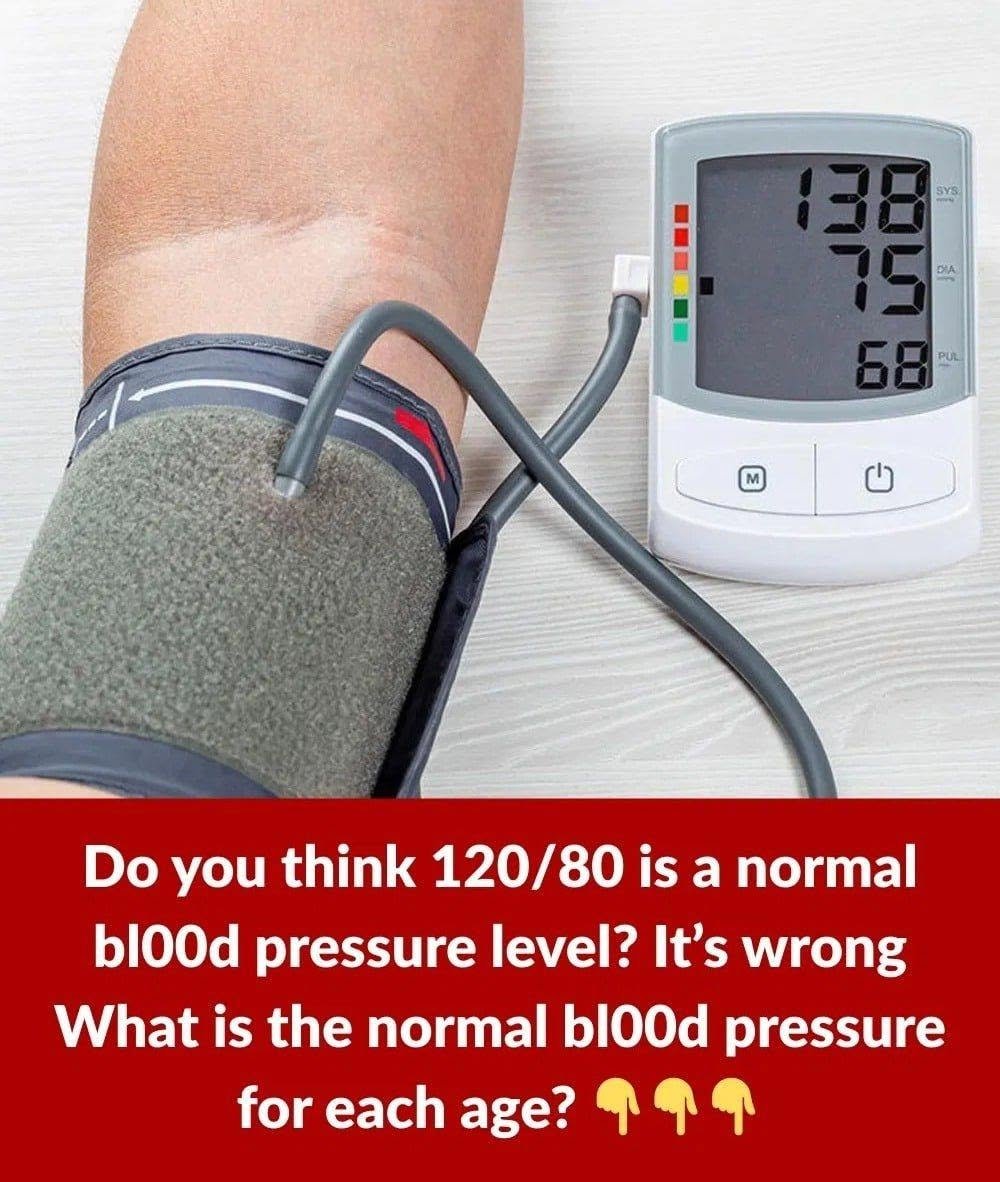
When looking at health guidelines from the American Heart Association (AHA), the American College of Cardiology (ACC), and the Centers for Disease Control and Prevention (CDC), the answer is clear: normal blood pressure does not change as you get older.
For adults of any age—whether you are 20, 50, or 80—a normal blood pressure reading is defined as less than 120/80 mm Hg.
The Adult Blood Pressure Categories
Modern clinical guidelines divide adult blood pressure into five distinct categories based on your systolic (top) and diastolic (bottom) numbers:
| Blood Pressure Category | Systolic (Top) mm Hg | Diastolic (Bottom) mm Hg | |
| Normal | Less than 120 | and | Less than 80 |
| Elevated | 120–129 | and | Less than 80 |
| Stage 1 Hypertension | 130–139 | or | 80–89 |
| Stage 2 Hypertension | 140 or higher | or | 90 or higher |
| Hypertensive Crisis | Higher than 180 | and/or | Higher than 120 |
(Note: If your top and bottom numbers fall into two different categories, your proper classification is the higher category.)
Why the Confusion? Average Readings vs. Healthy Targets
Many people grew up hearing an outdated rule of thumb: “take 100 and add your age” (which mistakenly suggested a 70-year-old could consider a 170 systolic reading normal).
While it is true that average blood pressure readings tend to rise across the decades—largely due to natural arterial stiffening and lifestyle factors—average is not the same as healthy. Population data shows that average blood pressure climbs as we age, but maintaining lower pressure significantly reduces the long-term risk of heart attack, stroke, and cognitive decline.
How Treatment Targets Shift for Older Adults
While the definition of normal remains under 120/80 mm Hg for everyone, physicians often individualize treatment targets for older adults (65 and older):
-
Independent Seniors: For most active, healthy older adults, a treatment target of below 130/80 mm Hg (or aiming lower if well-tolerated) is standard.
-
Frail or Multi-Condition Seniors: For individuals with significant frailty, history of falls, or multiple complex medical conditions, doctors frequently set more relaxed, customized targets to prevent dizziness, fainting, or kidney strain.
Children and Teens
Pediatric blood pressure works differently than adult scales. For infants and children up to age 12, normal blood pressure is determined by age, sex, and height percentiles rather than a fixed number. Adolescents aged 13 and older are evaluated using the standard adult categories.
