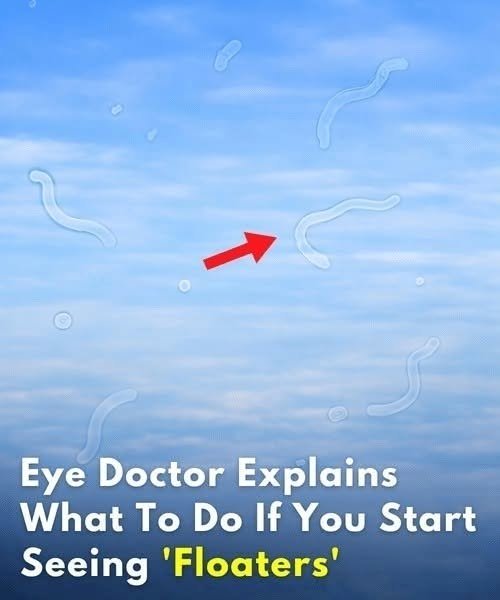
When sensationalized health clickbait capitalizes on sudden vision changes with headlines like “What to Do If You Start Seeing Eye Floaters: An Eye Doctor’s Helpful Guide,” they often try to induce panic by implying you are moments away from going blind.
From a clinical ophthalmology and geriatric perspective, eye floaters—those tiny spots, threads, cobwebs, or specks that drift across your field of vision—are exceptionally common, completely normal, and usually harmless. They are caused by natural, age-related changes inside the eye. However, because certain types of sudden floaters can indicate a serious retinal emergency, knowing the clinical difference between normal aging and a medical red flag is essential.
The Reality Behind Eye Floaters
What are floaters physically, and why do they appear?
-
The Vitreous Jelly: Your eyeball is filled with a gel-like substance called the vitreous, which is attached to the retina at the back of your eye.
-
Posterior Vitreous Detachment (PVD): As we age (typically starting in our 50s or 60s), the vitreous gel naturally liquefies, shrinks, and pulls away from the retina. This harmless separation is called a Posterior Vitreous Detachment. As the gel clumps, it casts tiny shadows on your retina—which you perceive as floating spots or threads.
-
The Critical Distinction: While most floaters are benign remnants of PVD that eventually settle or become less noticeable to your brain, sudden mechanical pulling can sometimes tear the retina.
Red Flag Symptoms: When to See an Eye Doctor Immediately
While most floaters are a normal part of aging, ophthalmologists emphasize that you must seek immediate evaluation by an eye care professional (optometrist or ophthalmologist) if you experience any of the following “red flag” symptoms:
-
A Sudden Shower of New Floaters: Suddenly noticing dozens or hundreds of new specks or dark dots appearing all at once.
-
Flashing Lights: Seeing sudden flashes of light, streaks of lightning, or camera-flash sensations in your peripheral vision.
-
A “Curtain” or Shadow: The appearance of a dark shadow, gray curtain, or veil creeping across any part of your side or central field of vision.
Evidence-Based Ways to Manage Normal Floaters
If your eye doctor has examined your eyes, confirmed a harmless PVD, and given you the all-clear, clinical guidance focuses on reassurance and adaptation:
-
Give Your Brain Time to Adapt: Over weeks and months, your brain naturally learns to “ignore” or filter out harmless floaters, making them much less noticeable.
-
Move Your Eyes: Shifting your gaze up and down can physically move the fluid inside your eye, temporarily displacing floaters out of your direct line of sight.
-
Comprehensive Dilated Eye Exams: If you experience new or changing floaters, never guess at the cause. A simple, painless dilated eye exam allows a doctor to look directly at your retina to ensure it is healthy and intact.
