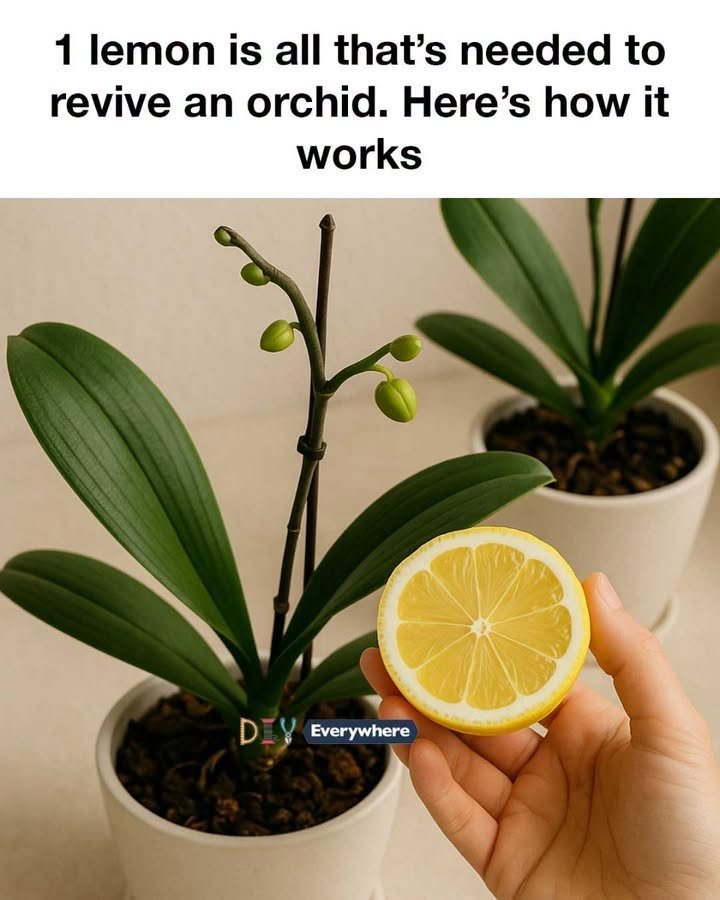
When viral gardening videos and social media clips claim that “1 lemon is all that’s needed to revive an orchid,” they trade in the appeal of a quirky, kitchen-sink miracle cure. By promising that a single piece of citrus fruit can magically force dormant plants to bloom continuously, these hacks oversimplify delicate plant biology into an internet trend.
What Clickbait “Lemon Orchid” Hacks Get Wrong
-
The “Magic Acid Serum” Fallacy: Viral clips often imply that citric acid acts as a comprehensive fertilizer and growth hormone, ignoring the fact that citrus juice lacks essential macronutrients like nitrogen, phosphorus, and potassium.
-
Overlooking Root Vulnerability: Many quick-fix videos suggest placing lemon slices directly into the pot or pouring juice over the root system, completely disregarding how sensitive orchid tissues react to concentrated acids.
The Horticultural Reality: Plant Chemistry and Epiphytic Roots
Horticulturists and orchid specialists evaluate plant vitality through the lens of natural habitat and nutrient uptake:
-
The Epiphytic Nature of Orchids: Most common houseplants, like Phalaenopsis orchids, are epiphytes—meaning they naturally grow clinging to tree trunks in tropical rainforests, not buried in acidic soil. Their roots are covered in a spongy layer called velamen, which absorbs ambient moisture and nutrients from the air and decaying bark.
-
Acid Shock vs. Balanced pH: While rainwater in tropical environments is naturally slightly acidic (due to dissolved carbon dioxide), raw lemon juice has a very low pH (around 2 to 3). Pouring concentrated or improperly diluted citrus juice onto an orchid’s root system creates an aggressive chemical shock, causing acid burns, destroying delicate root tips, and killing the beneficial microbial balance in the potting medium.
-
The Nutrient Deficit: For an orchid to produce flowers or recover from stress, it requires a steady, balanced supply of primary nutrients (NPK). A lemon contains vitamin C, trace minerals, and citric acid, but it cannot feed plant cells or synthesize the complex compounds needed for new leaf and spike growth.
Evidence-Based Steps to Revive a Declining Orchid
If your orchid is struggling—dropping leaves, shriveling, or refusing to bloom—skip the kitchen tricks and focus on foundational care:
-
Inspect the Root System: Gently remove the plant from its pot. Healthy orchid roots are plump and green (when wet) or silvery-white (when dry). Rotted roots are brown, mushy, or stringy; sterilize a pair of shears and trim away any decayed tissue.
-
Upgrade to Proper Bark Media: Orchids suffocate in standard potting soil. Re-pot them in a coarse, well-ventilated medium made of chunky fir bark and perlite to ensure maximum airflow around the roots.
-
Master the Watering Cycle: Never let an orchid sit in standing water. Soak the root ball thoroughly when the roots turn silvery-gray, allow it to drain completely, and let it dry out between waterings.
-
Provide Appropriate Ambient Light: Place the plant in bright, indirect light (such as near an east-facing window). Too little light stalls blooming, while direct, harsh sun scorches the leaves.
This video takes a closer look at common viral gardening tips and explores the actual mechanics behind popular online plant hacks Orchid Lemon Hack review.
