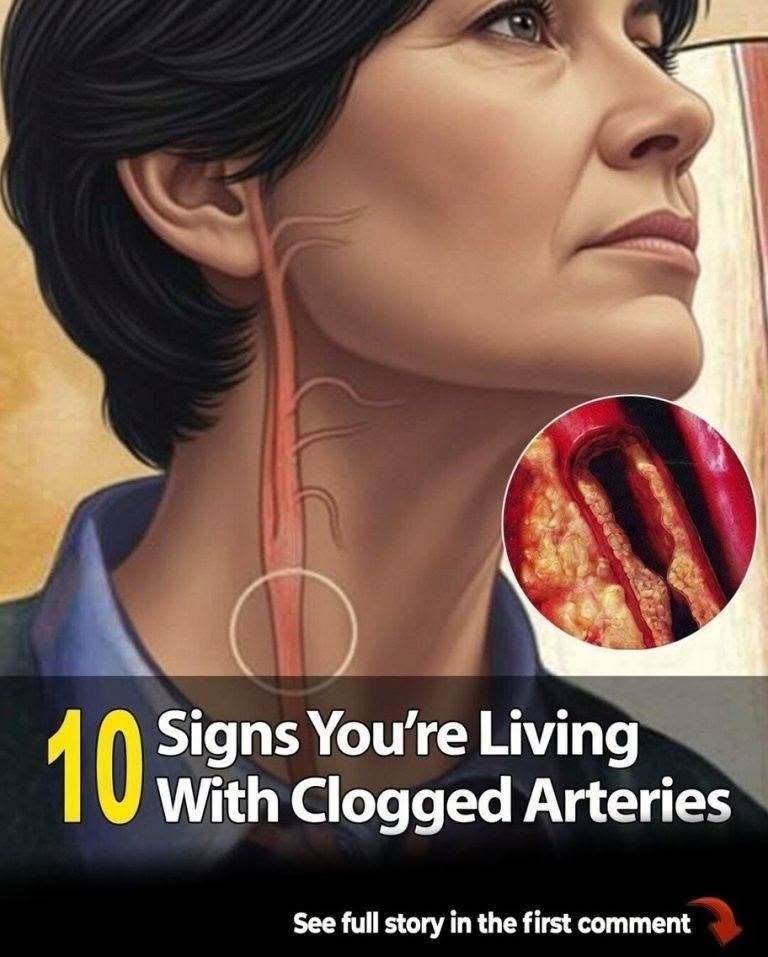
When plaque slowly builds up inside your arteries (atherosclerosis), it quietly restricts blood flow long before a major cardiovascular event occurs. Your body often sends subtle, localized warnings that certain tissues aren’t getting enough oxygen-rich blood.
Here are 10 key indicators of blocked or narrowing arteries that should never be ignored:
1. Intermittent Claudication (Calf Pain During Exercise)
-
What it feels like: A consistent aching, cramping, or heavy tiredness in your calves, thighs, or buttocks that flares up only when walking or climbing stairs, and completely disappears after a few minutes of rest.
-
Why it happens: This is a hallmark sign of Peripheral Artery Disease (PAD). When plaque narrows the arteries supplying your legs, working muscles demand more blood than the restricted pipes can deliver.
2. Cold Lower Extremities (Feet and Toes)
-
What it feels like: One or both feet consistently feel ice-cold to the touch, even in a warm room, compared to the rest of your body.
-
Why it happens: Poor peripheral circulation means warm, oxygenated arterial blood is struggling to reach the furthest points of your circulatory system.
3. Slow-Healing Sores or Wounds on the Legs and Feet
-
What it feels like: Minor cuts, scrapes, or blisters on your lower legs or feet that take weeks or months to heal, or turn into persistent ulcers.
-
Why it happens: Your skin and tissues need a robust, continuous supply of oxygen, nutrients, and white blood cells delivered by healthy blood flow to repair themselves. Deprived arteries stall this healing process.
4. Weak or Absent Pulse in the Feet
-
What it feels like: When checking the top of your foot (dorsalis pedis pulse) or inner ankle, you cannot feel a strong, rhythmic pulse.
-
Why it happens: Just like feeling a pulse in your wrist, a diminished or missing pulse indicates that blood flow through major arterial pathways to the lower extremities is severely restricted.
5. Shiny, Hairless Skin on the Lower Legs
-
What it feels like: The skin on your shins, ankles, or feet appears tight, unnervingly smooth, glossy, and has lost its normal hair growth.
-
Why it happens: Chronic lack of adequate nutrition and blood supply starves hair follicles and changes skin texture over time.
6. Erectile Dysfunction (ED)
-
What it feels like: A persistent difficulty in achieving or maintaining an erection.
-
Why it happens: Because the arteries supplying the pelvic region are much smaller in diameter than coronary arteries, arterial plaque buildup often shows up here years before a heart issue. ED is frequently one of the earliest biological warning signs of systemic vascular disease.
7. Angina (Chest Pain, Pressure, or Tightness)
-
What it feels like: A squeezing, pressure, fullness, or aching pain in the center of your chest, often triggered by physical exertion or emotional stress and relieved promptly by rest.
-
Why it happens: This occurs when the coronary arteries supplying the heart muscle itself become narrowed by plaque, temporarily starving the heart of oxygen.
8. Shortness of Breath on Exertion
-
What it feels like: Feeling unusually winded or exhausted doing mild activities (like walking up a flight of stairs or carrying light groceries) that used to be easy.
-
Why it happens: If your heart muscle isn’t receiving enough blood flow to pump efficiently, or if the left side of the heart struggles under stress, the body immediately senses an oxygen deficit.
9. Transient Ischemic Attacks (TIAs) or “Mini-Strokes”
-
What it feels like: Sudden, temporary weakness or numbness in the face, arm, or leg (usually on one side of the body), sudden slurred speech, or temporary vision loss in one eye.
-
Why it happens: These are caused by a brief blockage of blood flow to part of the brain—often from a piece of plaque breaking loose or a clot forming in the carotid arteries in the neck. A TIA is a critical medical emergency and a massive red flag for a future major stroke.
10. Unexplained Fatigue and Dizziness
-
What it feels like: A profound, bone-deep exhaustion that doesn’t resolve with sleep, occasionally accompanied by lightheadedness.
-
Why it happens: When your entire cardiovascular system has to work overtime to push blood through narrowed, rigid pipes, your body expends massive amounts of energy, leaving vital organs operating on suboptimal oxygen levels.
When to Seek Immediate Help
While subtle signs like cold feet or mild cramping warrant a conversation with your doctor during your next routine checkup, any sudden chest pain, severe shortness of breath, signs of a stroke (FAST: Face drooping, Arm weakness, Speech difficulty, Time to call 911), or sudden, painful coldness in a limb requires emergency medical evaluation.
