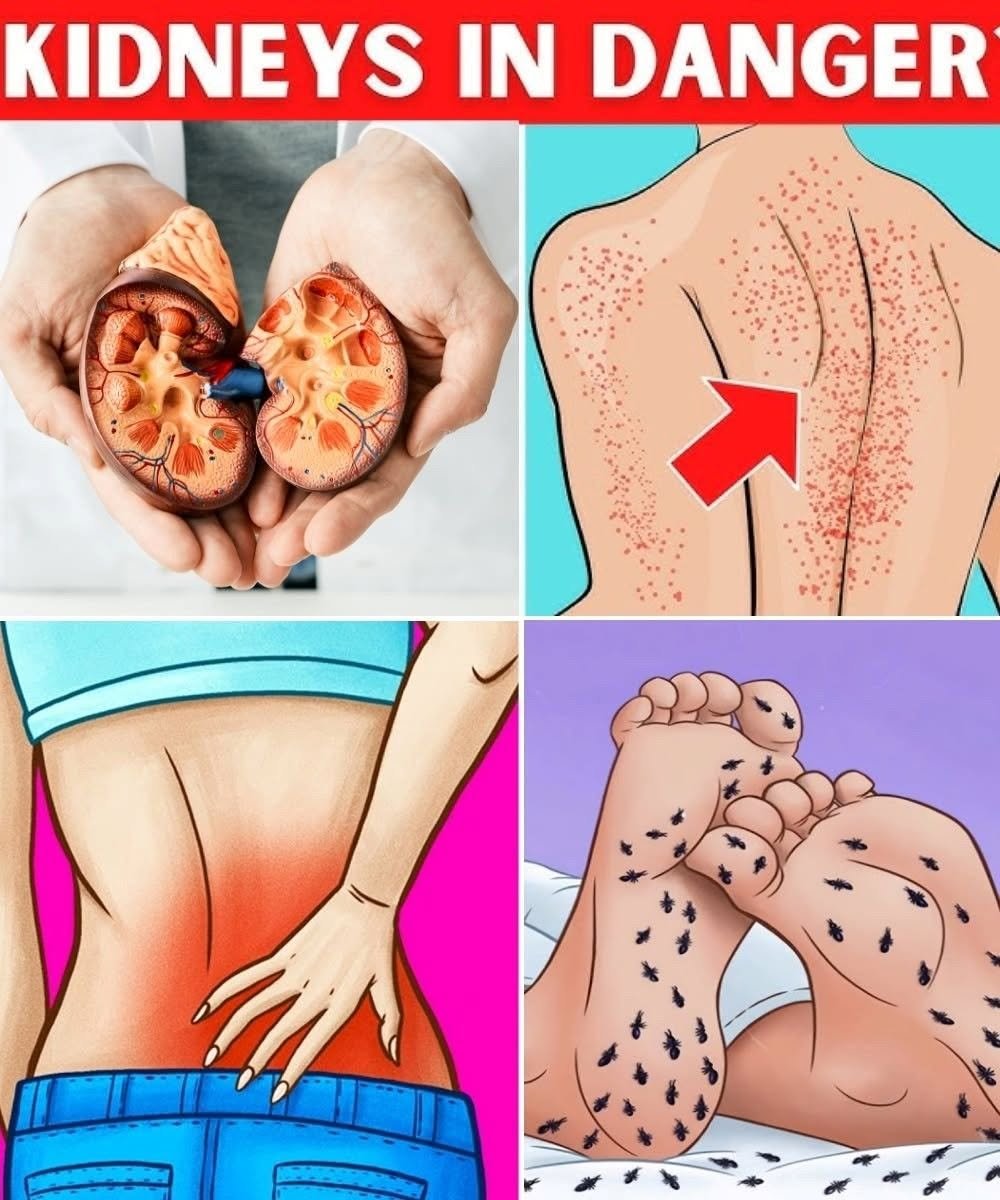
The kidneys filter roughly 120 to 150 quarts of blood daily to remove waste, balance fluids, and regulate blood pressure. Because kidneys are remarkably adaptable, they can lose up to 90% of their functional capacity before severe symptoms appear. This earns chronic kidney disease (CKD) its reputation as a “silent” condition.
However, subtle physical signals often emerge as renal function declines and metabolic waste (uremic toxins) accumulates in the bloodstream.
Here are 10 warning signs that your kidneys may be struggling:
1. Swelling in the Feet, Ankles, or Hands (Edema)
-
What Happens: Noticing puffiness around your ankles, socks leaving deep indentations on your legs, or tightness in your shoes and rings.
-
Why It Occurs: Decreased kidney function leads to sodium and fluid retention. When the body cannot excrete excess fluid, gravity pulls it down into lower extremities. Damaged kidney filters can also leak large amounts of protein (albumin) into urine, reducing blood oncotic pressure and causing fluid to seep into tissues.
2. Persistent Puffiness Around the Eyes (Periorbital Edema)
-
What Happens: Waking up with heavy, swollen, or puffy eyelids that do not subside as the morning goes on.
-
Why It Occurs: This is often an early sign that your kidney filters (glomeruli) are damaged, allowing essential blood proteins to leak into your urine rather than remaining in circulation.
3. Changes in Urination Patterns
Your kidneys produce urine, so any dramatic shifts in frequency, volume, or appearance warrant attention:
-
Foamy or Bubbling Urine: Multiple flushes needed to clear white, frothy foam indicates high levels of protein in the urine (proteinuria).
-
Dark, Tea-Colored, or Bloody Urine (Hematuria): Damaged filters allow red blood cells to spill into the urinary tract.
-
Nocturia: Needing to wake up multiple times during the night to urinate as the kidneys lose their ability to concentrate urine.
4. Severe, Unexplained Fatigue & “Brain Fog”
-
What Happens: Feeling constantly drained, physically weak, or unable to focus, even after full night’s sleep.
-
Why It Occurs: Healthy kidneys produce erythropoietin (EPO), a hormone that signals bone marrow to manufacture oxygen-carrying red blood cells. Declining kidney function drops EPO production, leading to anemia of chronic kidney disease. Additionally, a buildup of uremic toxins directly impairs brain function.
5. Intensely Dry, Itchy Skin (Uremic Pruritus)
-
What Happens: Deep, persistent itching across the back, chest, or legs that lotions cannot relieve.
-
Why It Occurs: As kidney clearance falls, minerals like phosphorus accumulate in the blood. When blood phosphorus spikes, it binds with calcium, forming microscopic crystals that deposit in skin tissues, triggering severe localized or systemic itching.
6. Metallic Taste in the Mouth or Ammonia Breath
-
What Happens: Food tastes unappealing or metallic (especially meat), accompanied by chronic bad breath that smells like ammonia.
-
Why It Occurs: Known as uremia, elevated levels of urea and nitrogenous waste build up in the bloodstream and break down into ammonia in saliva, altering taste perception and suppressing appetite.
7. Flank Pain (Pain in the Mid-to-Upper Back)
-
What Happens: A deep, dull ache on one or both sides of your back just under the ribcage, sometimes radiating down toward the groin.
-
Why It Occurs: While muscle strain is common, kidney-related pain typically stems from kidney stones blocking a ureter, active kidney infections (pyelonephritis), or enlarged fluid-filled cysts from polycystic kidney disease (PKD).
8. Shortness of Breath (Dyspnea)
-
What Happens: Feeling winded or struggling to catch your breath during low-impact, routine daily tasks.
-
Why It Occurs: Fluid buildup from failing kidneys can back up into the lungs (pulmonary edema). Additionally, severe anemia limits the blood’s overall capacity to carry oxygen to your vital organs.
9. Persistent Nausea and Loss of Appetite
-
What Happens: Frequent morning nausea, a feeling of fullness after taking a few bites, or vomiting.
-
Why It Occurs: Uremic toxins irritate the stomach lining and stimulate the chemoreceptor trigger zone in the brain, causing persistent GI upset and involuntary weight loss.
10. Muscle Twitching, Cramps, and Spasms
-
What Happens: Sudden, painful muscle cramps in the calves or legs during rest.
-
Why It Occurs: Kidneys regulate circulating levels of electrolytes like calcium, phosphorus, potassium, and magnesium. Imbalances in these minerals disrupt neuromuscular signaling, causing muscles to fire involuntarily.
Essential Diagnostic Tests for Kidney Health
Because kidney damage can progress without dramatic pain, simple routine blood and urine tests are the gold standard for early detection:
-
eGFR (Estimated Glomerular Filtration Rate): A blood test measuring how effectively your kidneys filter waste based on serum creatinine levels. An eGFR below 60 for more than 3 months indicates kidney disease.
-
uACR (Urine Albumin-to-Creatinine Ratio): A spot urine test that detects microscopic traces of protein (albumin) in the urine long before visible foam appears.
-
Blood Urea Nitrogen (BUN): Measures the amount of nitrogen in your blood that comes from the waste product urea.
