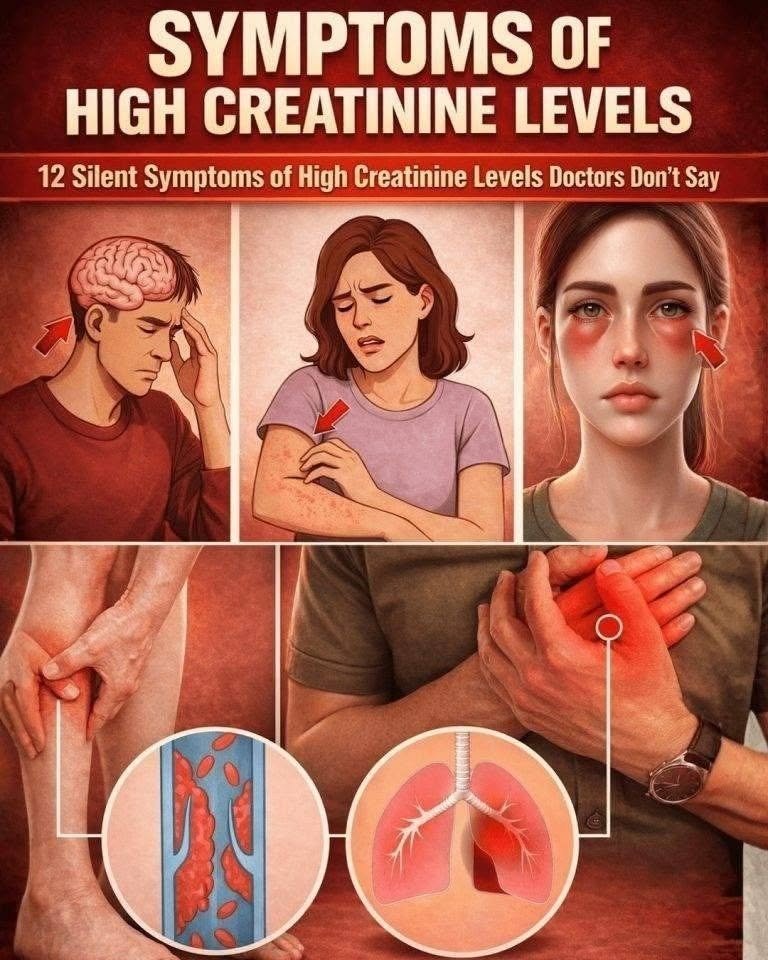
Viral health articles and medical blogs frequently highlight long lists of vague, everyday symptoms—from fatigue to mild puffiness—claiming they are absolute warning signs of high creatinine and failing kidneys.
While persistently elevated creatinine and chronic kidney disease (CKD) can eventually impact the entire body, many subtle signs are non-specific and can point to dozens of other common conditions. However, when the kidneys’ filtration units (nephrons) lose their efficiency, waste products accumulate in the bloodstream, leading to distinct physiological changes.
Here is an objective, science-based breakdown of the 12 subtle signs associated with high creatinine and kidney dysfunction, the physiological mechanisms behind them, and when to seek clinical evaluation:
The 12 Signs Linked to High Creatinine and Kidney Issues
1. Foamy or Bubbly Urine
-
The Mechanism: Creatinine itself doesn’t make urine foamy, but failing glomeruli (the kidney’s filtering filters) often allow larger proteins—primarily albumin—to leak out of the blood and into the urine, a condition called proteinuria.
-
The Clinical Sign: Noticeable, persistent bubbles or foam in the toilet water that resembles the froth on scrambled eggs or beer, requiring multiple flushes.
2. Changes in Urination Frequency (Especially at Night)
-
The Mechanism: As kidney function declines, the kidneys lose their ability to concentrate urine and manage fluid balance properly, triggering increased output.
-
The Clinical Sign: Waking up multiple times throughout the night to urinate (nocturia) or noticing sudden, uncharacteristic shifts in your daily bathroom habits.
3. Persistent Fatigue and Low Energy
-
The Mechanism: Healthy kidneys produce an essential hormone called erythropoietin (EPO), which signals the bone marrow to manufacture red blood cells. When kidneys are damaged, EPO production drops, leading to anemia and reduced oxygen delivery to tissues.
-
The Clinical Sign: A heavy, lingering exhaustion that sleep does not fix, accompanied by feeling constantly sluggish or weak during routine daily tasks.
4. Unexplained Swelling (Edema) in Ankles and Feet
-
The Mechanism: Damaged kidneys fail to filter out excess dietary sodium and fluid effectively. As fluid builds up in the vascular system and leaks into surrounding tissues, gravity pulls it downward.
-
The Clinical Sign: Puffiness or pitting edema in the feet, ankles, and lower legs, often noticeable when socks leave deep, indented rings around the ankles by the end of the day.
5. Periorbital Puffiness (Morning Facial Swelling)
-
The Mechanism: Similar to leg edema, generalized fluid retention and protein loss alter oncotic pressure in the blood vessels, causing fluid to pool overnight in areas with loose tissue.
-
The Clinical Sign: Waking up in the morning with tight, swollen eyelids or puffy bags around the eyes that gradually subside as you move around during the day.
6. Persistent Itchy, Dry Skin (Uremic Pruritus)
-
The Mechanism: When kidneys fail to filter blood efficiently, mineral imbalances—specifically a high phosphorus-to-calcium ratio in the blood—along with circulating uremic toxins irritate skin nerve endings.
-
The Clinical Sign: Deep, relentless itching that feels like it originates under the skin, often unresponsive to standard moisturizers and lotions.
7. Muscle Cramps and Spasms
-
The Mechanism: Impaired kidney function disrupts serum electrolyte balances, particularly calcium, phosphorus, magnesium, and potassium levels, which govern neuromuscular contraction.
-
The Clinical Sign: Sudden, painful tightening or “charley horses” in the calves or feet, frequently striking unexpectedly at rest or overnight.
8. Metallic Taste in the Mouth or Ammonia Breath
-
The Mechanism: A buildup of urea and other nitrogenous waste products in the blood (a condition known as uremia) alters taste bud receptors and breaks down into ammonia in saliva.
-
The Clinical Sign: Food suddenly tasting metallic (particularly meats), chronic bad breath, or a general loss of appetite for favorite foods.
9. Brain Fog and Difficulty Concentrating
-
The Mechanism: Accumulating uremic toxins, combined with anemia-induced oxygen deprivation to the brain, can slow cognitive processing speed and mental clarity.
-
The Clinical Sign: Struggling to focus during conversations, experiencing memory lapses, or feeling mentally “hazy” throughout the workday.
10. Shortness of Breath
-
The Mechanism: Reduced kidney function can cause fluid to back up directly into the lungs (pulmonary congestion), while concurrent anemia deprives the body of adequate oxygen.
-
The Clinical Sign: Becoming unusually breathless after climbing a single flight of stairs or walking short distances that previously felt effortless.
11. High Blood Pressure (Hypertension)
-
The Mechanism: The kidneys play a master regulatory role in blood pressure via the renin-angiotensin-aldosterone system (RAAS) and fluid volume control. Damaged kidneys both cause and suffer from high blood pressure in a destructive feedback loop.
-
The Clinical Sign: Consistently elevated blood pressure readings on a home monitor, especially if hypertension is newly diagnosed or suddenly difficult to control with medications.
12. Loss of Appetite and Unintended Nausea
-
The Mechanism: Widespread toxin accumulation in the gastrointestinal tract irritates the stomach lining and alters metabolic signaling.
-
The Clinical Sign: Feeling vaguely nauseous in the mornings, losing your appetite, or experiencing mild food aversions without a clear viral stomach bug.
What High Creatinine Actually Means
Creatinine is a normal waste product generated by everyday muscle breakdown. It is filtered out of the blood exclusively by the kidneys.
-
When a blood test shows “high creatinine,” it means your Estimated Glomerular Filtration Rate (eGFR)—the mathematical calculation of how well your kidneys are filtering blood—may be reduced.
-
However, creatinine levels can also be temporarily elevated by dehydration, heavy intake of cooked meat right before a blood draw, strenuous weightlifting, or certain medications (like specific NSAIDs or blood pressure drugs).
When to See a Physician
Because early-stage kidney disease is largely “silent” and rarely causes overt symptoms until function is severely compromised, do not wait for physical signs to check your kidney health.
If you have risk factors like hypertension, diabetes, a family history of kidney disease, or notice persistent changes like foamy urine or swelling, ask your primary care physician for a routine Serum Creatinine Blood Test (with eGFR) and a Spot Urine Albumin-to-Creatinine Ratio (uACR).
