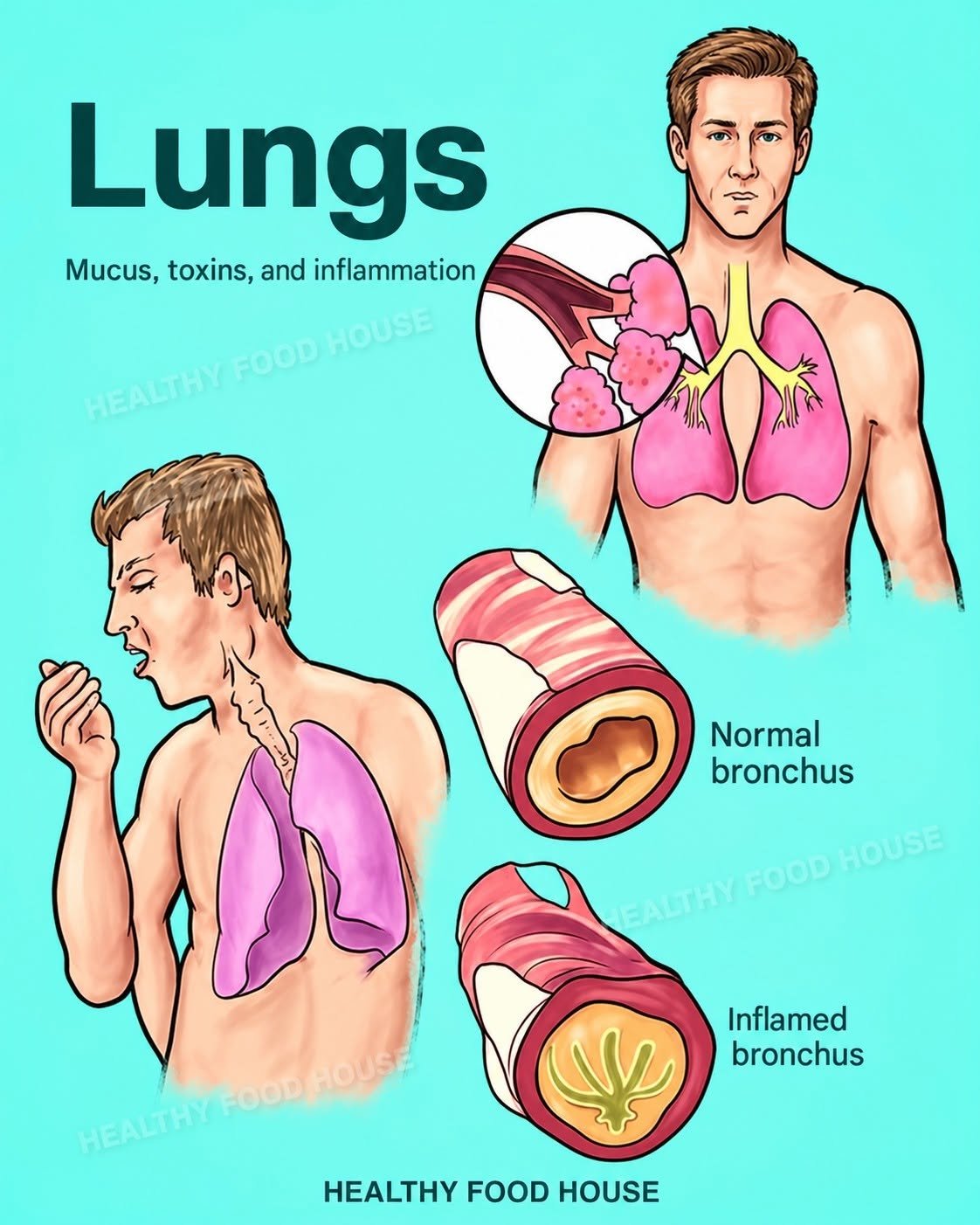
Viral health blogs and social media clips often promote radical “mucus cleanses,” raw juice detoxes, or immediate “toxin-purging” drinks that promise to dissolve chest and throat phlegm overnight.
In otolaryngology (ENT) and pulmonology, however, mucus is a vital physiological barrier designed to hydrate tissue, trap airborne debris, and neutralize pathogens. When infection, inflammation, or acid irritation strikes, your body simply produces excess or thicker mucus. “Getting rid” of excess phlegm naturally relies on thinning its physical consistency so your respiratory cilia can clear it normally.
Here is an objective, science-based breakdown of why throat and chest mucus accumulates, the physiological mechanisms of natural relief, and evidence-based steps to clear it:
The Science: Why Phlegm Accumulates
-
Upper Airway (Throat & Post-Nasal Drip): Excess throat mucus is frequently driven by post-nasal drip from allergies, sinusitis, or Laryngopharyngeal Reflux (LPR)—often called “silent reflux.” When micro-droplets of stomach acid travel up into the delicate throat, the body produces thick mucus as a protective lining to prevent acid burns.
-
Lower Airway (Chest): Chest phlegm is secreted by goblet cells lining the bronchial tubes in response to viral infections, bronchitis, asthma, or environmental irritants (like smoke or dust).
Evidence-Based Natural Methods to Thin and Clear Mucus
1. Systemic Hydration (The Most Effective Mucolytic)
-
The Mechanism: Mucus is composed of over 90% water bound to gel-forming proteins (mucins). When you are even mildly dehydrated, the body conserves water, making mucus significantly thicker, stickier, and harder to cough up or swallow.
-
The Action: Drink plenty of room-temperature water, herbal teas, or clear broths throughout the day. Increasing fluid intake thins the physical viscosity of mucus from the inside out, allowing tiny airway cilia to sweep it away efficiently.
2. Steam Inhalation and Warm Humidification
-
The Mechanism: Inhaled moist air direct-hydrates dry, irritated mucosal linings and breaks up dense surface secretions in the nasal passages and upper bronchial tubes.
-
The Action: Take a warm, steamy shower or sit in a closed bathroom while hot water runs. Alternatively, use a cool-mist humidifier in your bedroom at night to keep ambient indoor air moisture around 40% to 50%.
3. Saltwater Gargles for Throat Mucus
-
The Mechanism: Warm saltwater creates an osmotic gradient across throat tissues. Hypertonic salt solutions draw excess fluid out of swollen mucosal membranes, reducing tissue inflammation while physically loosening stubborn, sticky mucus clinging to the pharynx.
-
The Action: Dissolve 1/2 teaspoon of pure salt (or kosher salt) in 8 ounces of warm water. Swish and gargle near the back of the throat for 30 seconds, then spit it out. Repeat 2 to 3 times daily.
4. Natural Demulcents: Honey and Warm Liquids
-
The Mechanism: Warm fluids soothe spastic cough reflexes, while raw honey acts as a natural demulcent—coating the throat to reduce tickling and irritation while exerting mild antimicrobial properties.
-
The Action: Stir 1 to 2 teaspoons of honey into a mug of warm water or caffeine-free chamomile/ginger tea. (Note: Never give honey to infants under 12 months due to the risk of infant botulism).
5. Head Elevation During Sleep
-
The Mechanism: Lying completely flat allows post-nasal secretions to pool at the back of the throat and enables stomach acid to travel upward overnight, worsening morning phlegm.
-
The Action: Prop your head and upper chest up with an extra pillow or raise the head of your bed slightly to let gravity assist drainage while you sleep.
Common Myths to Avoid
-
Myth: “Dairy Creates Mucus”: Controlled clinical trials consistently show that drinking milk does not increase total mucus production. However, milk emulsions can temporarily mix with saliva, creating a slightly thicker feeling in the mouth that some people mistake for phlegm.
-
Myth: “Swallowing Mucus is Toxic”: Swallowing excess phlegm is completely harmless. Your stomach contains potent hydrochloric acid, which safely neutralizes trapped dirt and bacteria.
When to Seek Medical Evaluation
While natural methods help manage acute, mild congestion from seasonal colds or dry air, you should consult a doctor if you experience:
-
Phlegm accompanied by high fever, shortness of breath, or chest pain
-
Coughing up rust-colored, brownish, or blood-streaked mucus
-
Chronic throat phlegm that lasts longer than 3 to 4 weeks (which often warrants an evaluation for acid reflux, chronic sinusitis, or asthma)
