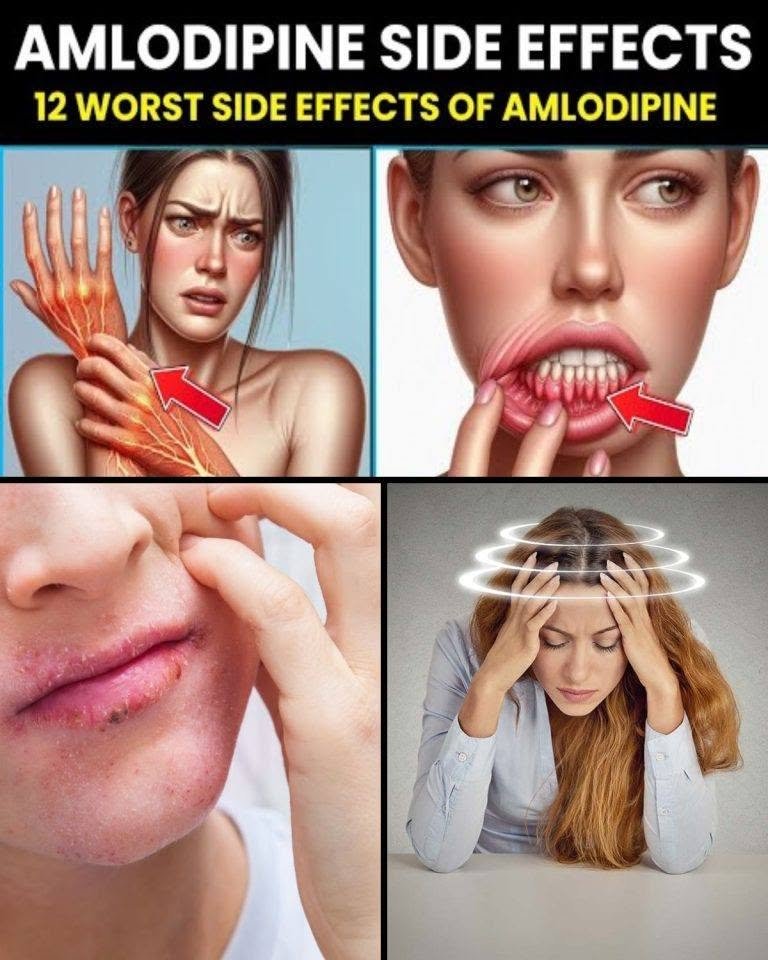
Amlodipine (commonly known by brand names like Norvasc) is a widely prescribed calcium channel blocker used to treat high blood pressure and coronary artery disease. While millions of people take it safely, it can cause adverse reactions that range from mild annoyances to medical red flags.
While many mild effects (like minor flushing or slight fatigue) are common as your body adjusts, certain serious side effects should never be ignored.
1. Severe Dizziness or Fainting (Profound Hypotension)
-
What happens: Amlodipine works by relaxing and widening your blood vessels. Sometimes, blood pressure drops too low, depriving the brain of adequate blood flow.
-
Why you shouldn’t ignore it: Frequent lightheadedness, feeling like you might pass out, or actual fainting (syncope) put you at immediate risk for dangerous falls or accidents.
2. Worsening Chest Pain or New Angina Attacks
-
What happens: Paradoxically, shortly after starting amlodipine or increasing the dose, some individuals experience an increase in chest pain.
-
Why you shouldn’t ignore it: If your heart rate spikes to compensate for widened blood vessels (reflex tachycardia), it can strain a heart that already has narrowed arteries. New or worsening crushing chest pressure, tightness, or pain spreading to the arm or jaw requires immediate emergency evaluation to rule out a heart attack.
3. Rapid, Pounding, or Irregular Heartbeats (Palpitations)
-
What happens: You may feel your heart fluttering, racing, or skipping beats.
-
Why you shouldn’t ignore it: While a mild reflex increase in heart rate can happen, severe or persistent palpitations, an unusually slow heartbeat, or an irregular rhythm can signal a dangerous cardiac reaction and should be assessed promptly by a physician.
4. Severe Peripheral Edema (Asymmetrical or Rapid Swelling)
-
What happens: Mild fluid retention causing puffy ankles and feet is a common side effect of amlodipine.
-
Why you shouldn’t ignore it: While minor, symmetrical ankle swelling is usually benign, you should never ignore swelling that is severe, rapidly progressive, occurs in only one leg, or is accompanied by pain and redness. This can be a sign of a deep vein thrombosis (DVT) or worsening heart failure.
5. Sudden Shortness of Breath or Difficulty Breathing
-
What happens: Difficulty catching your breath, wheezing, or feeling like you are drowning when lying flat (orthopnea) can occur.
-
Why you shouldn’t ignore it: This can indicate fluid backing up into the lungs (pulmonary edema) or worsening heart failure, both of which are medical emergencies.
6. Signs of Liver Damage (Hepatotoxicity)
-
What happens: Though rare, amlodipine can affect liver function.
-
Why you shouldn’t ignore it: Watch closely for yellowing of your skin or the whites of your eyes (jaundice), dark urine, pale or clay-colored stools, and persistent pain or tenderness in the upper right side of your stomach. These require immediate lab work and medical intervention.
7. Severe Allergic Reactions (Anaphylaxis and Angioedema)
-
What happens: An immune system overreaction to the medication.
-
Why you shouldn’t ignore it: Symptoms like sudden hives, a widespread rash, blistering/peeling skin, or deep swelling of the face, lips, tongue, or throat can block your airways and become life-threatening within minutes. Seek emergency care immediately.
8. Severe Abdominal Pain (Potential Pancreatitis)
-
What happens: In very rare cases, amlodipine has been linked to acute inflammation of the pancreas.
-
Why you shouldn’t ignore it: Severe upper abdominal pain that radiates straight through to your back, often accompanied by persistent vomiting and fever, is a medical emergency.
9. Extreme, Debilitating Fatigue and Drowsiness
-
What happens: Mild tiredness is normal as blood pressure drops, but debilitating exhaustion is different.
-
Why you shouldn’t ignore it: If you are too tired to function, or if fatigue is coupled with confusion or shortness of breath, it may indicate that your blood pressure is chronically too low or that your heart function is compromised.
10. Gum Overgrowth (Gingival Hyperplasia)
-
What happens: Some patients notice their gums becoming tender, swollen, bleeding easily, or-over time-slowly thickening and growing over their teeth.
-
Why you shouldn’t ignore it: Though usually appearing after months of use (particularly at higher doses), ignoring gum changes can lead to severe dental decay and periodontal disease. Good oral hygiene helps, but persistent overgrowth requires a doctor’s evaluation.
11. Unexplained Mood Changes or Depression
-
What happens: Though less common, calcium channel blockers have occasionally been associated with psychological shifts.
-
Why you shouldn’t ignore it: Persistent anxiety, nervousness, vivid/unusual nightmares, or a deep low mood/depression can severely impact your quality of life and should be discussed with your healthcare provider to see if an alternative medication is appropriate.
12. Abnormal Muscle Movements (Extrapyramidal Symptoms)
-
What happens: Rare neurological side effects can manifest as tremors, muscle stiffness, a shuffling walk, or involuntary movements of the face, neck, or back.
-
Why you shouldn’t ignore it: Any sudden onset of movement disorders or rigidity while on a blood pressure medication warrants a prompt neurological and medical review.
When to Seek Emergency Help
Call 911 or go to the nearest emergency room immediately if you experience signs of a severe allergic reaction (throat swelling, trouble breathing), a suspected heart attack (chest pressure, pain radiating to the jaw/arm), sudden fainting, or severe shortness of breath.
Disclaimer: Never stop taking amlodipine or alter your dosage abruptly without consulting your prescribing physician, as sudden changes can cause dangerous rebounds in blood pressure.
Are you or a loved one currently taking amlodipine? Let me know if you are experiencing any specific symptoms, and I can provide more tailored information.
