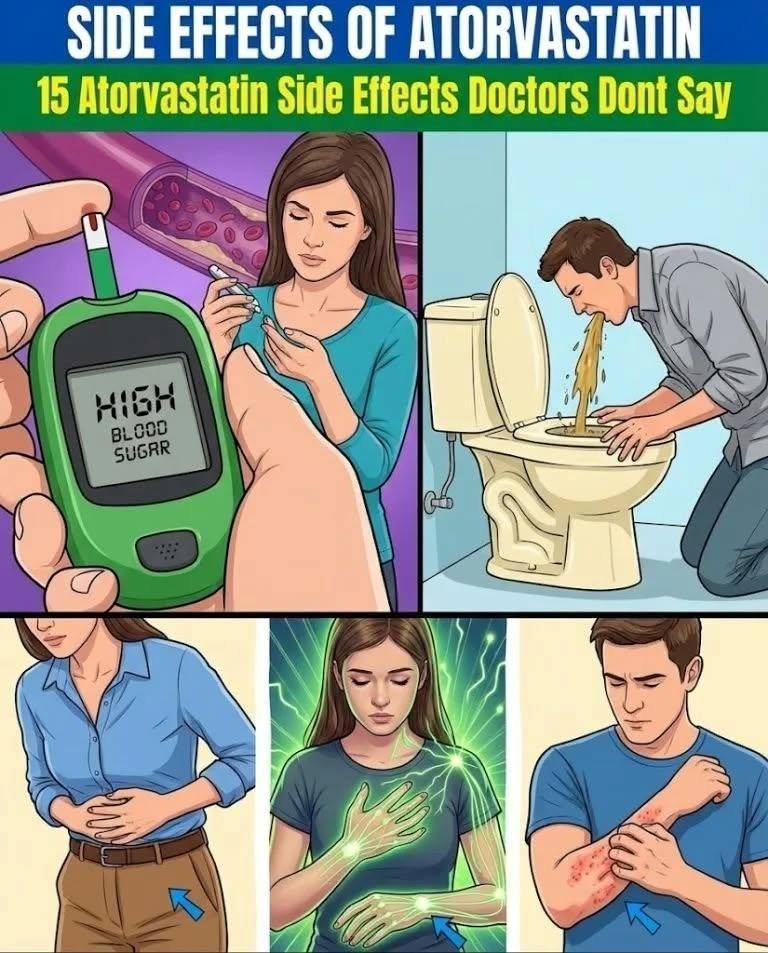
Atorvastatin (commonly known by its brand name Lipitor) is one of the most widely prescribed medications in the world for lowering cholesterol and protecting cardiovascular health. While most patients tolerate it well, standard medical consultations rarely leave time to review the full spectrum of less common, subtle, or overlooked adverse reactions.
Because atorvastatin is “lipophilic” (meaning it is fat-soluble and can cross cell membranes throughout the body, including the central nervous system), it can occasionally trigger unique physiological responses outside of standard muscle aches.
Here are 15 hidden or less-discussed side effects associated with atorvastatin that are worth knowing before your next refill:
1. Vivid Dreams and Cinematic Nightmares
-
What Happens: Some patients report a sudden onset of intensely vivid, bizarre, or disturbing nightmares. Because atorvastatin crosses the blood-brain barrier easily due to its fat-soluble structure, it can subtly influence neurotransmitter activity and sleep architecture during REM cycles.
2. Transient Cognitive “Brain Fog” or Short-Term Forgetfulness
-
What Happens: Occasional complaints include mild memory lapses, mental sluggishness, or a temporary feeling of confusion. While the FDA notes that these cognitive effects are generally rare, reversible, and do not cause permanent damage, cholesterol is vital for brain cell membranes and synapse formation, meaning altering it can occasionally affect mental sharpness.
3. Peripheral Neuropathy (Tingling and “Pins and Needles”)
-
What Happens: A small subset of users experience unexplained numbness, burning sensations, or a “pins and needles” feeling primarily in the hands and feet. This is thought to stem from microscopic changes in nerve fiber membranes over long-term, high-dose usage.
4. Coenzyme Q10 (CoQ10) Depletion and Cellular Fatigue
-
What Happens: Atorvastatin works by blocking an enzyme (HMG-CoA reductase) that not only produces cholesterol but also halts the body’s natural synthesis of CoQ10—a vital compound required for cellular energy production (mitochondrial function). This depletion can manifest as a heavy, unshakeable body fatigue, particularly in high-energy tissues like muscle and heart cells.
5. Subtle Blood Sugar Elevations (Increased Diabetes Risk)
-
What Happens: Statins can slightly increase insulin resistance, leading to modest upward shifts in fasting blood glucose levels over time. For individuals already borderline pre-diabetic, this can occasionally cross the threshold into a type 2 diabetes diagnosis, requiring closer metabolic monitoring.
6. Tendinopathy and Tendon Vulnerability
-
What Happens: Beyond general muscle soreness, some individuals experience nagging tendon stiffness, weakness, or inflammation (particularly in the Achilles tendon). In rare post-marketing reports, statin use has been linked to an increased risk of tendon stress or tearing.
7. Temperature Dysregulation and Night Sweats
-
What Happens: A less common physiological complaint involves unexpected hot flashes, localized temperature intolerance (feeling freezing in a normal room), or unexplained mild night sweats linked to autonomic nervous system shifts.
8. Altered Sense of Taste (Dysgeusia)
-
What Happens: Food may suddenly taste metallic, excessively salty, or flat. Because medications can alter the micro-environment of saliva and interact with oral taste receptors, this can inadvertently lead to reduced appetite or unexpected weight changes.
9. Mild Gastrointestinal Upset and Microscopic Gut Changes
-
What Happens: While standard side effects list constipation or diarrhea, some patients experience persistent, low-grade bloating, indigestion, or changes in gut motility that mimic mild irritable bowel patterns as the body adjusts to altered systemic lipid processing.
10. Subtle Personality Shifts or Increased Irritability
-
What Happens: Rarely, family members or patients themselves notice uncharacteristic mood shifts—such as heightened irritability, low-grade anxiety, or mild depressive symptoms—which typically resolve promptly if the medication is adjusted or stopped.
11. Asymptomatic Liver Enzyme Elevations
-
What Happens: Routine blood panels may occasionally show a bump in liver transaminases (ALT/AST). While true liver failure is exceedingly rare, these elevations indicate that the liver cells are working under stress to process the medication, which is why routine monitoring panels are standard practice.
12. Rare Immune-Mediated Necrotizing Myopathy (IMNM)
-
What Happens: Distinct from normal, temporary muscle aches that disappear when you stop a statin, IMNM is a very rare autoimmune reaction where the immune system continues attacking muscle tissue even after the medication is discontinued, requiring targeted medical therapy.
13. Ocular Changes and Dry Eyes
-
What Happens: Some patients report persistent dry eyes, mild blurred vision, or eye irritation. In very rare instances, statins have been associated with ocular myasthenia affecting the tiny muscles controlling eyelid movement.
14. Sleep Architecture Disruption (Insomnia)
-
What Happens: Difficulty falling asleep, staying asleep, or experiencing restless, unrefreshing rest can occur when central nervous system uptake alters natural sleep-wake cycles.
15. Hair Thinning or Texture Changes
-
What Happens: On rare occasions, systemic metabolic shifts or micro-nutrient processing changes triggered by long-term statin therapy can result in increased hair shedding or a drier, more brittle hair texture.
What to Do If You Notice Unusual Symptoms
-
Never Stop Abruptly Without Consulting Your Doctor: Abruptly discontinuing a statin without a cardiovascular evaluation can carry risks if you have active heart disease.
-
Discuss Adjustments: If you experience nagging side effects (like muscle fatigue or brain fog), doctors can often resolve them by lowering the dose, switching to a different type of statin (such as a hydrophilic statin like rosuvastatin or pravastatin which crosses into tissues differently), or evaluating whether a CoQ10 supplement is appropriate for your routine.
